Overview
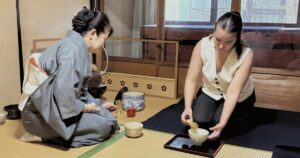
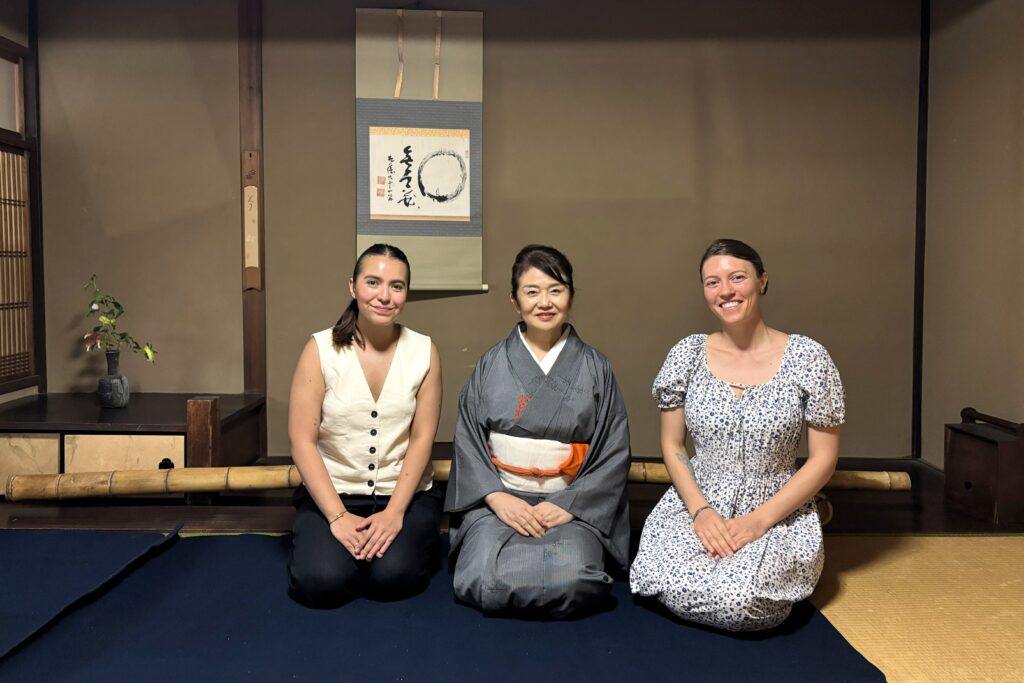
We hosted a private tea ceremony (chado) experience for a guest from Mexico, in a 130-year-old machiya (traditional Kyoto townhouse) in central Kyoto. The guest had no prior experience with tea ceremony, but reached out to BASE KYOTO specifically because she wanted to understand the tea ceremony and Japanese culture in depth, rather than take part in a touristic experience. The session ran for 90 minutes. The instructor was Katsuyo Tanaka, a tea master who serves as a Kyoto Prefecture Culture and Tourism Ambassador and gives around 100 lectures a year, in Japan and abroad, on applying the spirit of the tea ceremony to business etiquette. The session was held in a machiya with easy access, a 4-minute walk from Karasuma Oike subway station, rented exclusively for this session.
The Session
Many tea ceremony experiences aimed at tourists follow the same pattern: watch the instructor prepare tea, then drink the matcha that’s been made for you. This session was structured differently, as a dialogue. Each step of preparing matcha was explained as it happened, with the guest encouraged to think through why each movement exists and what it represents, rather than simply observing — with time built in for her questions along the way.
We covered the kakejiku (hanging scroll) displayed in the tokonoma alcove — what it represents and the role it plays in a tea gathering. The scroll is typically chosen to reflect the season or the theme the host wants to convey to guests that day, setting the tone for the entire gathering.
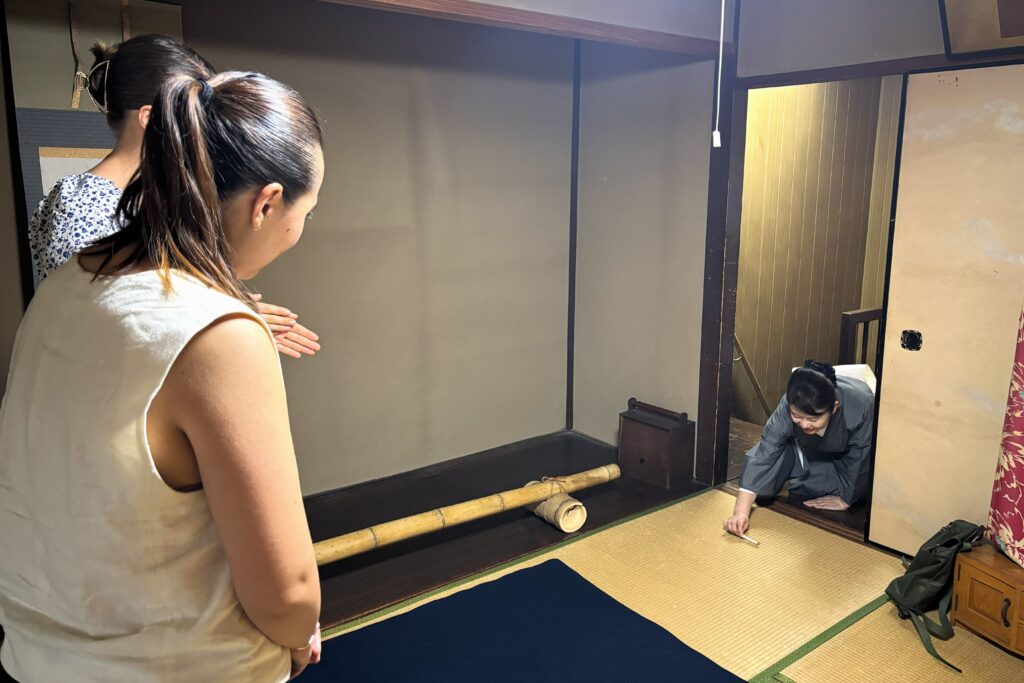
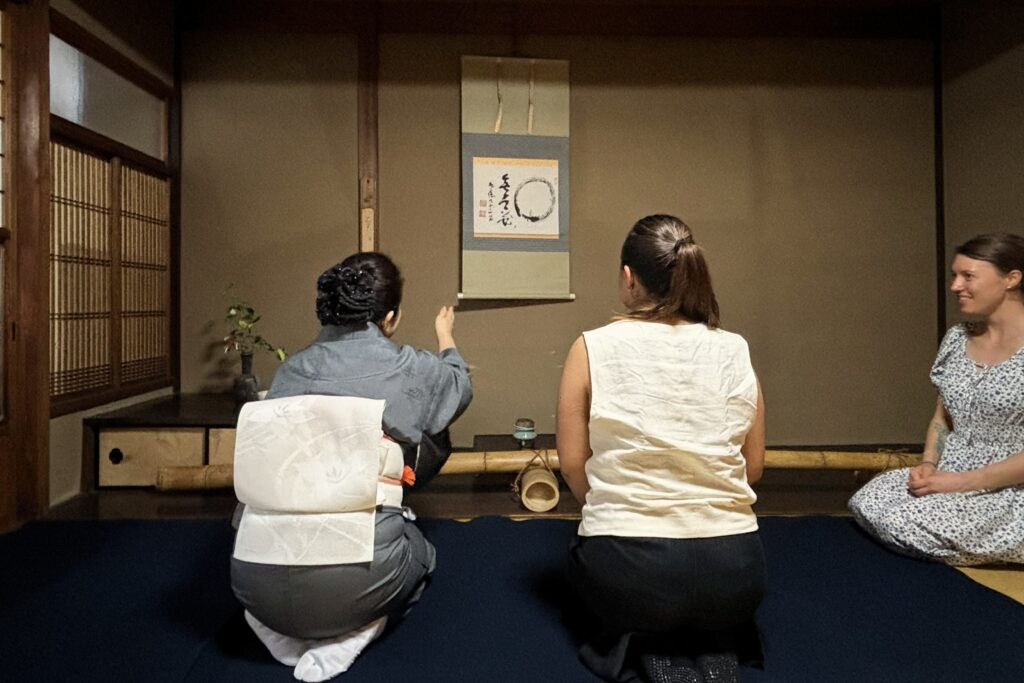
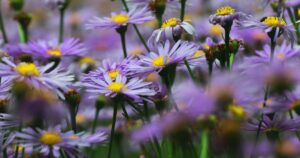
We also discussed chabana, the flowers used in the tea room. Unlike the more elaborate arrangements of ikebana, chabana follows a simpler principle: a single stem, or a small handful, arranged to look as close as possible to how it grows in nature. These explanations gave the guest a way into the thinking behind the practice — not just the steps, but the idea of hospitality (omotenashi) that shapes them.
The conversation also touched on how numbers carry meaning in Japanese culture — something that shows up in everyday situations, from how many items to give as a gift to which numbers are avoided at ceremonial occasions. Comparing this with how numbers are viewed in her own culture gave the guest a way to see Japanese thinking beyond the tea room itself, not just the practice of chado.
The session was conducted with consecutive interpretation. The interpreter is well versed in tea ceremony, which meant specialized terms and concepts came through to the guest smoothly.
Watching and Making Tea
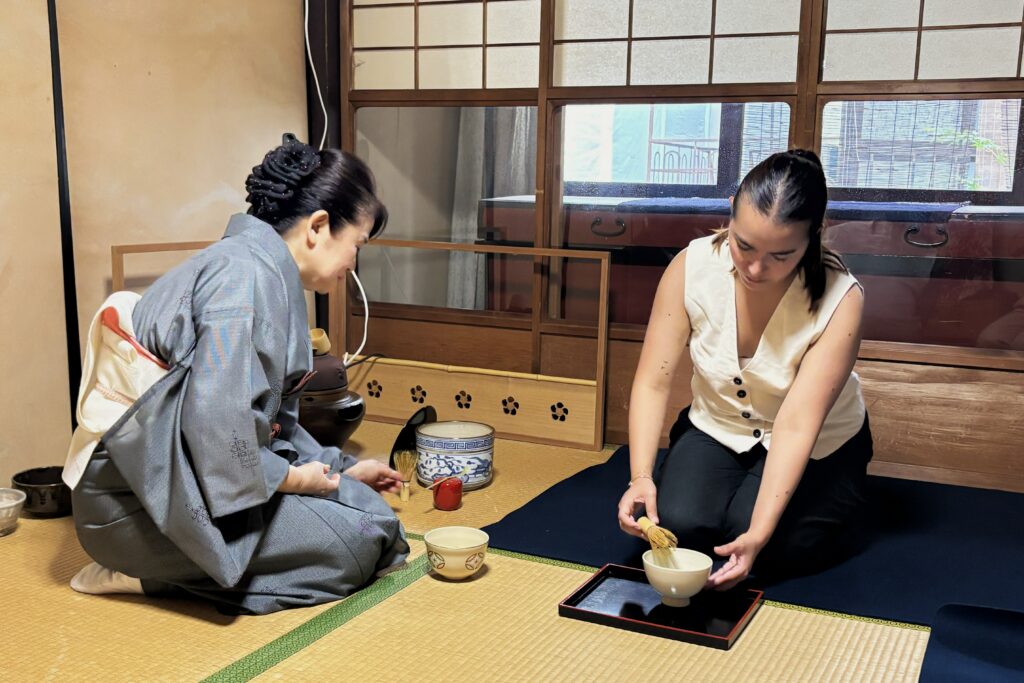
In the second half, the guest observed Mr. Tanaka’s temae (the formal procedure of preparing tea) up close — the handling of the hishaku (bamboo ladle), the motion of the chasen (tea whisk), each movement visible at close range.
She then prepared matcha herself, under Mr. Tanaka’s guidance. Handling the chasen for the first time took some adjustment, but she completed the full sequence of movements by the end of the session.
Guest Feedback
After the experience, the guest shared the following:
“I truly appreciated the care, warmth, and attention to detail throughout the experience. It was my first tea ceremony, and I felt very welcomed and thoughtfully guided. I learned so much, and it definitely made me want to continue discovering more about Japanese tea culture. I would be very happy to contact you again if I return to Kyoto for a more personalized session.”
For a first tea ceremony experience, the session met its purpose well.
Interested in a Private Cultural Experience in Kyoto?
This wasn’t the kind of tea ceremony experience common at tourist sites, where guests simply watch and then drink the matcha that’s been prepared for them. BASE KYOTO offers private sessions for individual guests, families, groups of friends, and MICE needs such as corporate training, incentive travel, and post-conference activities following international conferences — each one built around the group’s interests, purpose, and schedule.
Sessions are conducted with consecutive interpretation, which also makes them well suited to mixed groups of Japanese and international guests.
What guests take away from the experience
- A learning experience built on dialogue, not just observation — guests think through the meaning behind each movement rather than simply watching it performed
- Practical, first-hand knowledge that goes beyond guidebook explanations — the meaning behind the tea utensils, the hanging scroll, the seasonal flowers
- The chance to watch a tea master’s temae up close, then go through the same sequence of movements themselves
- A window into everyday Japanese thinking that extends beyond tea itself — such as how numbers carry meaning in daily life
- A conversational format with consecutive interpretation from an interpreter who is well versed in tea ceremony, so questions get answered clearly and without delay
Beyond tea ceremony, BASE KYOTO offers the same kind of custom sessions in wagashi making, zazen, kyogen, and noh, drawing on close familiarity with Kyoto’s seasonal rituals and annual festivals — for solo travelers, small groups, and larger parties alike.
How to inquire
All arrangements go through direct inquiry. Send us your preferred experience, group size, and travel dates, and we’ll follow up to discuss content, timing, and venue before proposing a program. Once details are confirmed, payment is handled via PayPal.
What a typical day looks like (tea ceremony example)
Sessions take place in a machiya in central Kyoto — the exact location depends on availability, typically a 4-minute walk from Karasuma Oike subway station or within a 7-minute walk of Shijo Karasuma or Gojo. The session moves through an explanation of the tea utensils, hanging scroll, and seasonal flowers as a dialogue, not a one-way demonstration. Consecutive interpretation is provided by an interpreter with a background in tea ceremony, so specialized terms and concepts come through clearly. In the second half, guests watch the tea master’s full procedure up close, then prepare tea themselves.
Whether you’re planning a visit on your own or arranging an experience for a larger group, feel free to reach out.