Going out in the rain is rarely appealing. You need an umbrella, your clothes get wet, and staying indoors feels like the obvious choice.
And yet rainy season has become one of my favorite times of year in Kyoto. I’ve spent close to twenty years photographing this city’s shrines and temples, and somewhere along the way I noticed that rain reveals a side of Kyoto that sunshine simply can’t.
This article covers three temples worth visiting specifically when it’s raining — places where you can sit quietly indoors and take in the garden, the sound of rain, and the deep green of moss and maple leaves at their most vivid.
Why Gardens Look Different in the Rain
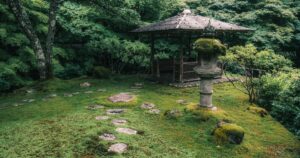
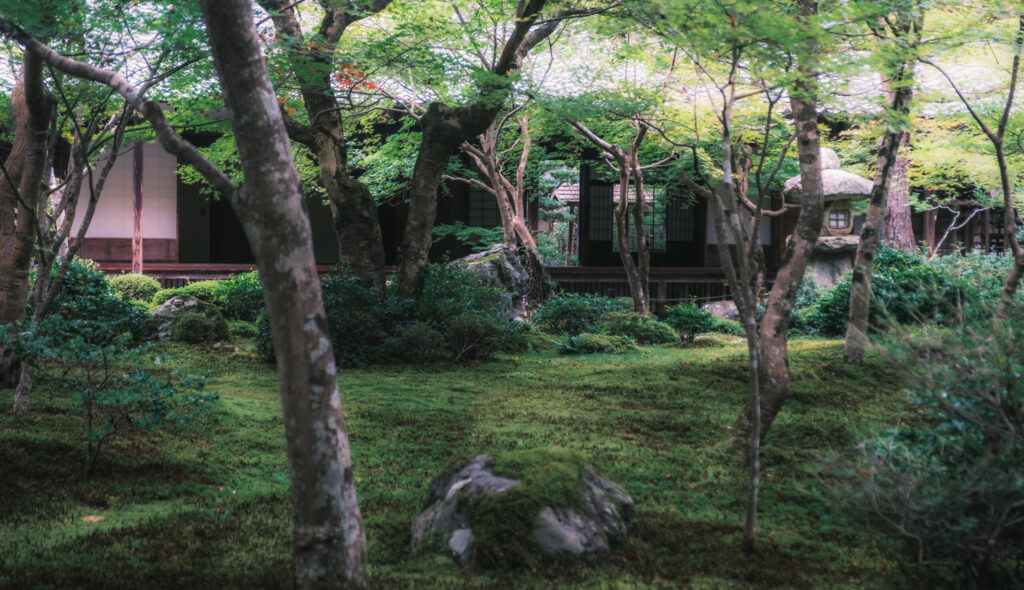
On a clear day, a Japanese garden has strong contrast between light and shadow. Sunlight filters through the leaves and creates patterns on the ground, but the moss itself looks drier and less saturated. It’s still beautiful, but if you want to see moss at its richest, rain — or the period right after rain — is when it actually looks its best.
Moss holds water and turns a deeper green. Young maple leaves (aomomiji), which stay green through the rainy season before turning red in autumn, take on a sharper, almost washed clarity. On top of that, rain creates a particular kind of quiet in a garden. Fewer visitors means you can sit on the veranda and look at the garden alone, without anyone moving through your line of sight.
In other words, the rainy-day garden experience comes down to this: sitting indoors, with nothing to do but listen to the rain and look at deep green. Here are three temples I keep coming back to.
Enko-ji Temple — Moss, Maple, and Bamboo in One View
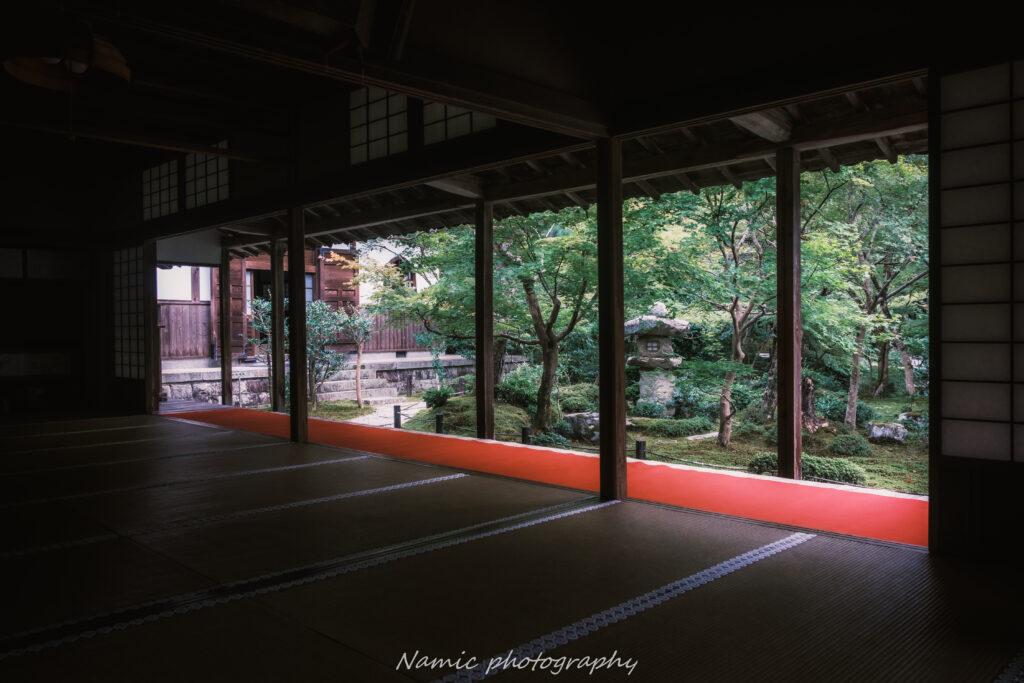
Enko-ji, in the Ichijoji area of Kyoto’s Sakyo Ward, was originally founded as a school by Tokugawa Ieyasu, the founder of the Tokugawa shogunate. The temple grounds open with a small, unusually shaped dry rock garden near the entrance, then lead to its main garden, known as the Jugyu-no-niwa, or “Garden of the Ten Bulls” — a reference to a series of Zen teaching images depicting stages of enlightenment. The garden brings together a carpet of moss, young green maples, and a stand of bamboo at the back, which together capture much of what makes Kyoto’s gardens distinctive.
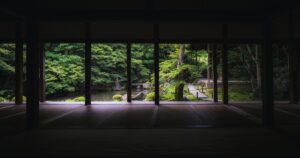
The main thing to see is the framed view from the shoin, the formal study room facing the garden. The wooden pillars and lintel act like a picture frame, and just by shifting where you sit, you can take in different layers of green — moss in the foreground, maple in the middle, bamboo behind. In the rain, the moss color deepens noticeably, and you can hear individual drops falling from the leaf tips.
One detail most visitors miss is a suikinkutsu near the entrance — a buried earthenware jar that catches dripping water and turns the sound into a resonant chime, audible through a bamboo listening tube placed at ground level. It was a device Edo-period garden designers used to add sound to a garden’s design. Hearing that clear, bell-like tone layered over the sound of rain is something you simply don’t get on a sunny day.
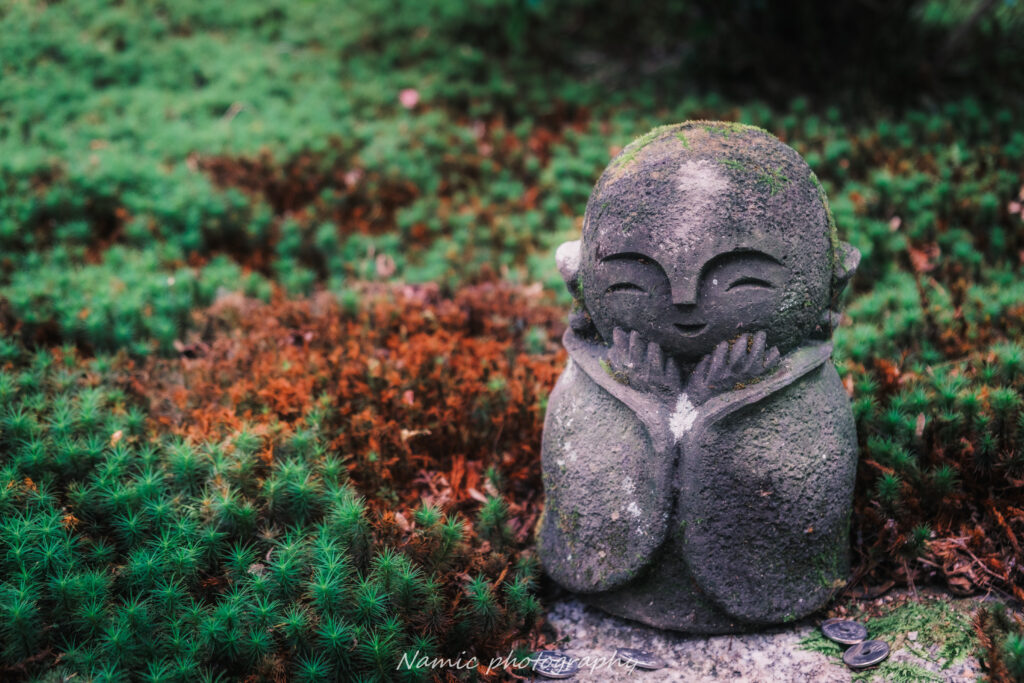
There’s also a small stone jizo statue tucked somewhere in the garden — worth looking for while you’re there.
Hosen-in Temple — A Garden Viewed From Two Directions
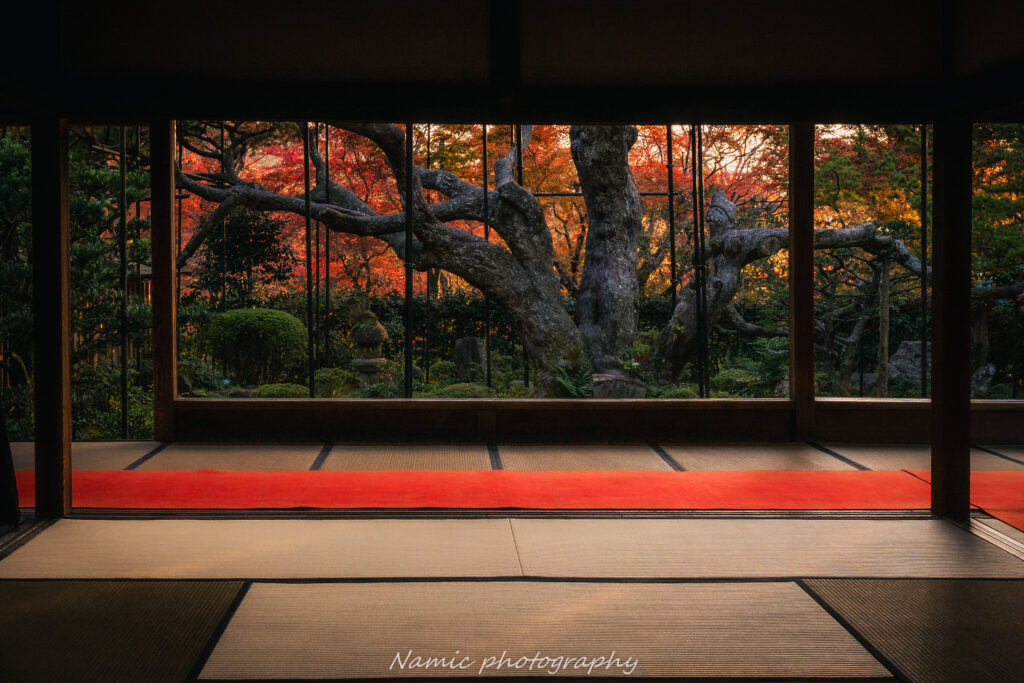
Ohara, a small valley settlement north of central Kyoto, is sometimes called Kyoto’s “inner parlor” — a quieter, slower-paced area away from the city center, where Sanzen-in and a handful of other temples are scattered among rice fields and forest. It’s noticeably calmer than central Kyoto, and the air feels cooler and cleaner.
Within Ohara, Hosen-in stands out for the quality of its framed garden view. The centerpiece is a five-needle pine tree said to be roughly 700 years old, its branches trained over centuries to fit precisely within the frame created by the room’s wooden pillars.
What sets Hosen-in apart is that you can view the same garden from two different angles within the temple. Most temples offer a single fixed viewpoint from one room; here, shifting your seat changes what the garden shows you. It’s a layout I haven’t seen replicated elsewhere in Kyoto.
I’ll be honest: once you sit down at Hosen-in, it’s hard to get back up. You’re served tea and a small sweet while you look at the garden, and time tends to disappear. This is especially true in the rain, when visitor numbers drop and the room stays quiet. There’s a suikinkutsu here too, with a different tone from the one at Enko-ji.
Because of its location in Ohara, Hosen-in doesn’t fit neatly into a typical Kyoto sightseeing route built around the city center. That’s exactly why it’s worth setting aside extra time to get there properly.
Sanzen-in, known for its moss garden, is a short walk from Hosen-in, and many visitors combine the two. One difference worth noting: Sanzen-in’s garden is a strolling-style garden, meaning you walk through it rather than view it from a seated room, so proper rain gear is worth bringing if you plan to visit both.
Renge-ji Temple — A Small Temple in Yase
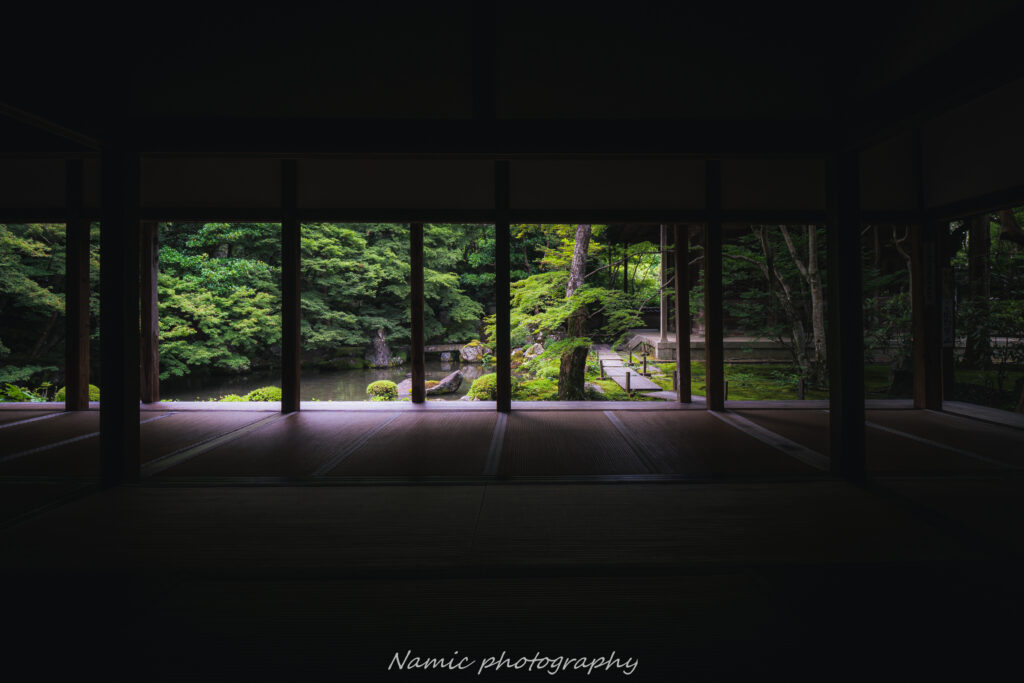
Renge-ji, in the Yase area, is considerably smaller than the previous two temples. That smaller scale works in its favor. Sitting on the tatami and looking out at the garden, there’s simply less to take in, which makes it easier to focus on the rain and the green in front of you.
The temple has its own framed garden view, with the shoin’s pillars and paper screens acting as a frame for a pond garden attributed to the early Edo-period scholar and garden designer Ishikawa Jozan. The garden includes a turtle-and-crane island arrangement, a traditional motif in Japanese garden design, and changes character with the seasons. Despite the smaller footprint, the level of detail in the design is dense — sitting with it for a while makes that clear.
The main hall also has a dragon painted on the ceiling, rendered with a forceful, confident brushwork that creates a different kind of intensity than the quiet of the garden outside.
Renge-ji doesn’t have the same visual drama as Enko-ji or Hosen-in, but for visitors who want a quieter, slower stop, it may be the better fit. It draws fewer visitors, so you can stay at your own pace without feeling rushed.
What These Three Temples Have in Common
All three share one structural feature: a room built specifically for viewing the garden from a seated position. This isn’t incidental. Shoin-style garden viewing — looking at a garden through the frame of pillars and lintels from inside a formal room — developed around the idea of treating the garden like a painting held within a frame. The architecture itself was designed to complete the composition.
On a sunny day, that “painting” can look flatter, since direct sunlight reduces the sense of depth. In the rain, humidity intensifies the range of greens and brings out more dimension. I’ve come to think that the version of these gardens the original designers actually had in mind is closer to what you see on a rainy day, not a clear one.
Practical Information for a Rainy-Day Visit
A few things are worth knowing before you go.
- A suikinkutsu’s sound changes mainly with water volume, not wind. Heavier or lighter rain — and the amount of water flowing into the buried jar — changes the tone, so it’s worth sitting for a few minutes to notice the variation.
- Moss is protected at all three temples, and walking is generally restricted to the designated paths. Watch your footing if you’re walking through any part of the garden.
- Both Ohara (Hosen-in) and Yase (Renge-ji) are about 30–40 minutes from central Kyoto by bus, so it’s realistic to plan half a day around either one.
- If you’re combining Hosen-in with nearby Sanzen-in, bring rain gear — Sanzen-in’s garden is meant to be walked through, not viewed from a seated room.
It’s understandable to want to rearrange your plans the moment the forecast shows rain. But if you actually want to see Kyoto’s moss and maple leaves at their best, and hear what these gardens sound like in the rain, going out anyway is the better call. That’s the conclusion I’ve come to after spending close to two decades walking through Kyoto’s temples and shrines in every kind of weather.
If You Want to Go Deeper Into Kyoto’s Culture
Each of these three temples can be visited independently. But sitting in front of one of these gardens with a cup of tea, there’s a lot more to it than the view — why the room was designed this way, how the moss is maintained, how a suikinkutsu actually works. Understanding that background changes how the same scene reads.
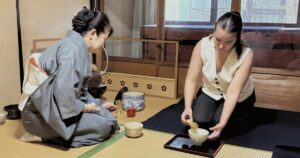
Kyoto’s gardens, temples, and seasonal rituals all carry specific histories and reasons behind their design. If you’re planning a trip to Kyoto, there’s real value in going beyond sightseeing and trying some of these traditions directly — tea ceremony, wagashi (Japanese sweet) making, zazen meditation — guided by someone who can explain the reasoning behind them as you go.
If that sounds like something you’d like to build into your trip, feel free to get in touch.