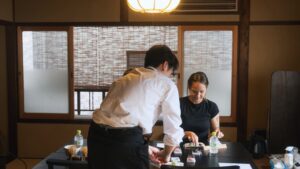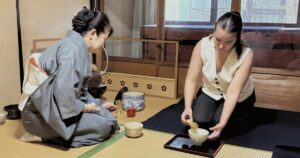
A private session with a wagashi artisan and a certified tea ceremony instructor, held in a traditional Kyoto townhouse.
What Is Wagashi?
Wagashi (和菓子) are traditional Japanese sweets, typically made from plant-based ingredients such as bean paste, rice flour, and sugar. They have been part of Japanese culture for centuries, often served alongside tea and shaped to reflect the seasons.
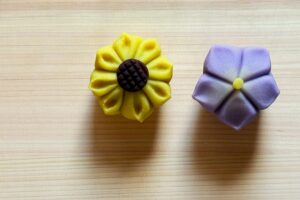
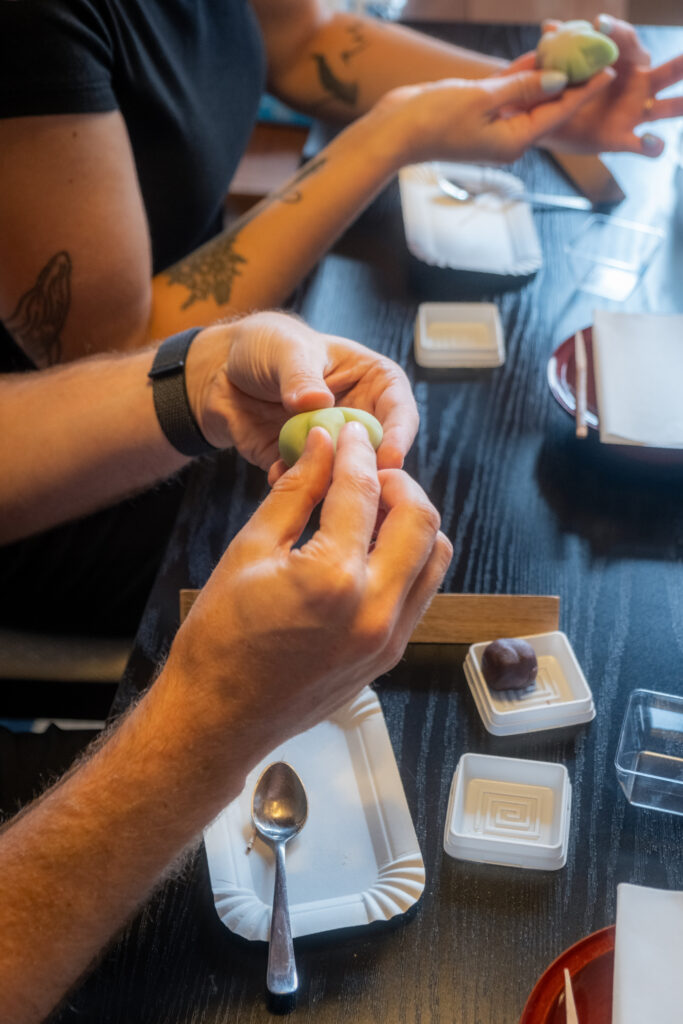
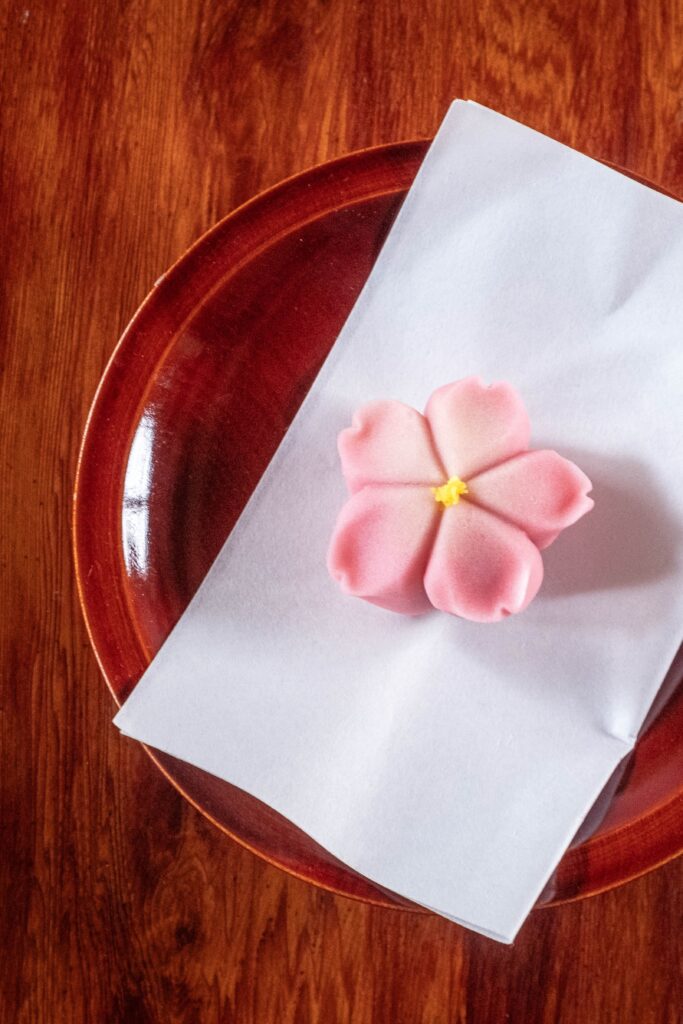
In this session, guests made nerikiri — a refined variety of wagashi crafted from white bean paste (shiro-an). Nerikiri is known for its smooth, pliable texture and is shaped by hand into seasonal motifs. Because the ingredients are entirely plant-based, nerikiri is suitable for vegetarians and vegans.
The Setting
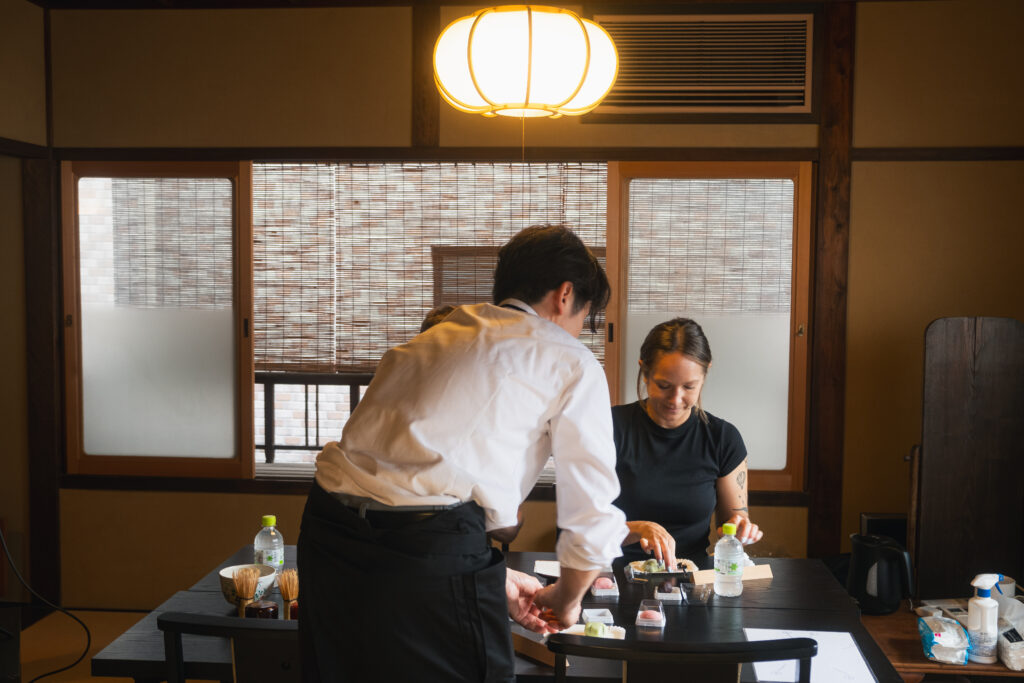
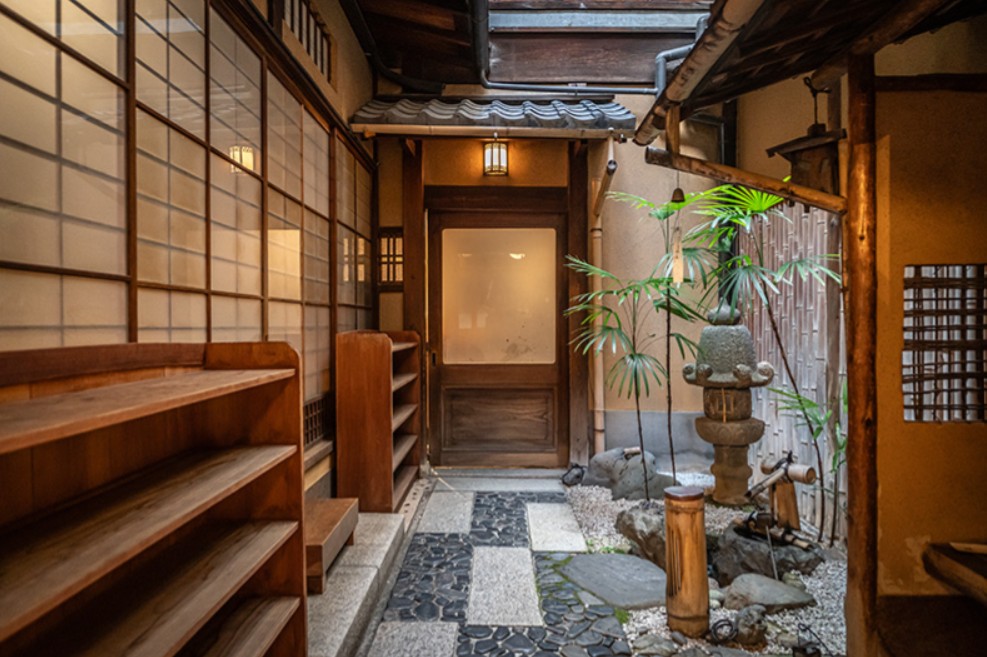
The session took place in a private tatami room inside a machiya — a traditional Kyoto townhouse over 100 years old. With the space reserved exclusively for our guests, the session moved at its own unhurried pace.
The Instructors
Two specialists led the session: a professional wagashi artisan and a certified tea ceremony instructor trained in the Urasenke tradition.
How the Session Unfolded
This time, we welcomed a couple visiting from the US — their first trip to Japan.
Guided by the artisan, guests shaped two varieties of nerikiri by hand. Therosewas chosen with Mother’s Day just around the corner — a small seasonal nod that added a personal touch to the session. The green maple leafreflects the fresh foliage of Kyoto’s early summer, when young maple leaves are at their most vivid. Both motifs are a good example of how nerikiri captures a moment in the year.
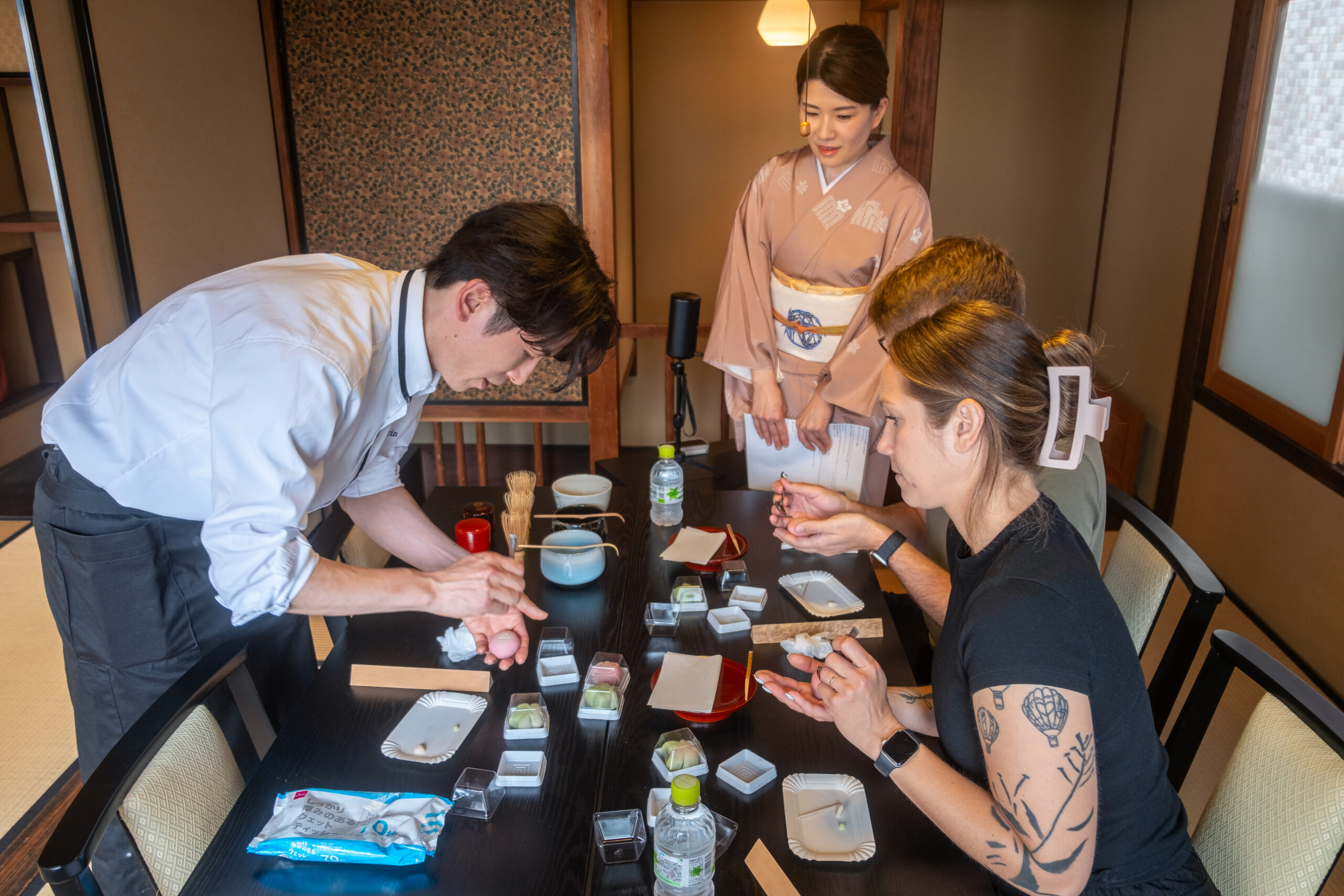
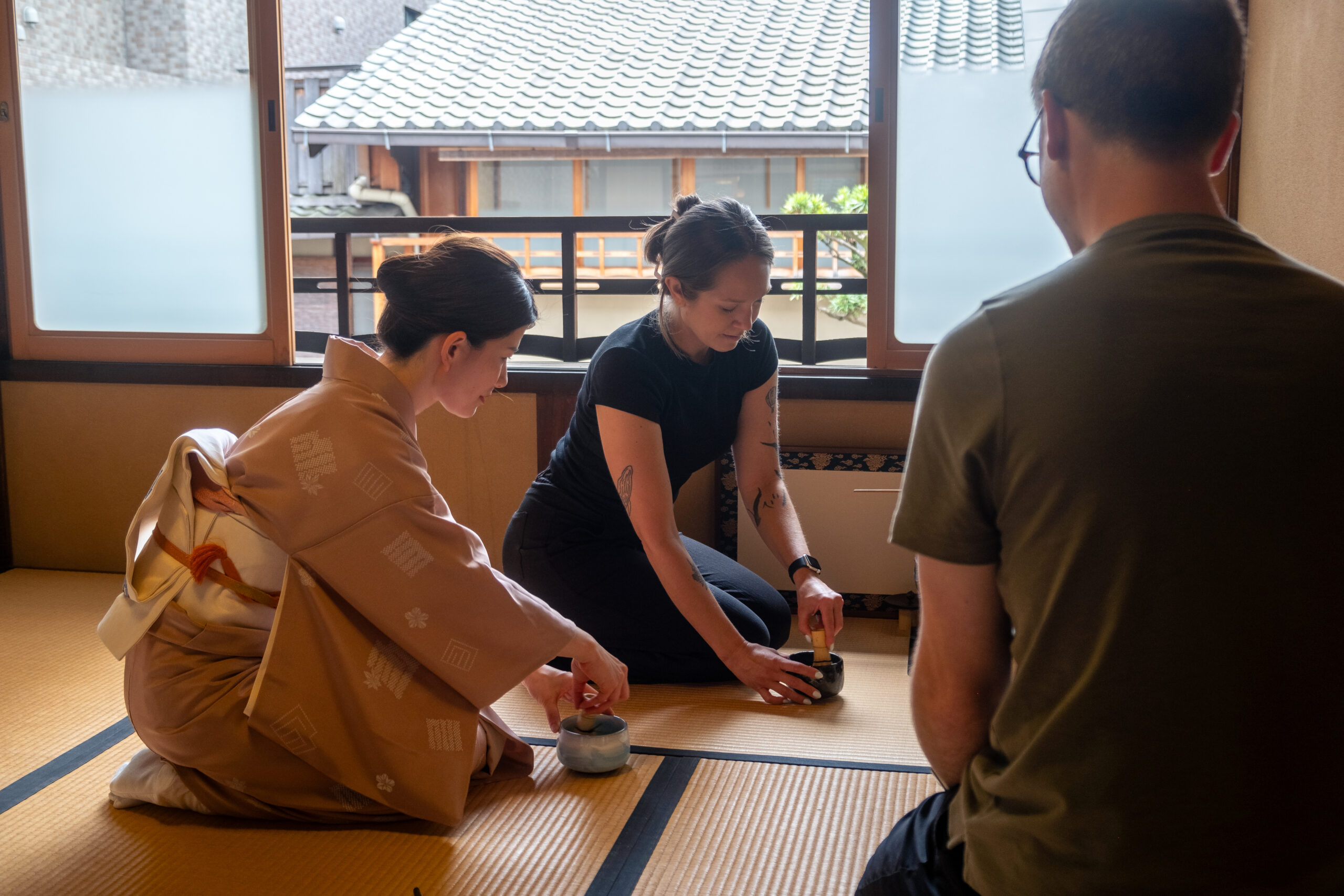
The tea ceremony instructor introduced the philosophy of chado and guided guests through the preparation of matcha — learning how to whisk, how to hold the bowl, and how to receive tea in the traditional manner.
Guests savoured the matcha they had prepared alongside the wagashi they made — tasting the result of their own work.
As first-time visitors to Japan, our guests shared things that had surprised or puzzled them during their trip, which led naturally into a conversation about Japanese customs and culture. One topic that caught their attention was the Japanese preference for odd numbers — a concept that runs through many aspects of daily life, from the way sweets are arranged in tea ceremony to the etiquette around wedding gift amounts. The reasoning behind it — and why even numbers are often avoided — sparked a lot of curiosity and made for a lively exchange.
The session closed with time to photograph the space and sweets, and a few group shots to mark the occasion.
What Makes It Different
Every session at BASE KYOTO is fully private — the space, the instructors, and the time are yours alone. There are no other groups, no fixed schedule to keep up with, and no need to rush.
Because each session is built around the guests, everything can be tailored in advance. The wagashi motifs, the content of the session, and the duration can all be adjusted to suit your interests, pace, or occasion. Planning something special — an anniversary, a birthday, or a meaningful gift for someone? Let us know beforehand and we’ll shape the session around it.
The private setting also makes for a different kind of conversation. Questions get answered properly, techniques can be revisited, and there’s space for the kind of exchange that simply doesn’t happen in a group setting.
Interested in a private wagashi & tea ceremony experience in Kyoto?