You’ve done Fushimi Inari. You’ve walked Philosopher’s Path. You’ve queued for matcha everything.
And now you’re wondering: is there something in Kyoto that feels less like a highlight reel and more like… real life?
Yes. And it happens every month on the 25th.
We runs a local-guided flea market tour connecting foreign visitors with English-learning Kyoto residents at Tenjin-san, Kobo-ichi, and Chion-ji. From ¥2,000 per person.
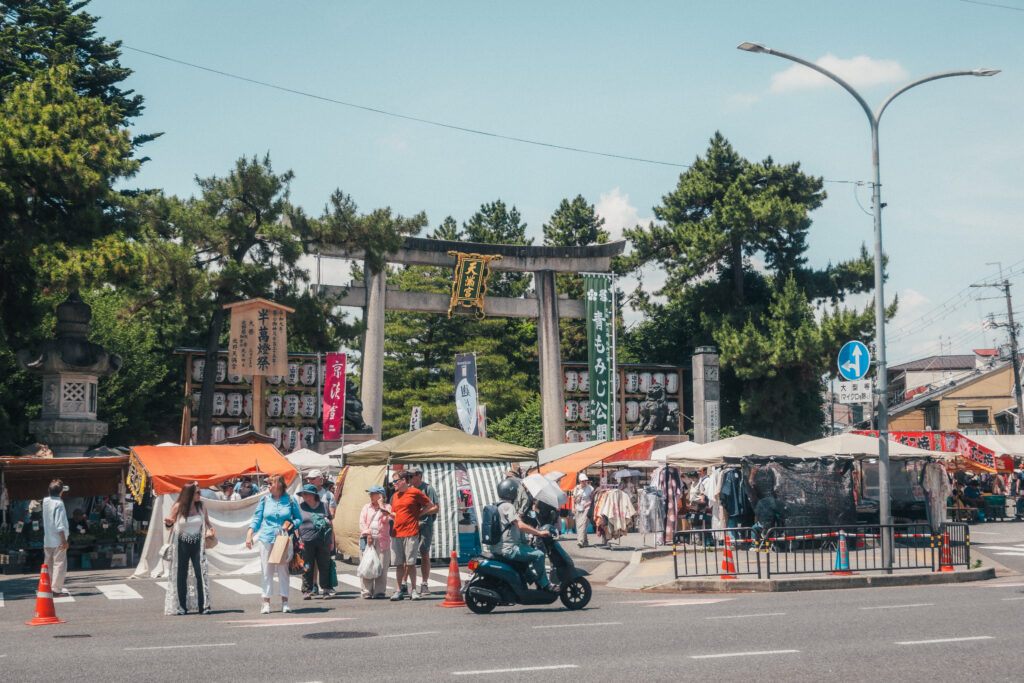
Tenjin-san — the flea market at Kitano Tenmangu shrine — is where Kyoto locals actually go. Antique hunters with torches in the pre-dawn dark. Grandmothers picking through stacks of vintage obi belts. University students eyeing old vinyl records. And in the middle of it all, the occasional wide-eyed visitor who stumbled in and never wants to leave.
This is your complete guide to one of the most atmospheric, underrated, and genuinely fun things to do in Kyoto.
What Is Tenjin-san? (And Why Every 25th?)
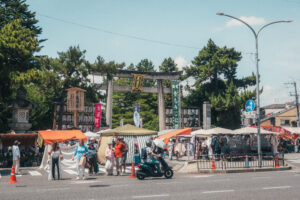
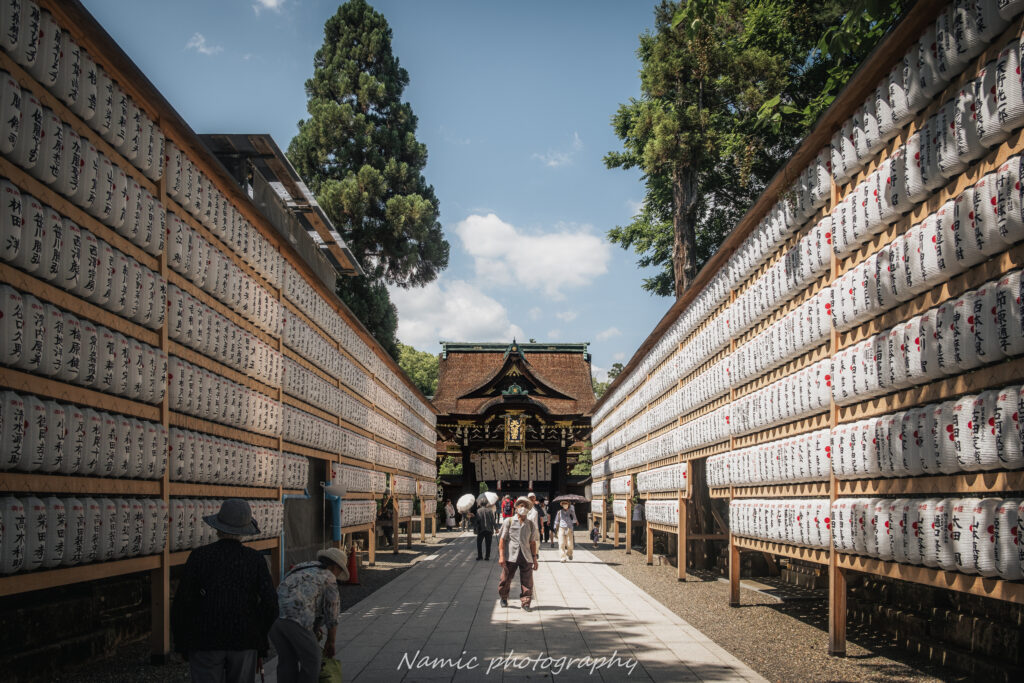
This flea market, called “Tenjin-san” by local residents, is famous in Kyoto for its amazing bargains and rare finds, and is popular with everyone — locals and tourists alike.
Kitano Tenmangu is one of the most important shrines dedicated to Sugawara Michizane, a scholar and politician who was unfairly exiled by his political rivals. A number of disasters were attributed to Michizane’s vengeful spirit after his death, and these shrines were built to appease him. Sugawara Michizane is associated with Tenjin, the kami of education.
The market is held on the 25th specifically because that date marks both Michizane’s birthday (June 25th) and his death anniversary (February 25th). Over the centuries, this monthly memorial day — called ennichi, a day of karmic connection to the deity — drew pilgrims, then vendors, then the whole neighbourhood. What started as a spiritual observance became Kyoto’s most beloved market.
This market is one of Kyoto’s two great ennichi markets, alongside the Kobo-ichi at Toji Temple — known for its antiques, vintage goods, and secondhand clothing.
Quick Facts
| When | 25th of every month (rain or shine) |
| Hours | From 6:00 am until sunset |
| Where | Kitano Tenmangu Shrine, Kamigyo-ku, Kyoto |
| Admission | Free |
| Number of stalls | Up to 1,000 |
| Getting there | City Bus 50 or 101 from Kyoto Station → Kitano Tenmangu-mae stop (30 min, ¥230) |
| Best time to arrive | 7:00–9:00 am for best finds; after 2:30 pm for discounts |
Mark your calendar for these special dates:
- January 25 — Hatsu Tenjin (初天神 / First Tenjin): The biggest market of the year. Around a thousand stalls fill the grounds, with special displays of ceremonial calligraphy and the shrine’s treasures put on public view.
- December 25 — Shimai Tenjin (終い天神 / Last Tenjin): The year’s final market draws extra-large crowds as people stock up before New Year.
What Can You Actually Find Here?
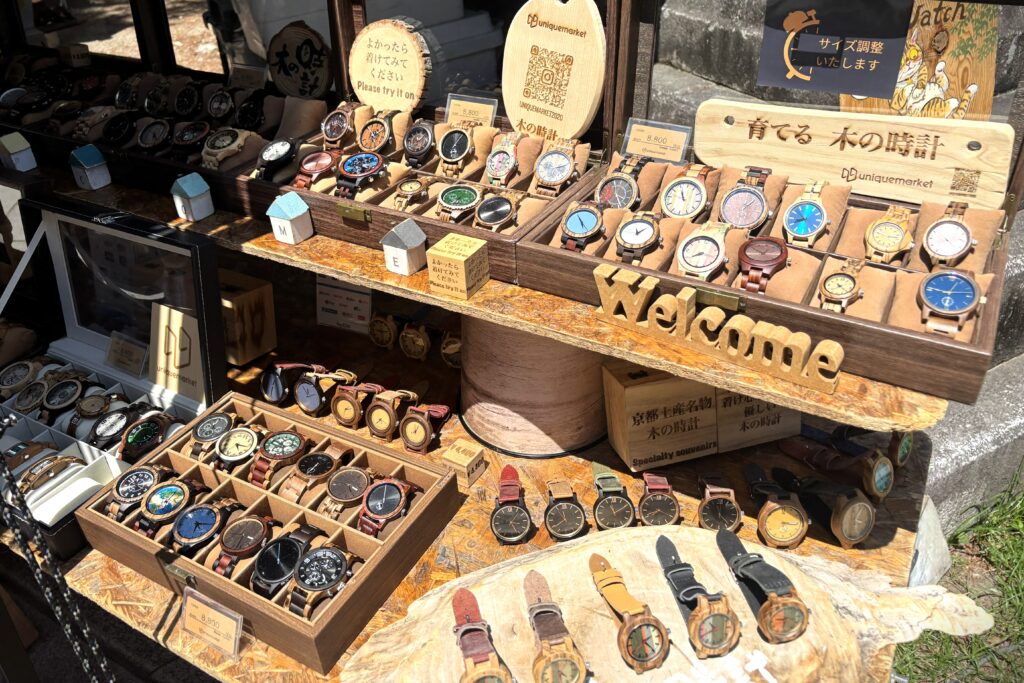
This is not a curated craft fair. This is a proper, sprawling, beautiful mess of stuff — and that’s exactly the point. No two visits are quite the same, but here’s a taste of what to expect based on what we actually found on our last visit.
Vintage Kimono & Textiles
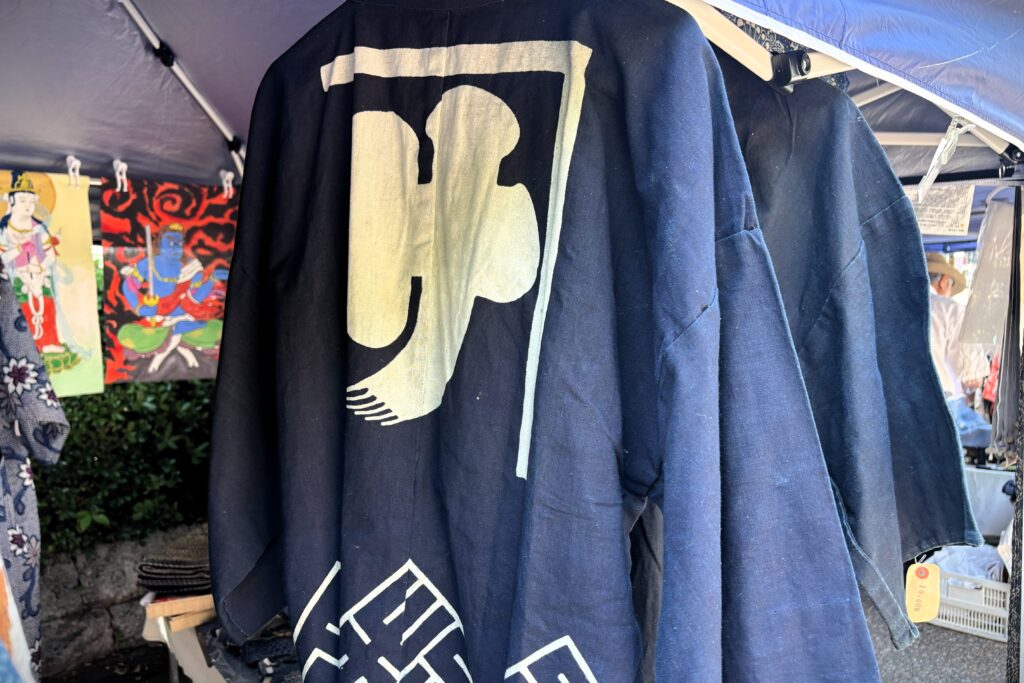
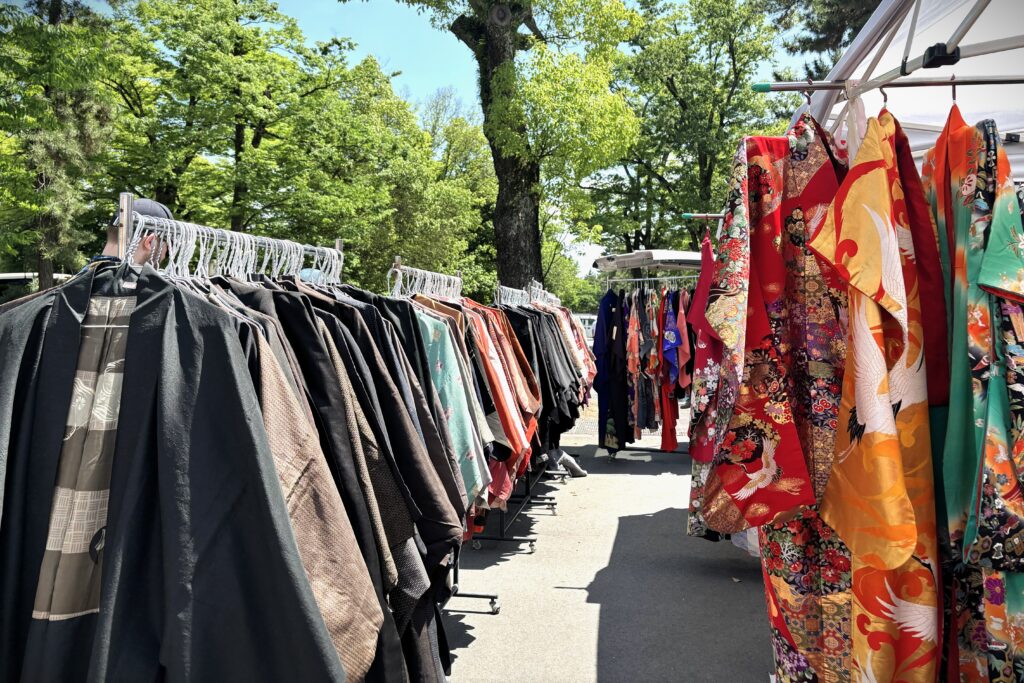
The undisputed star of Tenjin-san. Used kimonos, obi sashes, and haori jackets spill off tables and out of boxes in every direction. You can find everything from pristine pieces to “needs-some-love” bargains, ranging from ¥500 to several thousand yen. Antique fabrics with intricate hand-dyed patterns are worth seeking out even if you don’t wear kimono — they make stunning wall hangings or table runners.
Antiques & Ceramics
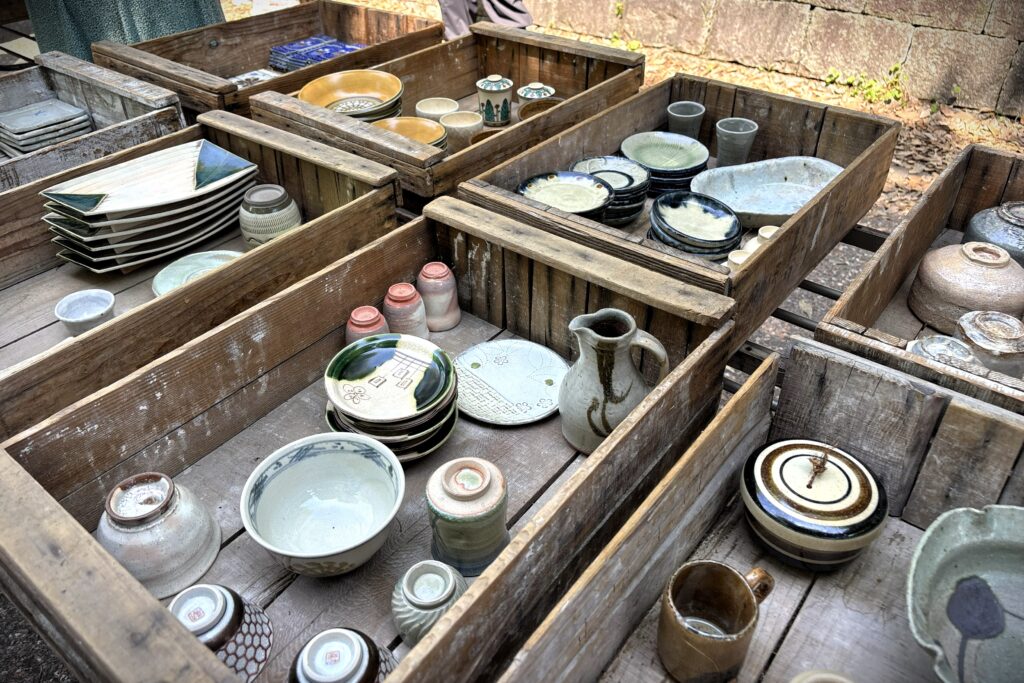
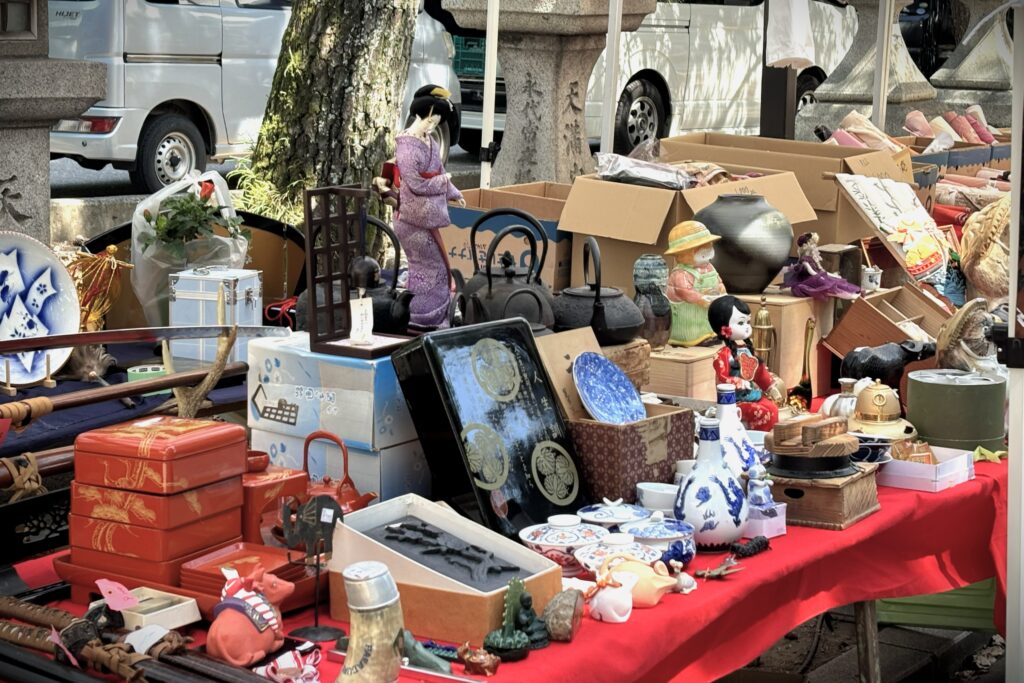
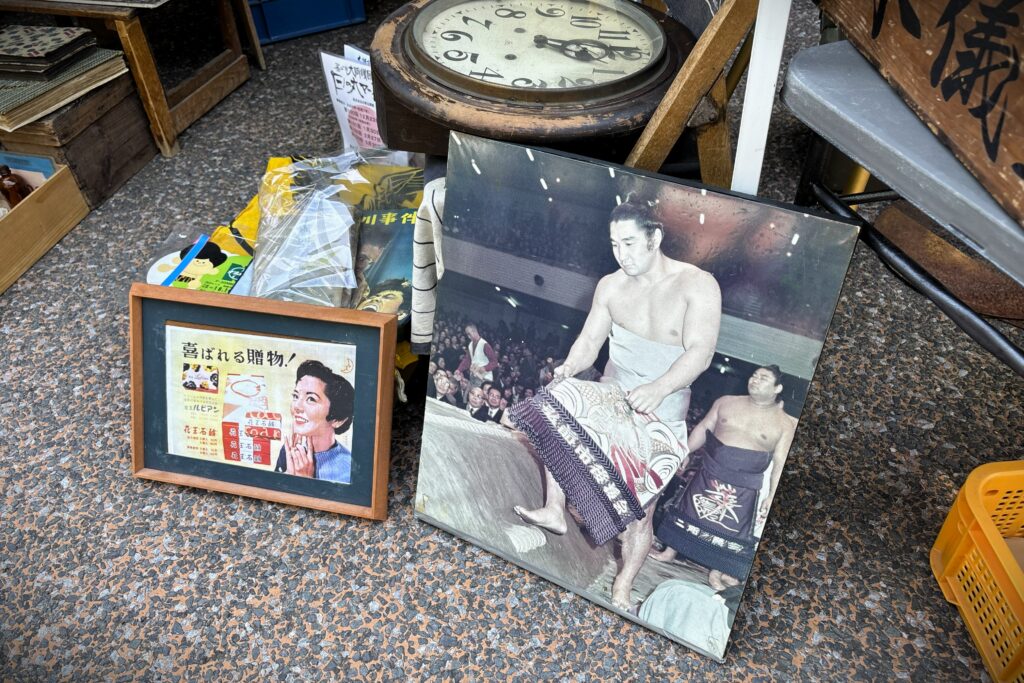
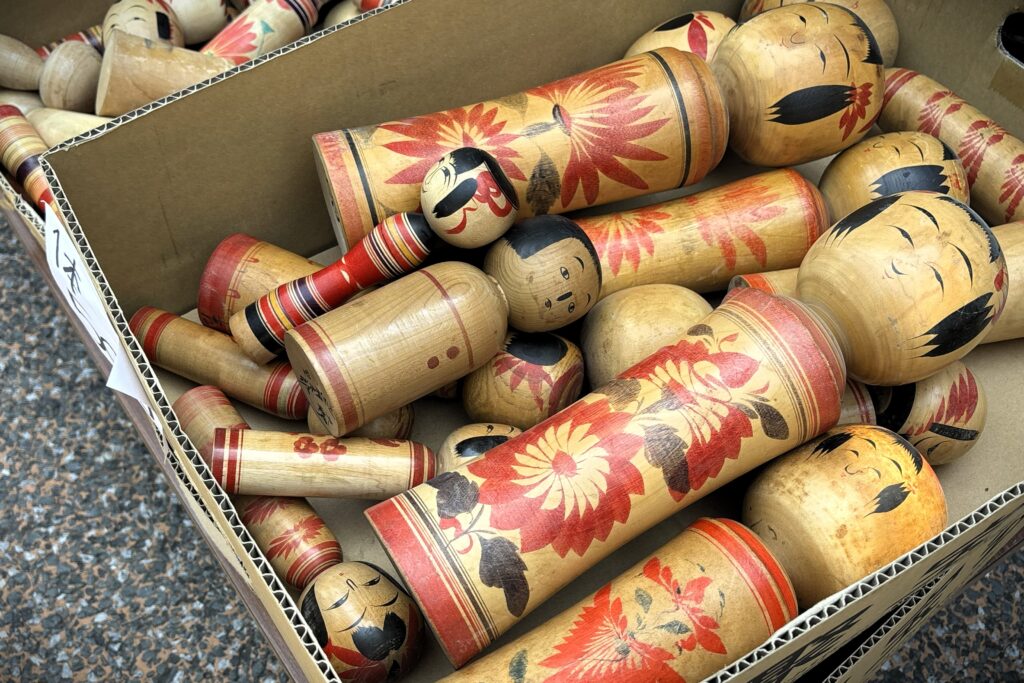
Ceramics, lacquerware, iron teapots (tetsubin), hanging scrolls, Buddhist altar fittings, samurai-era metalwork, Showa-period toys and ornaments — the kind of things that fill an entire afternoon of “wait, what is this?” The serious collectors are here before 8 am. You should be too.
Knives & Kitchen Woodcraft
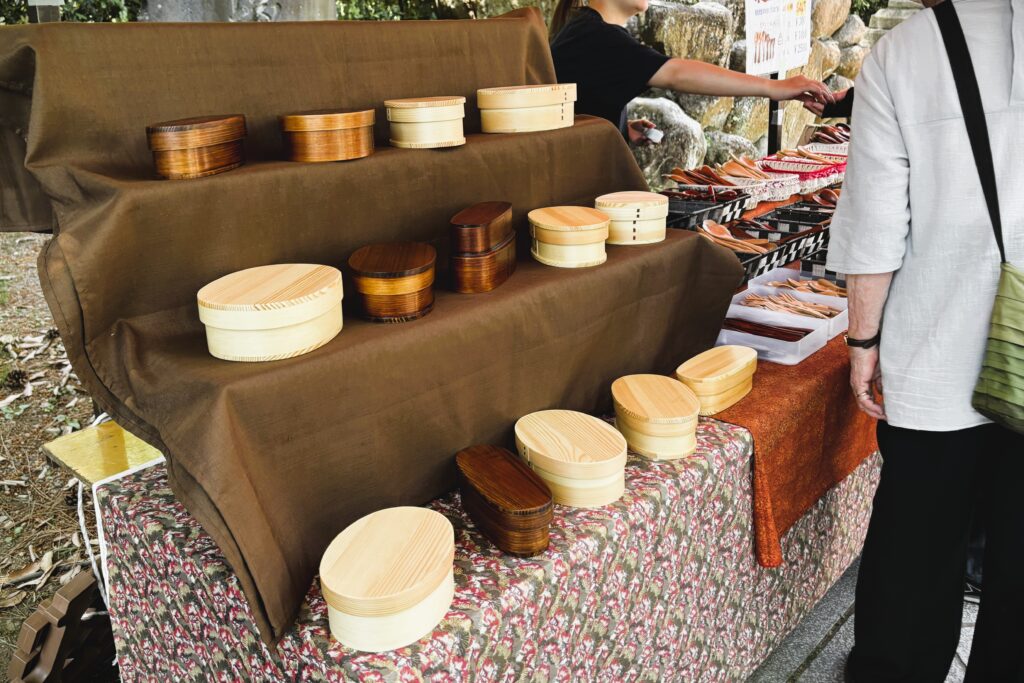
One of the things that surprises first-time visitors: Tenjin-san has excellent kitchen finds. Japanese kitchen knives (hocho) from established makers sit alongside vintage blades at prices well below retail — a hand-sharpened chef’s knife makes one of the most practical souvenirs you can bring home from Japan. Look out also for beautiful handcrafted woodware: wappa bentō boxes (the elegant cedar lunch boxes you’ve probably seen in photos and always wanted), wooden spoons, and other kitchen pieces made by local craftspeople. Functional, lightweight, and genuinely useful — the kind of thing you’ll actually use every day back home.
Japanese Food Products
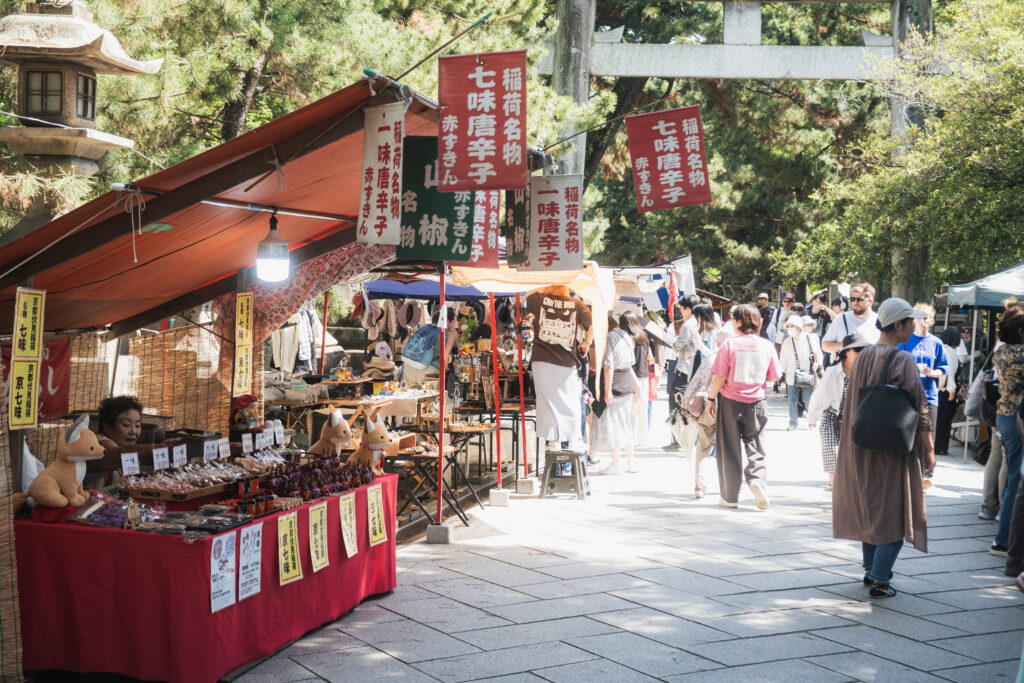
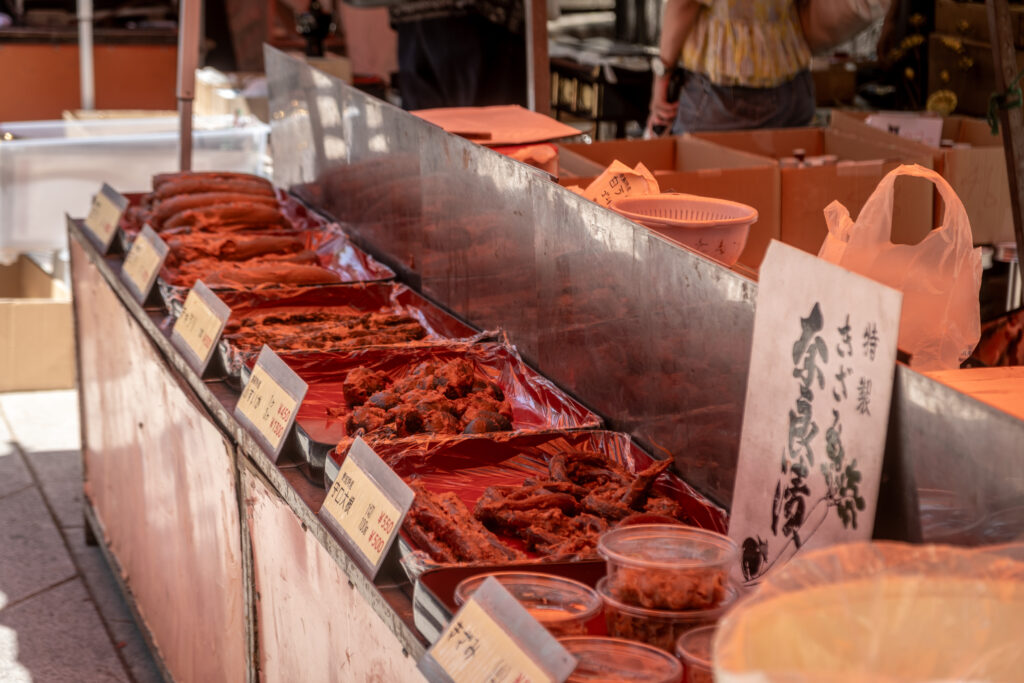
Local vendors sell specialty food products that are hard to find in ordinary shops: hand-blended shichimi togarashi (seven-spice chilli), artisan honey, loose-leaf teas, and an array of Kyoto pickles (tsukemono) — salty, tangy, and perfect for snacking on the spot or gifting. Stock up here rather than at the airport.
Art, Books & Curiosities
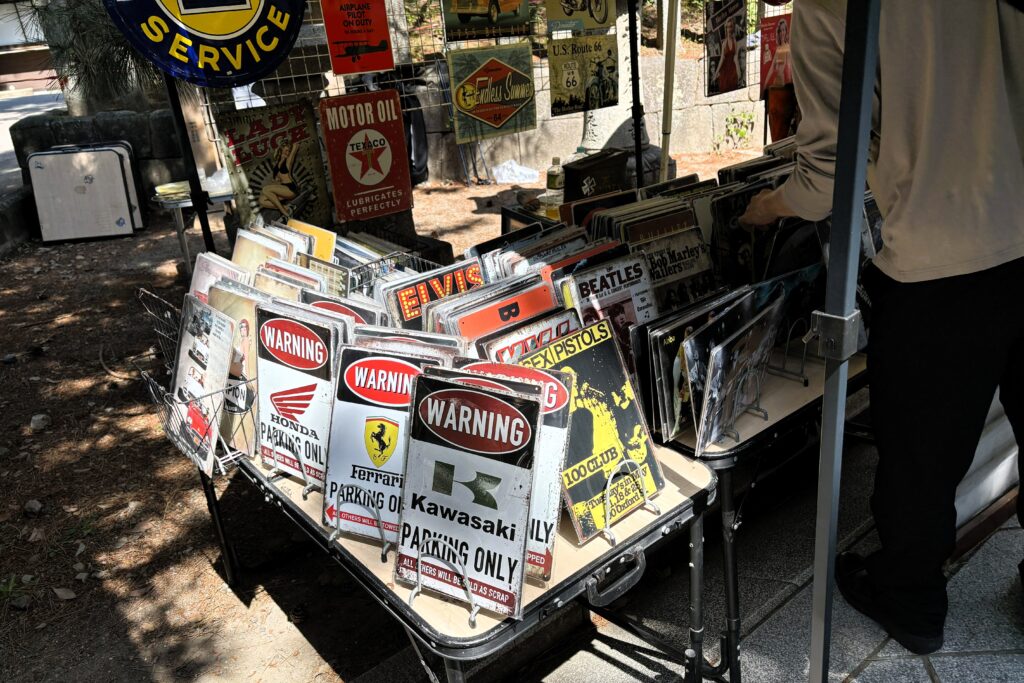
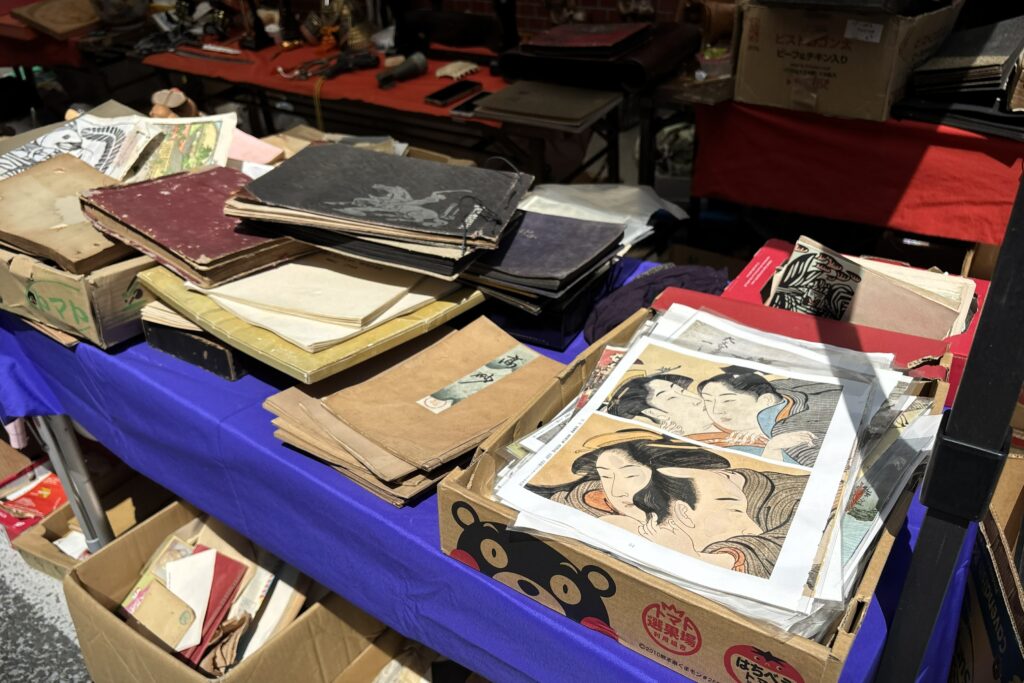
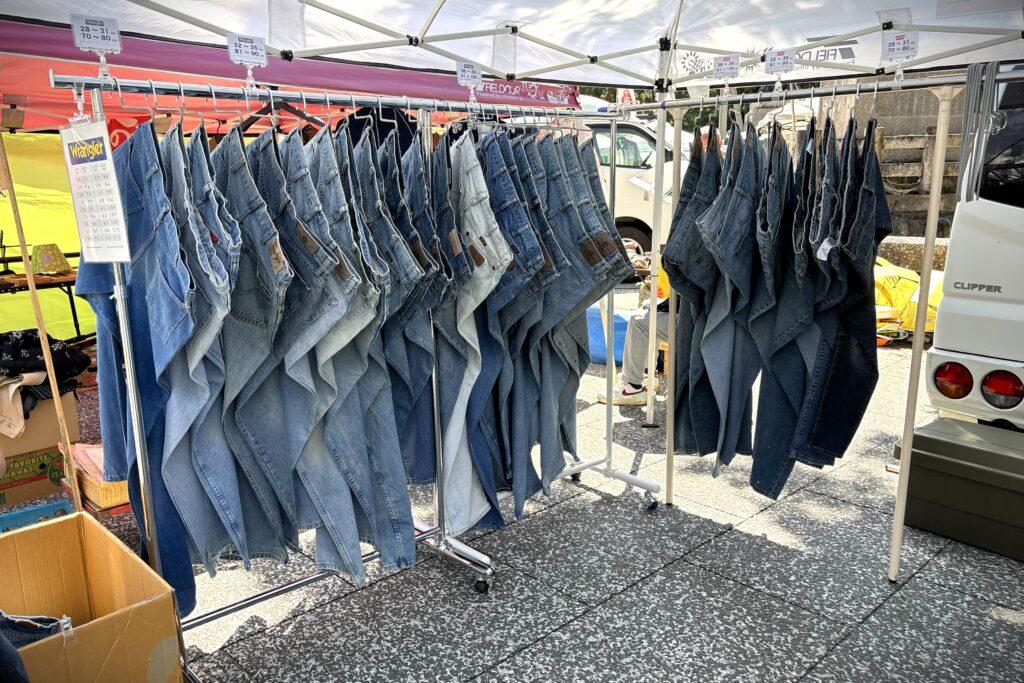
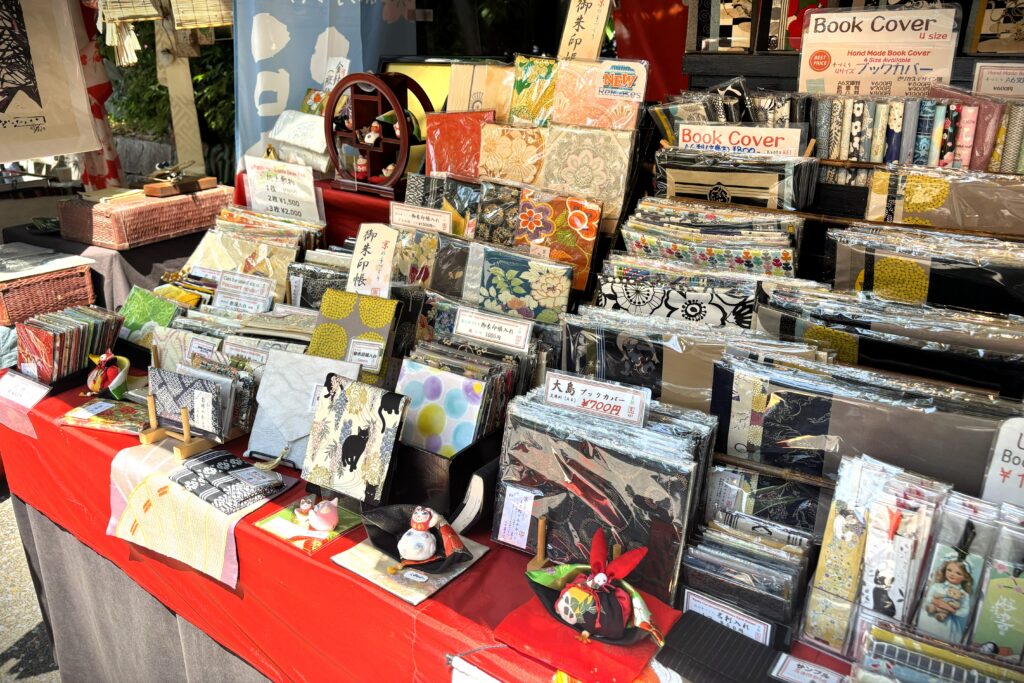
Old woodblock prints, vintage postcards, Showa-era magazines, hand-painted fans, Buddhist objects, small antique furniture, hand-painted signs. And then the genuinely unexpected: vintage denim, Japanese-pattern book covers (wagara designs in indigo, florals, and geometric patterns — perfect for protecting a notebook or paperback). The curiosity factor alone is worth the trip.
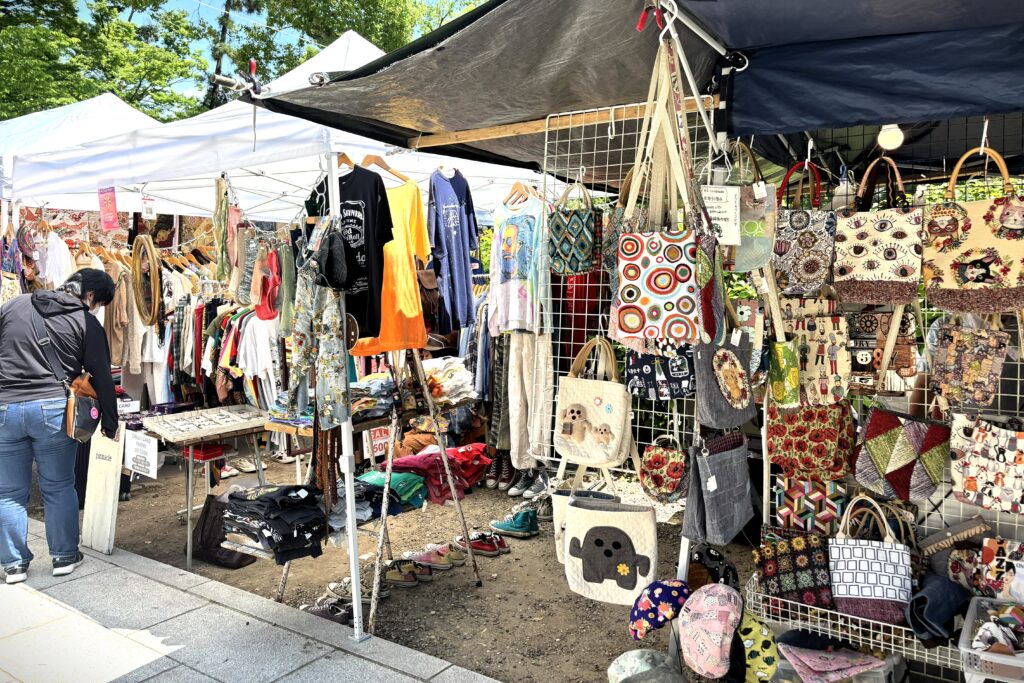
Handmade Bags & Pouches
A highlight for anyone who likes independent makers: Tenjin-san has a generous selection of handmade bags, pouches, and accessories crafted by local artisans. Wagara (traditional Japanese pattern) fabrics stitched into tote bags, zippered pouches, coin purses, and drawstring bags — each one slightly different, none of them mass-produced. Great gifts, and far more interesting than anything you’ll find in a souvenir shop.
The Local Side of the Market (Worth Knowing About)
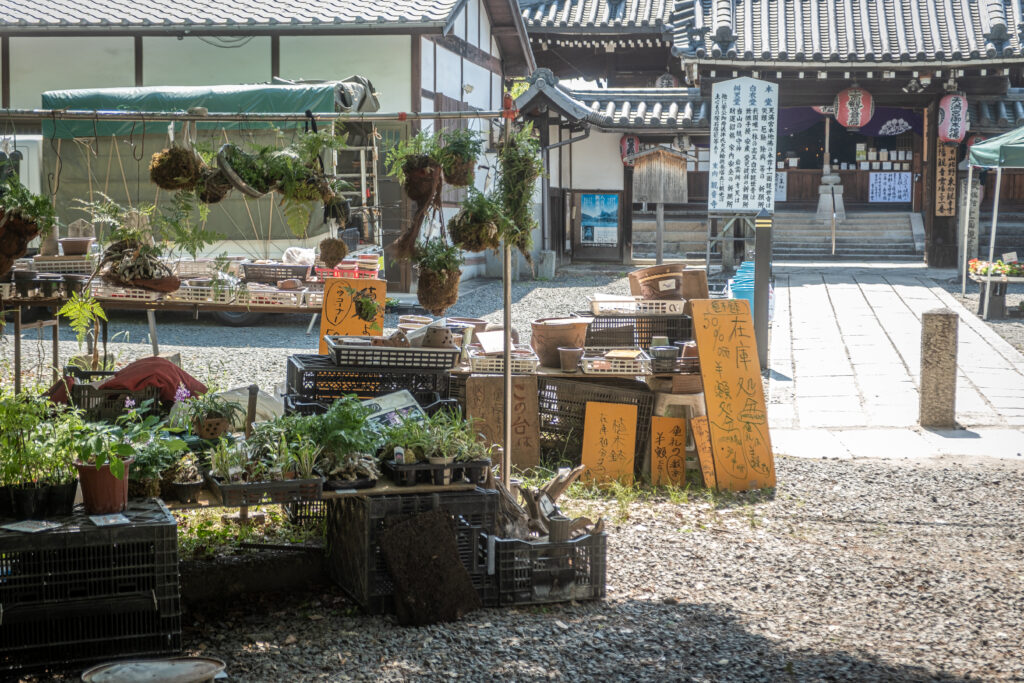
Not everything at Tenjin-san is aimed at visitors — and that’s part of what makes it feel real. Vendors sell fresh vegetables straight from local farms, and plant stalls offer everything from bonsai to seasonal flowers. You probably won’t be buying a leek or a pot of hydrangeas to take home, but wandering past these stalls is a reminder that this is a living neighbourhood market, not a set-piece for tourists.
Street Food — Full Festival Mode
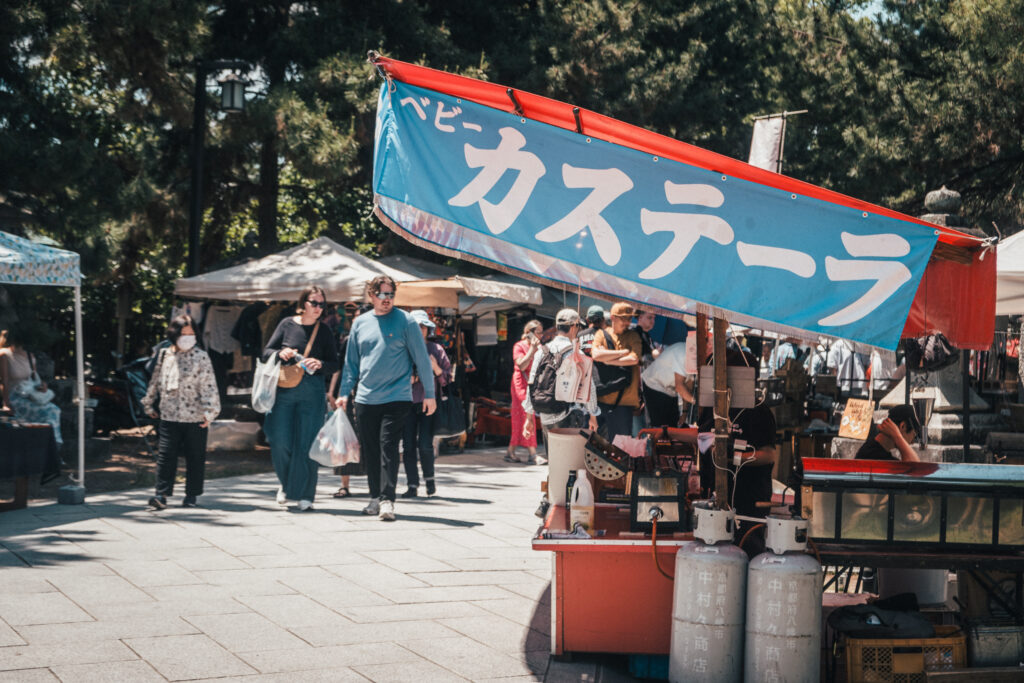
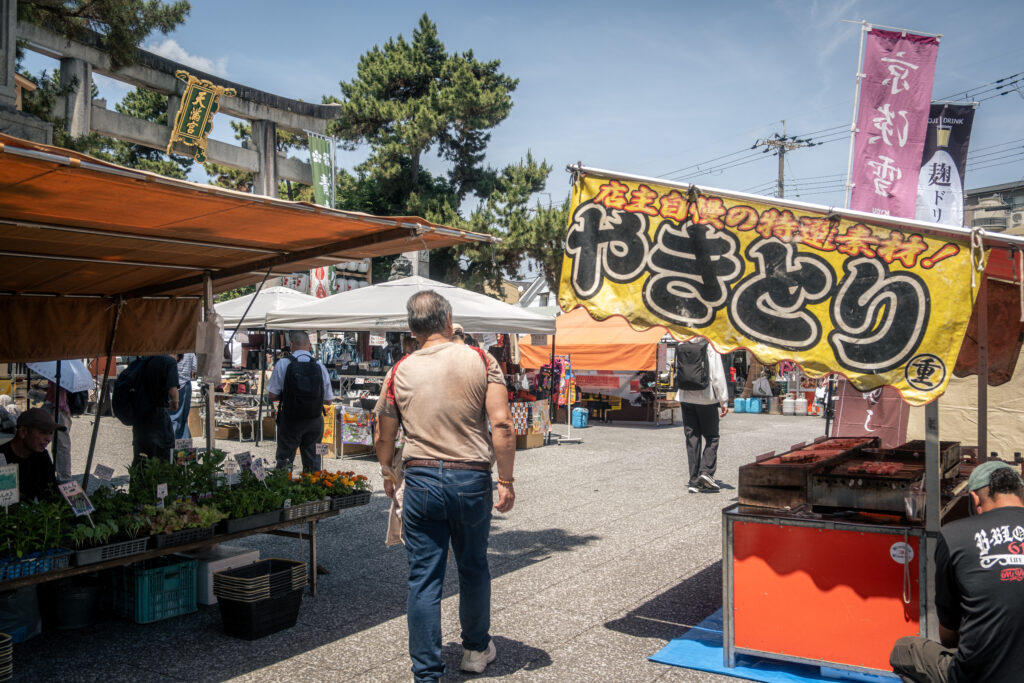
Tenjin-san doesn’t hold back on the food stalls. Expect the full lineup of Japanese festival classics: karaage (fried chicken), takoyaki (octopus balls), castella sponge cake sold by the slice, frankfurts on sticks, yakisoba, mitarashi dango, and more. Budget ¥500–1,500 and just point at whatever smells best.
5 Tips for Getting the Most Out of Tenjin-san
1. Go Early — Seriously
The legendary finds are gone by 9 am. Urban legend tells of bargain hunters showing up in the dark of winter mornings, miner lights strapped to their heads. You don’t have to go quite that early, but arriving by 7–8 am puts you ahead of the tourist crowds and alongside the people who actually know what they’re doing.
2. Bring Cash
Most vendors are cash-only. There are ATMs nearby (7-Eleven and convenience stores along the approach), but it’s easier to come prepared. ¥5,000–10,000 is a reasonable budget for a browse.
3. Haggling is (Quietly) Acceptable
This isn’t a high-pressure bazaar, and hard bargaining would feel rude. But if you’re buying multiple items from one vendor, a gentle “Issho ni, sukoshi yasuku narimasuka?” (“Could you do a small discount for all of these?”) is perfectly normal. A smile goes a long way too.
4. Late Afternoon Has Its Own Charm
Swing by after 2:30 pm, when some vendors offer discounts to lighten their load. Stallholders start packing up from 3:00 pm so if you opt to go late, shop at speed. The atmosphere shifts from busy morning hustle to something more relaxed and golden.
5. Don’t Just Shop — Wander
On the day of the market, the grounds are lit up from sunset, and the national treasure main shrine hall and surrounding buildings glow in an otherworldly light. If you stay until dusk, the transformation is worth it.
While You’re There: Visit the Shrine
Tenjin-san is a perfectly good reason to visit Kitano Tenmangu — but the shrine itself deserves more than a glance over your shoulder between stalls.
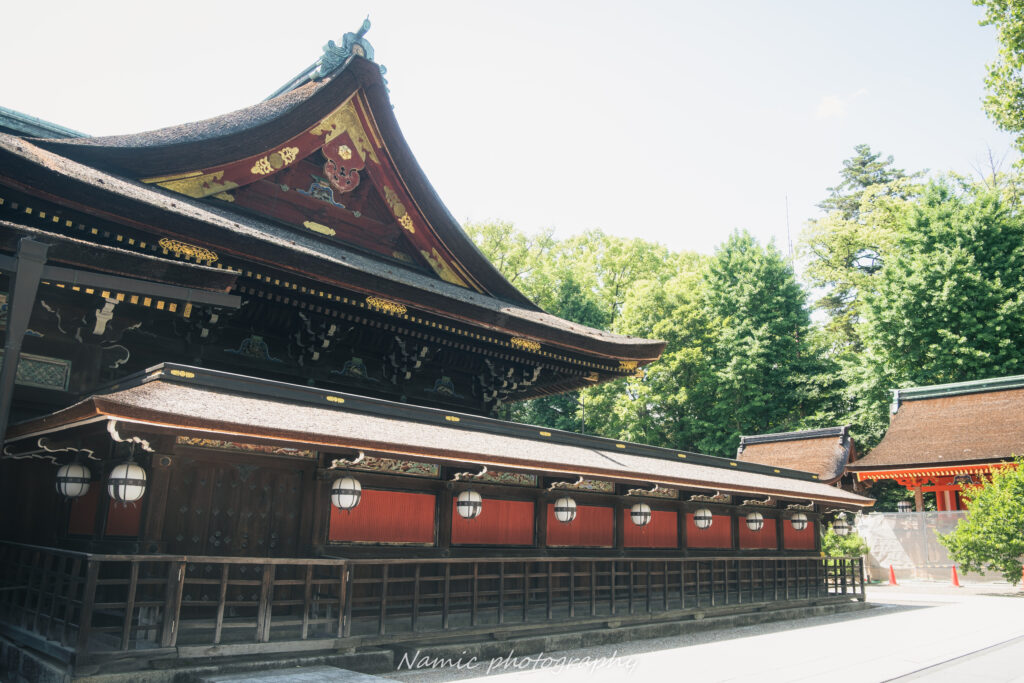
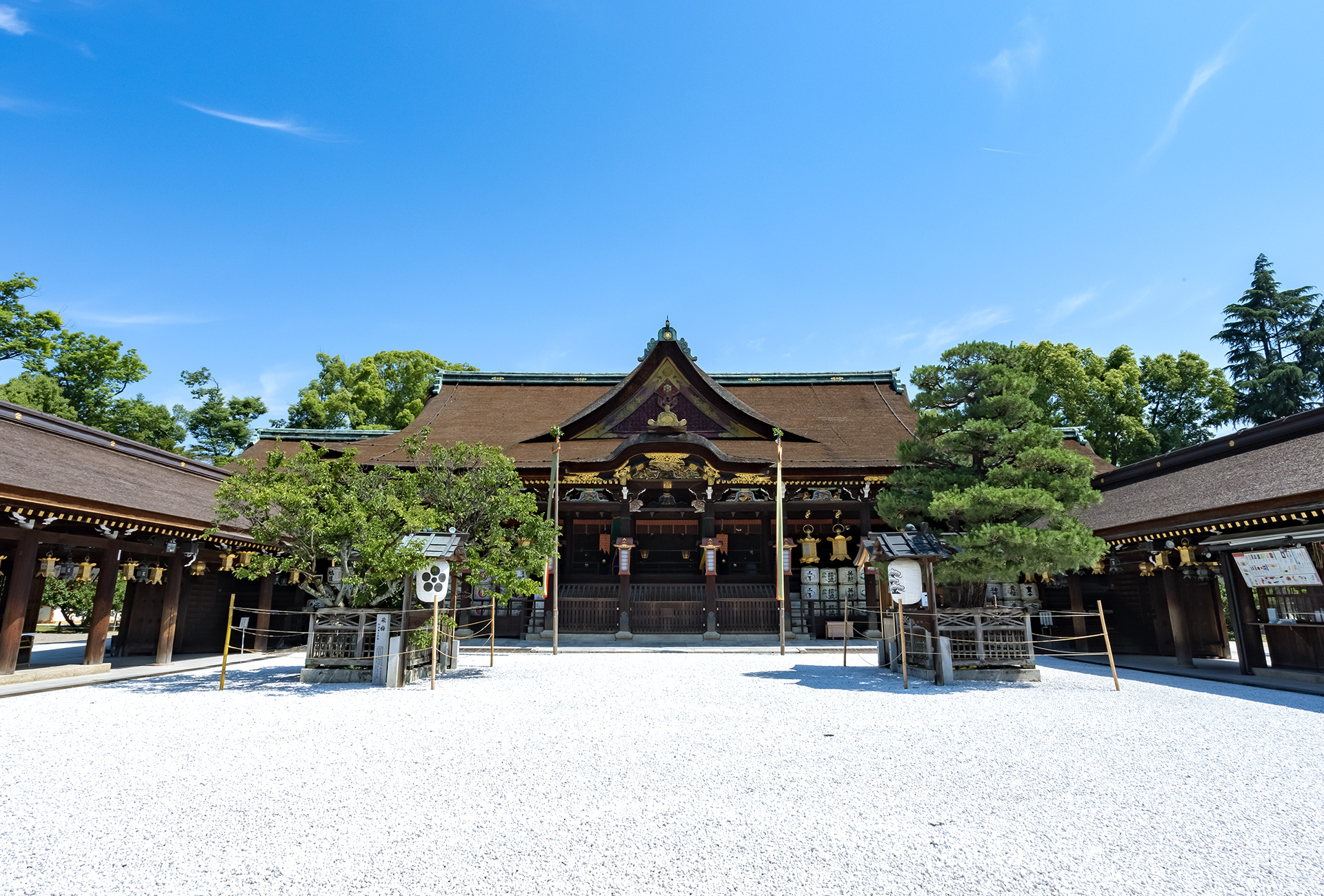
The main hall (honden) is a National Treasure of Japan, built in the ornate yatsumune-zukuri (“eight-roof”) style of the Momoyama period. The approach from the first torii gate through the two-storey romon gate and the sankomon gate is architecturally stunning — and largely overlooked by market-goers in a hurry.
Michizane loved plum trees, and one tree, called tobiume or “flying plum tree,” is said to have followed him from Kyoto to his exile in Kyushu. Because of this, a plum tree can always be found standing in front of the offering hall of Tenmangu shrines. The plum orchard here is considered one of the finest in Kyoto, blooming from February to early March.
And since this is the god of scholarship’s home ground — if you have any exams coming up, this is exactly the right place to buy an ema (wooden prayer plaque).
The Part Most Guides Don’t Mention
Here’s the honest truth about visiting Tenjin-san as a foreign traveller: it’s brilliant on your own, but it’s a completely different experience when you’re with someone who actually lives here.
When a Kyoto local walks into Tenjin-san, vendors light up differently. Conversations happen. Context appears. That ceramic bowl that looks ordinary becomes something extraordinary when someone can tell you it’s from a kiln that’s been operating in Kiyomizu since the Edo period. That vendor with the mountain of vintage obi — she only brings her best pieces in the morning, before the dealers arrive.
That’s exactly the kind of experience we offer.
Our Kyoto Flea Market Tour pairs you with a local Kyoto resident who is learning English. You get an insider’s guide to Tenjin-san (and the city’s other great markets). They get a real English conversation. The result is something neither of you would have found alone.
From ¥2,000 per person. No script. No tour bus. Just you and a local, exploring Kyoto together
Tenjin-san vs. Toji (Kobo-ichi): Which Should You Go To?
Can’t decide between Kyoto’s two famous markets? Here’s a quick comparison:
| Tenjin-san (Kitano Tenmangu) | Kobo-ichi (Toji Temple) | |
|---|---|---|
| Date | 25th of every month | 21st of every month |
| Vibe | Neighbourhood feel, mix of locals & visitors | Larger, more tourist-facing |
| Specialty | Vintage kimono, antiques, street food | Antiques, bric-a-brac |
| Landmark | National Treasure shrine + plum orchard | UNESCO pagoda |
| Size | Up to 1,000 stalls | 800–1,200 stalls |
| Insider tip | Some say this is better than the one at Toji, which seems to get more publicity for some reason. It is really huge with lots of people and the quantity of stuff for sale is incredible. | Famous, but gets crowded early |
Our verdict: If you can only do one, make it Tenjin-san. If you can do both in the same trip (the 21st and 25th are just four days apart), even better.
Getting There & Around
From Kyoto Station: City Bus 50 or 101 from stop B2 → Kitano Tenmangu-mae (approx. 30 min, ¥230)
From Gion / Kawaramachi area: City Bus 203 → Kitano Tenmangu-mae (approx. 25 min)
From Kinkakuji (Golden Pavilion): A 15-minute walk or short bus ride — these two sites pair beautifully for a half-day itinerary.
Address: Bakuro-cho, Kamigyo-ku, Kyoto 602-8386
The Bottom Line
Tenjin-san isn’t a tourist attraction. It’s a monthly ritual that Kyoto has been holding for over a thousand years, and you’re welcome to join in.
Come early, bring cash, eat something on a stick, touch everything you’re allowed to touch, and leave with something you didn’t know you needed until you found it. You’ll leave with souvenir swag, a deeper feel for Japanese culture and perhaps a vintage smoking box repurposed as a desk organizer.
That’s the Kyoto nobody puts on a postcard. It’s the best one.
We runs a local-guided flea market tour connecting foreign visitors with English-learning Kyoto residents at Tenjin-san, Kobo-ichi, and Chion-ji. From ¥2,000 per person.
Stories From Kyoto