Japan does something to couples. Maybe it was the lantern-lit alley in Gion, the mist rising off Arashiyama bamboo, a chance meeting in a tiny ramen bar in Ichijoji. Whatever the moment — you want to make it permanent, here.
You’re not alone. Every year, hundreds of international couples travel to Kyoto specifically to hold their wedding ceremony. Some have been planning it for years. Others got engaged beneath a torii gate and decided on the spot.
But the questions that follow can feel overwhelming: Is it legal? Do we need to be Buddhist? Can they accommodate us if we don’t speak Japanese? How do we plan this from 10,000 km away?
This guide answers every one of those questions — honestly, clearly, and with the experience of a team that has helped couples from various countries celebrate in Kyoto.
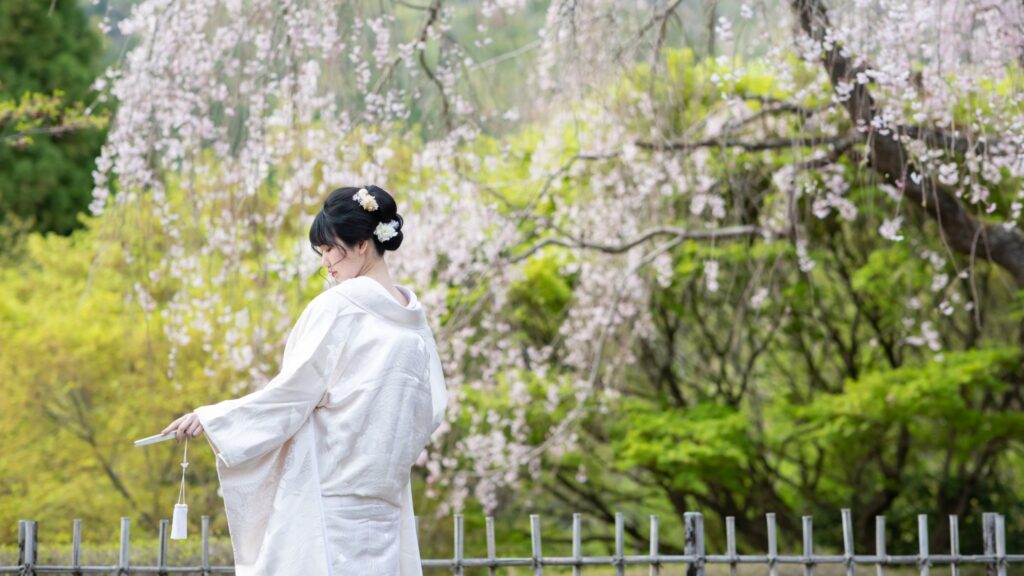
01 — The most important question first “Will our ceremony actually count?”
This is the question nearly every couple asks first — and the confusion is completely understandable. Let’s be direct about it.
MOST POPULAR CHOICE
Symbolic Ceremony
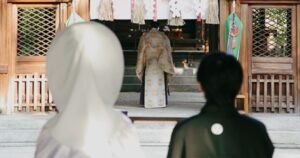
- A complete, beautiful wedding ritual at a real shrine, temple, or garden etc.
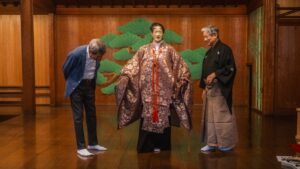
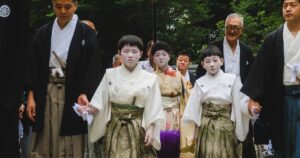
- Full traditional costume (shiromuku, hakama etc.) and ceremony
- No Japanese government paperwork required
- You register your marriage legally in your home country — before or after
- Open to all couples, including same-sex couples
- Can be planned entirely remotely
OPTIONAL ADD-ON
Legal Registration in Japan
- Legally binding Japanese marriage certificate (婚姻届)
- Certificate of eligibility to marry (from your home country)
- All documents must be translated into Japanese
- Apostille process needed for home-country recognition
- Available for heterosexual couples only (see note below)
Our honest recommendation: The vast majority of international couples choose the symbolic ceremony route. You legalize at home (where you have lawyers, family support, and familiar systems) and celebrate in Japan. Your ceremony is no less real, no less meaningful, and infinitely more relaxed.
A note for same-sex couples
Japan has not yet enacted national same-sex marriage legislation. This means only a symbolic ceremony is available — there is no legal registration option in Japan at this time. However, the symbolic ceremony is identical in beauty, depth, and significance to any other ceremony we offer. Many LGBTQ+ couples from around the world have celebrated at Kyoto temples and gardens with BASE KYOTO, and every one has been welcomed with complete warmth and respect.
02 — Culture, not conversion “Do we have to be Buddhist or Shinto to do this?”
This is perhaps the most widely misunderstood aspect of Japanese ceremonies for international couples. The short answer: NO.
Q We’re Christian / Muslim / atheist / not religious at all. Will the shrine or temple actually accept us?
Yes. In Japan’s religious tradition — especially in the context of ceremonial occasions — participation has always been understood as an act of respect and appreciation for culture, not a declaration of personal faith. Kyoto’s shrines and temples that welcome international couples are experienced in hosting people of every background.
What matters to the priests and ceremony staff is that you approach the ritual with sincere respect. That’s it. No conversion, no theological test, no awkward questions about your beliefs.
Q We’re worried about getting the rituals wrong — the san-san-kudo sake ceremony, the tamagushi offering. What if we mess up?
You won’t — because you’ll have a dedicated bilingual ceremony coordinator beside you for every moment. Before your ceremony, you’ll receive a full walkthrough of every ritual, what it means, and what you’ll do. During the ceremony itself, our coordinator guides you through each movement quietly and naturally. Guests watching simply see a couple moving gracefully through a beautiful ritual.
The meaning behind the rituals is something couples often find surprisingly moving — the san-san-kudo, for example, where you share sake three times to seal your bond with the heavens, earth, and humanity, tends to land differently once you understand it.
Q I have tattoos. My partner has a larger frame. Can we wear the kimono and hakama?
Tattoos: Traditional Japanese dress is layered and covers the body generously. In almost all cases, tattoos are fully covered by the kimono or hakama, so this is not an issue at shrine or temple venues. We assess on a case-by-case basis and will always tell you honestly in advance if anything needs consideration.
Sizing: Our kimono wardrobe and trusted dressing partners accommodate a wide range of body types. When you begin planning with us, we take measurements early so there is no surprise. Every body deserves to wear a beautiful kimono.
03 — Planning across time zones “Yes, you can plan everything from home. Here’s how.”
Japan has a reputation for in-person-first business culture. That’s true of large hotels and traditional banquet halls. It is not how BASE KYOTO operates. We were built specifically to serve international couples, which means every part of our process works remotely.
01
First Consultation
Everything begins with a detailed email exchange. We discuss your vision, explain the options, and answer your questions in clear English at a pace that works for your schedule.
02
Venue selection
Virtual tours and photo/video references of every venue option. You choose without setting foot in Japan.
03
Costume Selection
No prior fitting required. Since kimono are adjustable by design, we use your measurements to prepare the fit. Select your favorite style from our digital catalog; larger sizes are also available.
04
Florals & bespoke requests
While ceremonies follow a traditional ritual, we curate your florals and special requests via shared mood boards. We translate your aesthetic vision to local Kyoto vendors.
05
Guest coordination
We provide a shareable guest guide covering transport, accommodation, and etiquette. We handle the logistical questions so you can focus on your celebration.
06
Day-of coordination
A bilingual coordinator is with you from the moment hair and makeup begins through the final photograph, ensuring every moment flows perfectly.
The typical planning timeline
Most couples begin planning 4–8 months before their preferred date. Here is what that looks like:
Email us to discuss your vision. We’ll provide a tailored proposal and confirm availability for your dates.
Secure your venue and date. We begin deep-diving into your inspiration, color palettes, and specific requests.
Submit your measurements and choose your kimono from our catalog. We finalize briefs for photography and florals.
Professional hair, makeup, and kimono dressing on-site. Your coordinator guides you through every ritual from start to finish.
What about guests travelling from abroad? We create a bespoke travel guide for your guests covering how to reach Kyoto, recommended accommodations at different price points, transportation on the day, and what to wear. We handle the questions that would otherwise flood your inbox in the weeks before.
04 — No language barrier Everything in English, first contact to final bow
From your first inquiry through hair and makeup on the morning of your ceremony, every conversation with BASE KYOTO happens in English. Your planner is your single point of contact — translating your wishes to the priest, the makeup artist, the photographer, and every vendor in between. Nothing gets lost.
What about customization?
Japanese ceremony packages are often described as rigid. At BASE KYOTO, we do have a ceremony structure — the shrine or temple has its own ritual flow, and we respect that — but everything surrounding it is yours to shape: flowers, music, vows in English, photography style, post-ceremony dinner. We work with a limited number of couples each year precisely so that each one is genuinely considered.
We provide a full itemized quote before you commit to anything. There is no tipping culture in Japan — service fees are included, and the final invoice will match your quote.
Ready to start planning
your Kyoto ceremony?
Tell us about your vision in a short message. We’ll get back to you within a few days with an initial proposal and answers to any questions you may have. Once we’ve discussed potential locations and you’ve narrowed down your preferred venue and dates, we will then proceed to check specific availability.
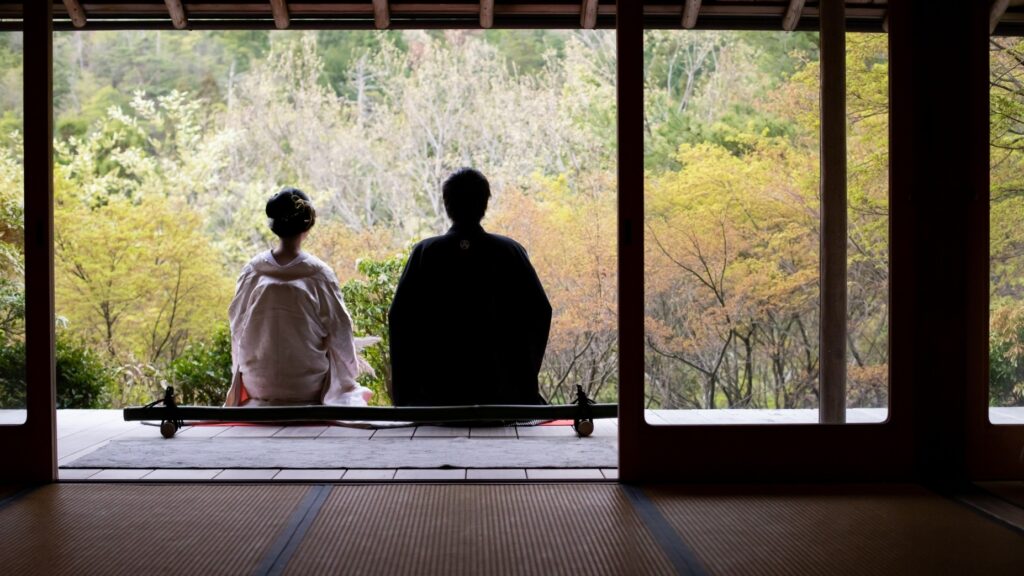
Appendix — Legal marriage registration in Japan
Making it official on Japanese soil
For couples who wish to register their marriage legally in Japan, it is possible to do so even as non-residents. BASE KYOTO offers a dedicated support package to make the process as straightforward as possible.
Expert advice
Personal guidance on exactly which documents you will need to prepare from your home country — before you arrive.
Official escort
A Japanese-speaking coordinator accompanies you to the Kyoto ward office, handling all communication and the submission process on your behalf.
Legal witnesses
Japanese law requires two witnesses for registration. We provide both, so there is nothing left for you to arrange.
Please note
While we provide expert guidance and full on-site support, couples are responsible for obtaining their own required documents from their home country and relevant embassies. We will tell you exactly what is needed from the moment you enquire.