A deep dive into Kyoto’s most photogenic cherry blossom sanctuaries, curated by a local photographer of 18 years.
Kyoto in spring is more than just a destination; it is a fleeting masterpiece of light, shadow, and soft pink petals. For a landscape photographer, it is the ultimate challenge. How do you capture the timeless essence of a thousand-year-old city when the beauty lasts only for a few heartbeats?
In this guide, I share the technical and spiritual nuances of Kyoto’s Sakura, focusing on the hidden geometries and quiet moments that most tourists overlook.
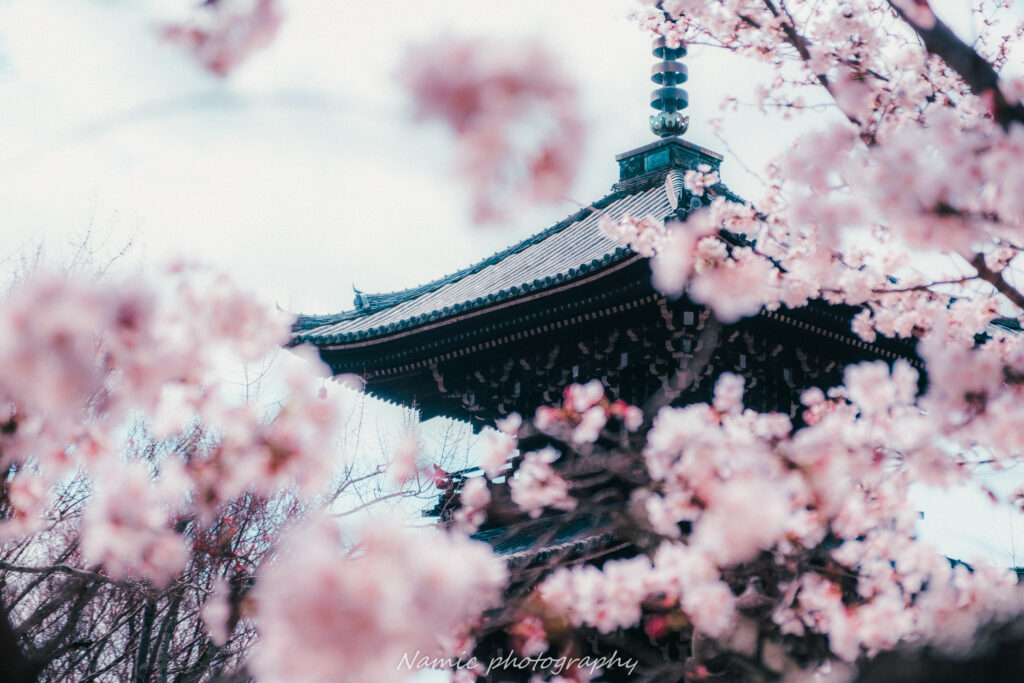
The Science of the Bloom: The “7-Day Rule”
Before you pack your lenses, you must understand the rhythm of the trees.
- The 2026 Forecast: Currently, we expect the first blossoms on March 21st, with the peak (Full Bloom) around March 31st. (Note: Dates may shift depending on daily weather).
- The Fragile Window: In Kyoto, it typically takes 7 days from the first blossom (Kaika) to reach full bloom (Mankai).
- The Aftermath: Once at their peak, the blossoms remain for about another week. However, a single night of heavy spring rain or strong wind can end the season prematurely. This fragility—what we call Mono no aware—is why we must be ready to shoot at a moment’s notice.
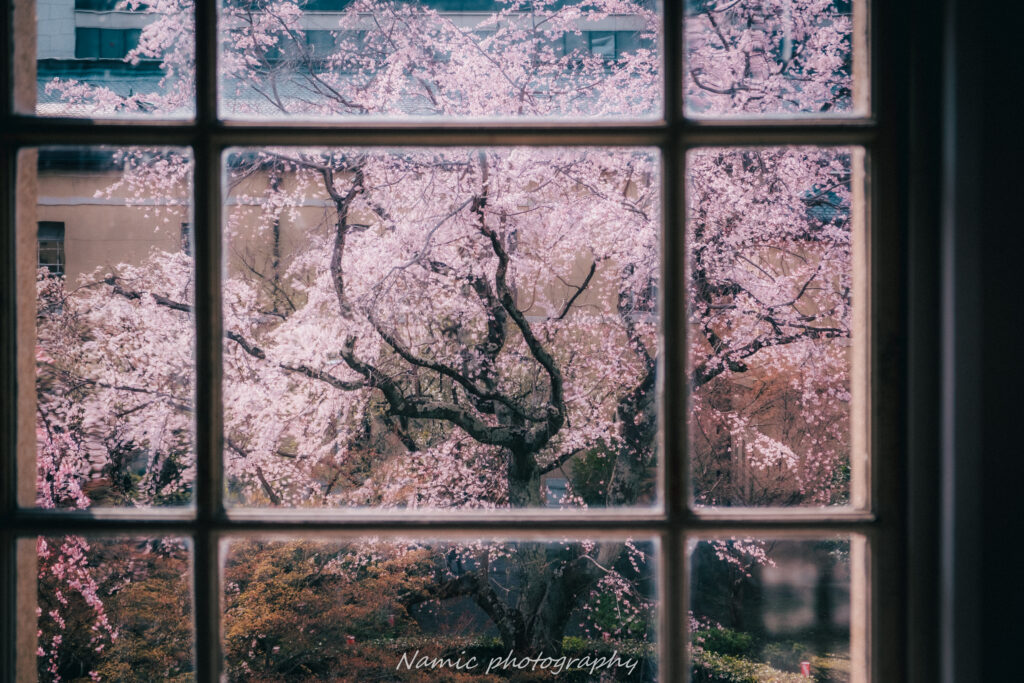
Curated Landscape Sanctuaries: Local Insights on Timing
To capture Kyoto, you must look past the crowds and master the clock. Here are five locations where timing is everything.
Kiyomizu-dera: Day and Night Spectacles
The “Stage of Desire” is iconic, appearing to float upon a cloud of cherry blossoms.
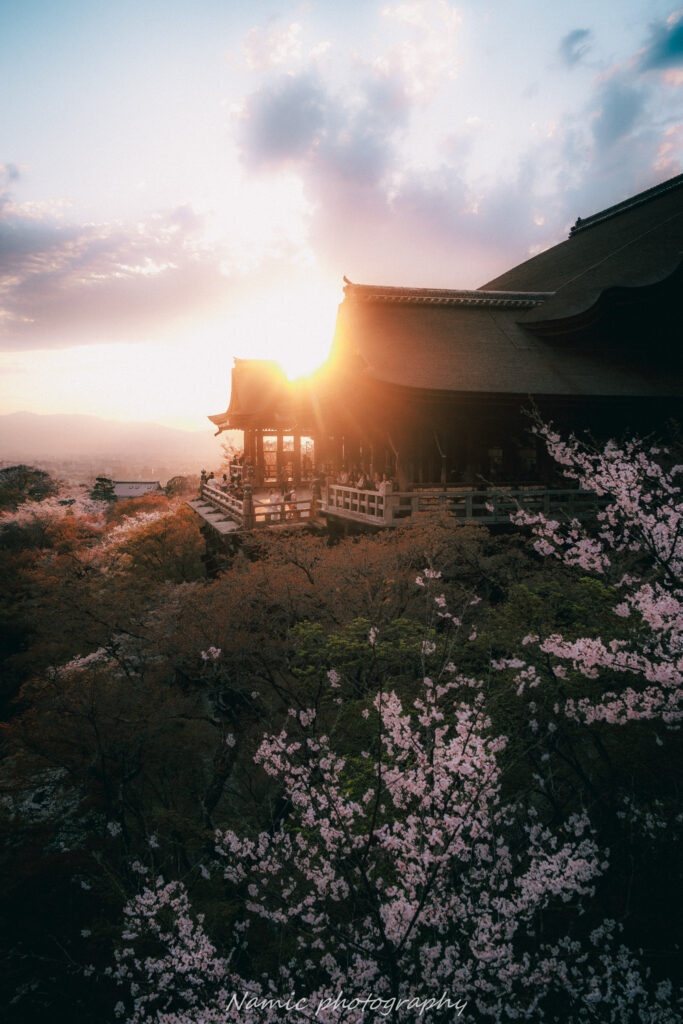
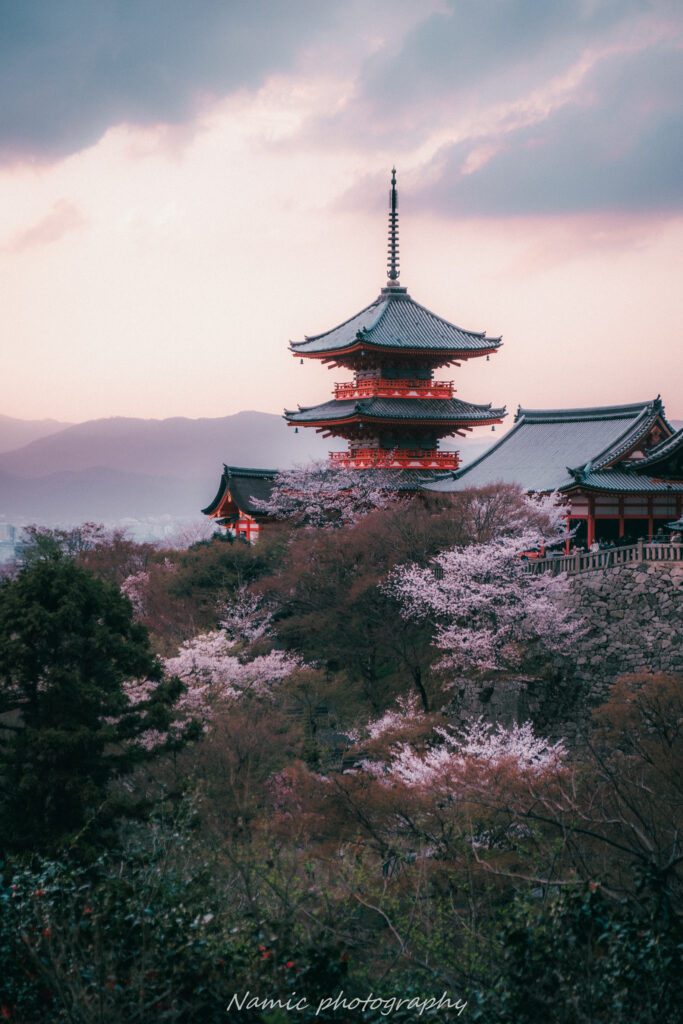
- Early Morning: I highly recommend the 6:00 AM opening to capture the temple in serene morning light without the massive crowds.
- Night Illumination: During the peak season, the temple is illuminated. Capturing the glowing blossoms against the dark wooden structure and the dramatic blue beam of light stretching into the sky is a quintessential Kyoto shot.
Fushimi Port: The Magic of “Hana-Ikada” (Flower Rafts)
A riverside paradise where traditional Jukkoku-bune boats glide through weeping cherries.
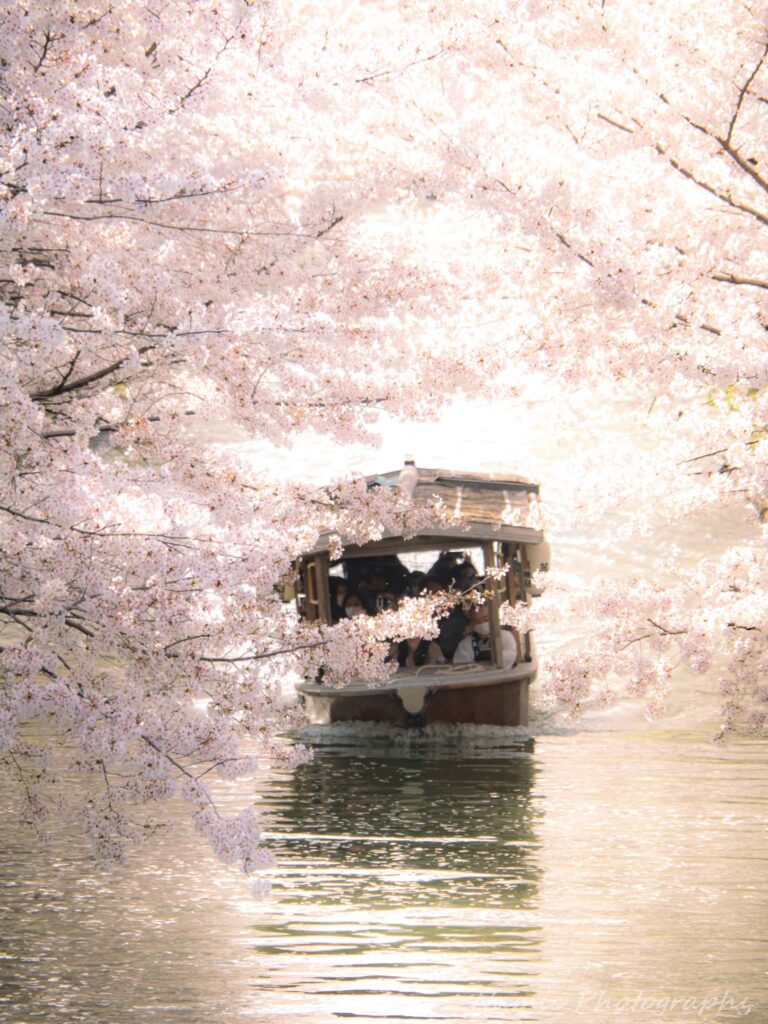
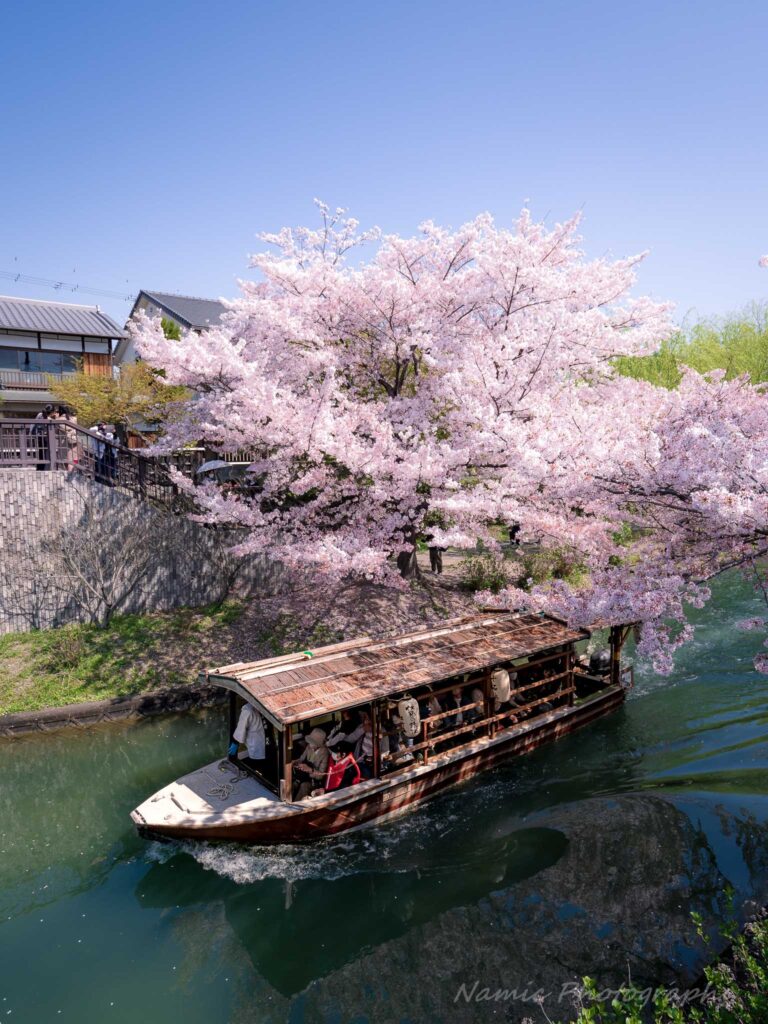
- The Aftermath Shot: Fushimi Port is world-famous for what happens after the peak. When the petals fall, they blanket the water surface in pink, creating Hana-Ikada (Flower Rafts).
- Booking Tip: If you wish to board the boat, advance reservation is mandatory, as tickets sell out months in advance.
Rokkakudo: An Urban Oasis at Dawn
Hidden among downtown skyscrapers, this hexagonal temple offers a unique urban-traditional contrast and is incredibly accessible.
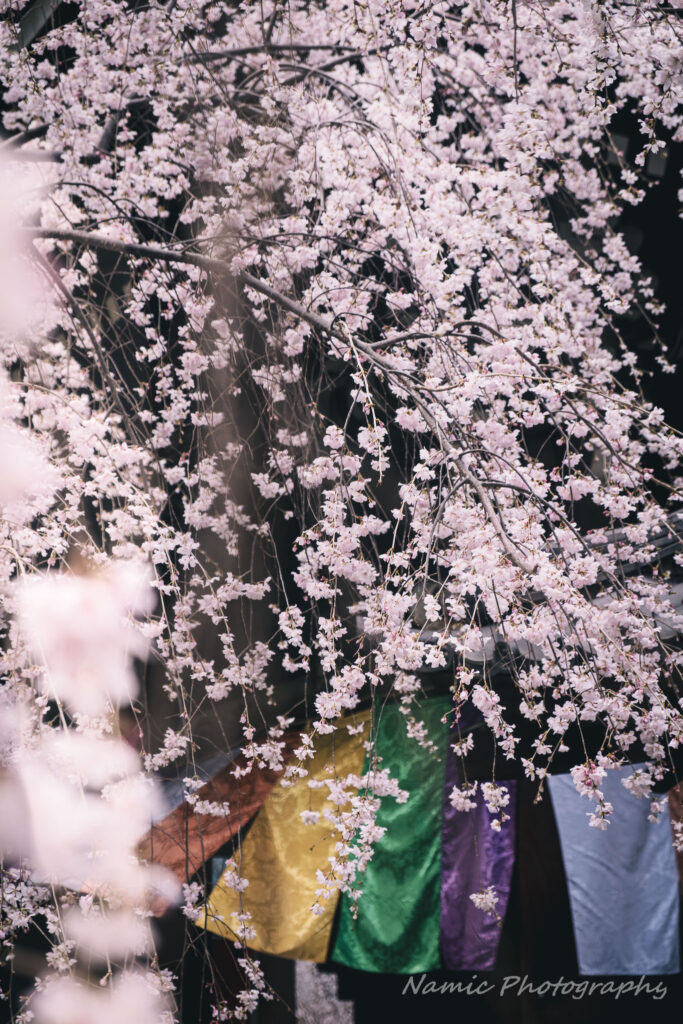
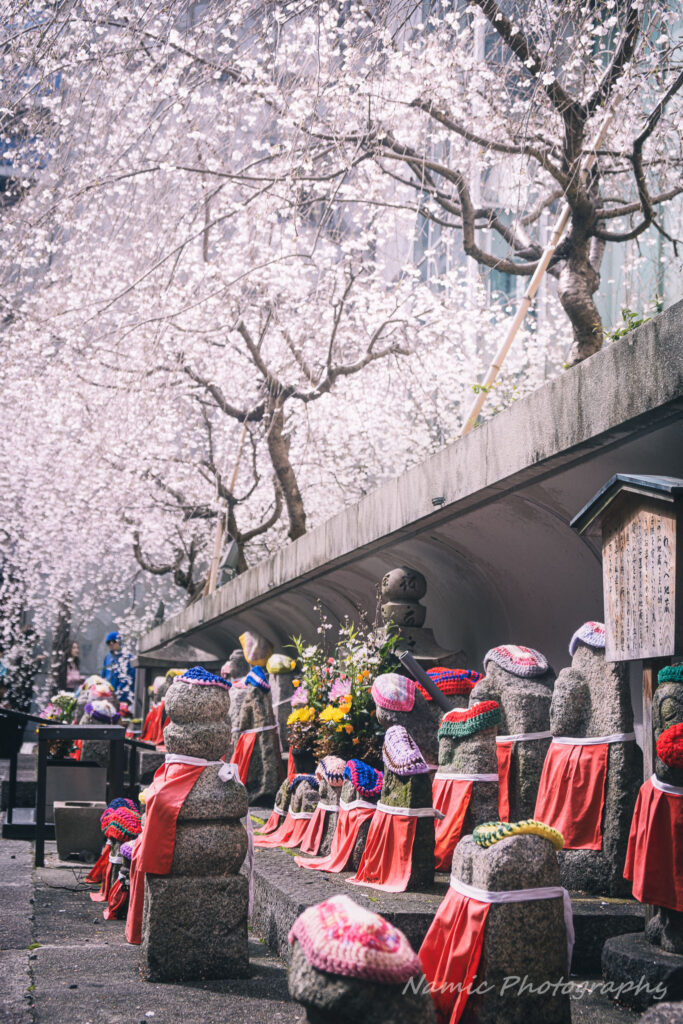
- Local Insight: It opens at 6:00 AM. Visiting at dawn allows you to capture the “floral waterfalls” of the weeping cherries in total silence before the city wakes up.
Rokusonno Shrine: The 24-Hour Hidden Gem
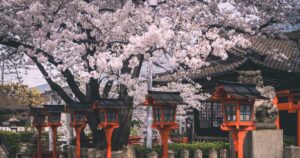
A masterclass in color theory—vermilion bridges against soft pink canopies.
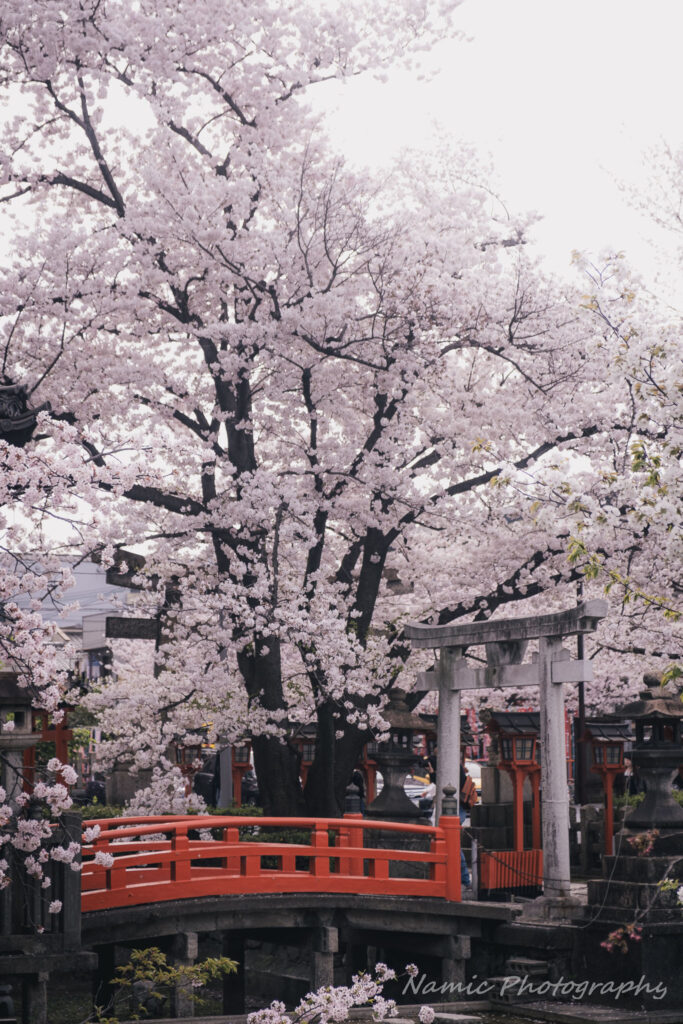
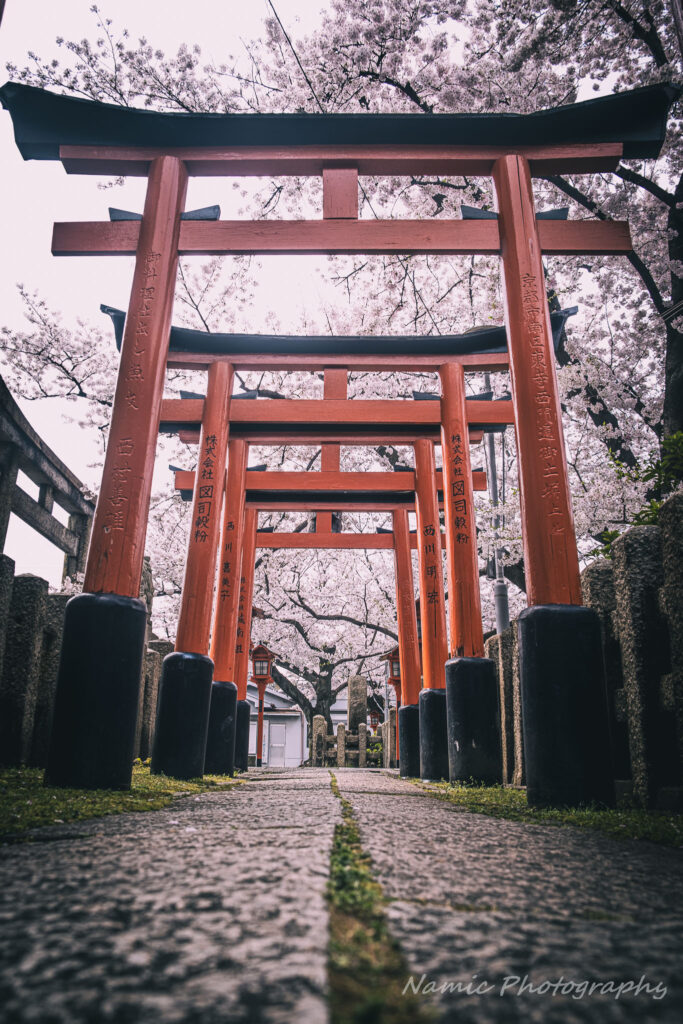
- Local Insight: This tranquil shrine is within walking distance of Kyoto Station. It is accessible 24 hours a day and remains relatively uncrowded, allowing for peaceful, uninterrupted sessions at any hour.
Keage Incline: The Vanishing Point
An abandoned railway track lined with cherry trees.
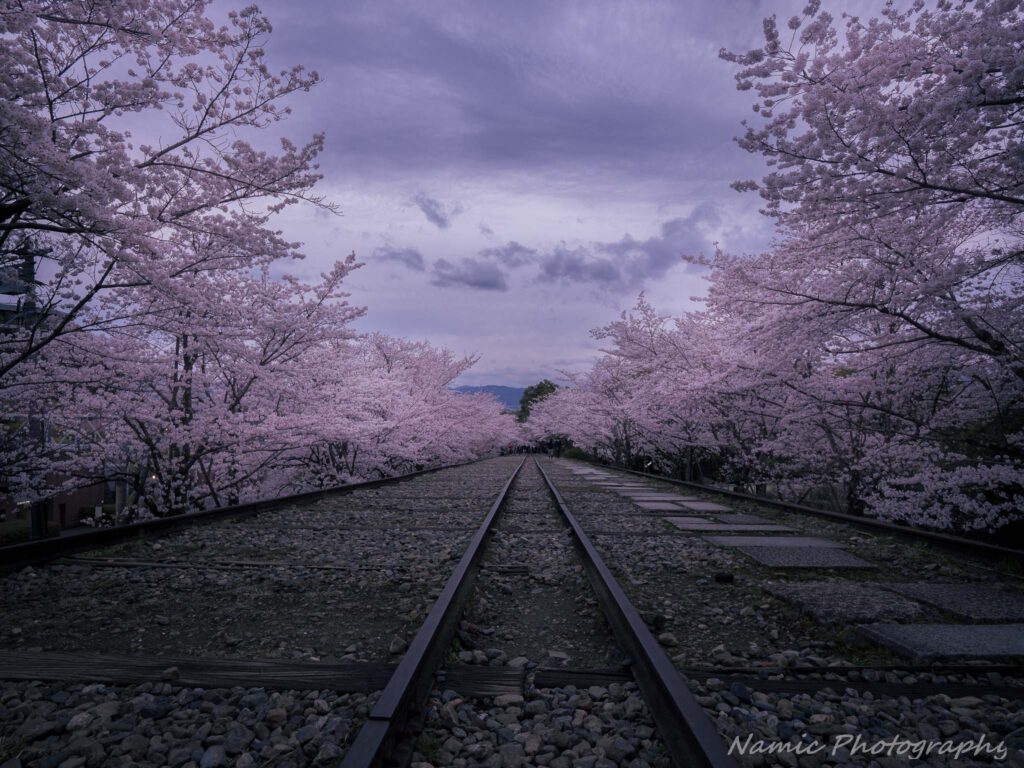
- Local Insight: This is an ultra-popular spot. Even at dawn or in the middle of the night, you will likely find people here. Patience and clever framing are required to capture the rails alone.
The Challenge: Ethics, Regulations, and Technique
Capturing the perfect landscape in Kyoto requires more than just a good eye; you must navigate several local constraints and environmental factors.
- The Rain and Lighting: Spring weather in Kyoto is notoriously unpredictable. While rain creates a moody, cinematic atmosphere with wet charcoal-colored stones, it also demands high-level gear protection and a deep understanding of how to manage flat light to make the pink petals “pop.”
- The No Tripod Rule & Garden Preservation: To protect the ancient wooden structures and maintain visitor flow, almost all temples and shrines in Kyoto strictly prohibit tripods and monopods. More importantly, this rule exists to protect Kyoto’s delicate ecosystem. A single tripod leg can destroy a patch of moss that has taken decades to cultivate. Mastering handheld techniques or finding natural stabilization points—without stepping off the path—is essential for sharp results in low-light sessions.
- Strict Drone Regulations: Drone flight is strictly prohibited in almost all central areas of Kyoto without special government permits. Unauthorized flight can lead to police intervention. My tours focus exclusively on ground-based photography.
- These locations are not tourist attractions: they are active places of worship. Maintaining a “quiet presence” and knowing exactly where you can and cannot stand to frame your shot is crucial to respecting local etiquette.
Experience Kyoto Through a Local Lens
Planning a photography-focused trip in such a short window is a daunting task. As a landscape photographer with 18 years of experience in Kyoto, I help fellow enthusiasts navigate these challenges.
- Bespoke Landscape Tours: A 100% custom itinerary based on the current bloom and your artistic style.
- Signature Spring Package: A curated route optimized for the best light and compositions.
**Note: My tours are exclusively for landscape photography. I do not provide portrait services or allow posing, ensuring we focus entirely on the scenery.