Toka Ebisu and Japan’s Culture of Praying for Business Success
If you visit Japan in early January, especially in the Kansai region, you may come across a lively festival filled with crowds, laughter, and cheerful chants.
At first glance, one detail often surprises foreign visitors the most:
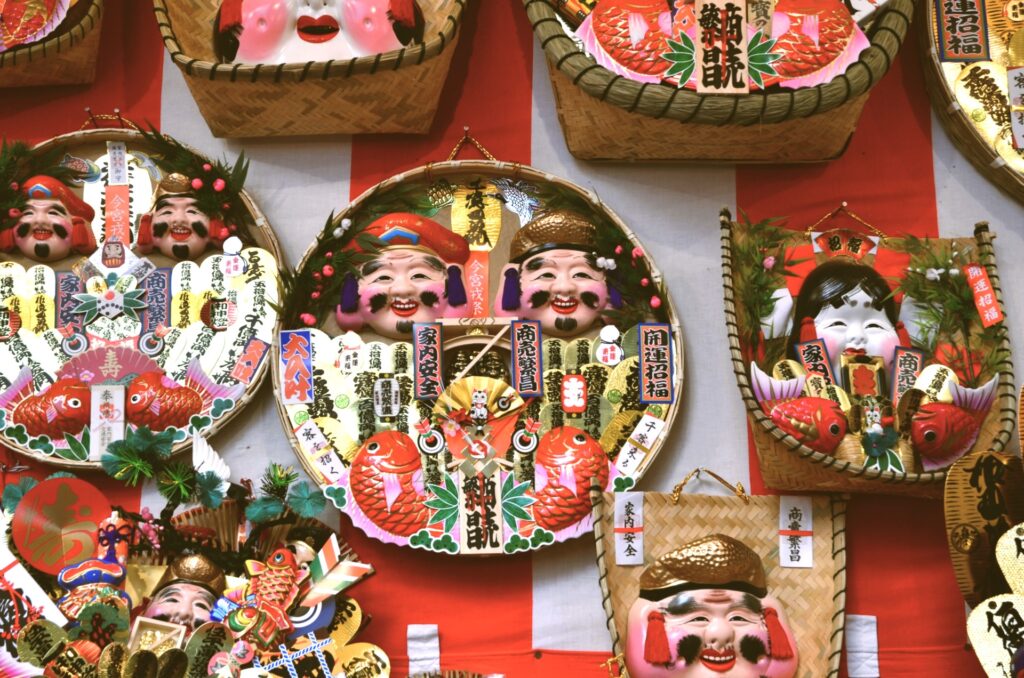
Why is there a giant tuna at a Shinto shrine?
This unique sight is part of Toka Ebisu (十日戎), a traditional Japanese festival held every year to pray for business success and prosperity.
Let’s explore what Toka Ebisu is, who the god “Ebessan” is, and why tuna and bamboo branches play such an important role in this fascinating tradition.
What Is Toka Ebisu?
Toka Ebisu is a festival held from January 9th to 11th, mainly in western Japan, especially Osaka, Hyogo, and Kyoto.
It is dedicated to Ebisu, one of Japan’s traditional gods, and is particularly popular among:
- Shop owners
- Business operators
- Freelancers and entrepreneurs
For many people, visiting Toka Ebisu is the first important ritual of the year — a way to start the year with gratitude and determination.
Who Is “Ebessan”?
“Ebessan” is the friendly Kansai nickname for Ebisu, a god in Japanese Shinto belief.
Ebisu is known as:
- The god of business prosperity
- The god of fishermen and merchants
- A symbol of honest work and good fortune
He is usually depicted holding a fishing rod and a sea bream (tai), a fish associated with celebration and good luck in Japan.
Unlike many other gods, Ebisu is cheerful, approachable, and deeply connected to everyday life and work.
The Giant Tuna at the Shrine: What Does It Mean?
One of the most eye-catching features of Toka Ebisu is the giant tuna (maguro) displayed at the shrine.
In Japanese culture, tuna has long been considered a valuable and luxurious fish, symbolizing wealth and abundance.
During Toka Ebisu, visitors place coins directly onto the tuna while praying.
This act is said to represent the wish that:
“Money will stick to me”
“Prosperity will stay with my business”
The visual impact is strong — a shrine and a massive fish covered with coins — but the meaning behind it reflects a very practical and heartfelt desire for stability and success.
The Three Great Ebisu Shrines (Sandai Ebisu)
Rather than focusing on many individual locations, Toka Ebisu is often explained through the Three Great Ebisu Shrines of Japan:
1. Nishinomiya Shrine (Hyogo)
Considered the head shrine of Ebisu, famous for the energetic “Lucky Man Race,” where participants run to become the first worshipper of the year.
2. Imamiya Ebisu Shrine (Osaka)
Deeply loved by local merchants, this shrine is known for its lively atmosphere and traditional Kansai chants calling out to Ebisu for good fortune.
3. Kyoto Ebisu Shrine (Kyoto)
More compact and refined, Kyoto Ebisu reflects the city’s merchant culture and long history of commerce and craftsmanship.
Each shrine has its own character, but all share the same core wish: prosperity through sincere effort.
Fukuzasa: The Symbol You Shouldn’t Miss
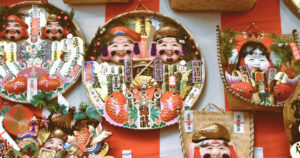
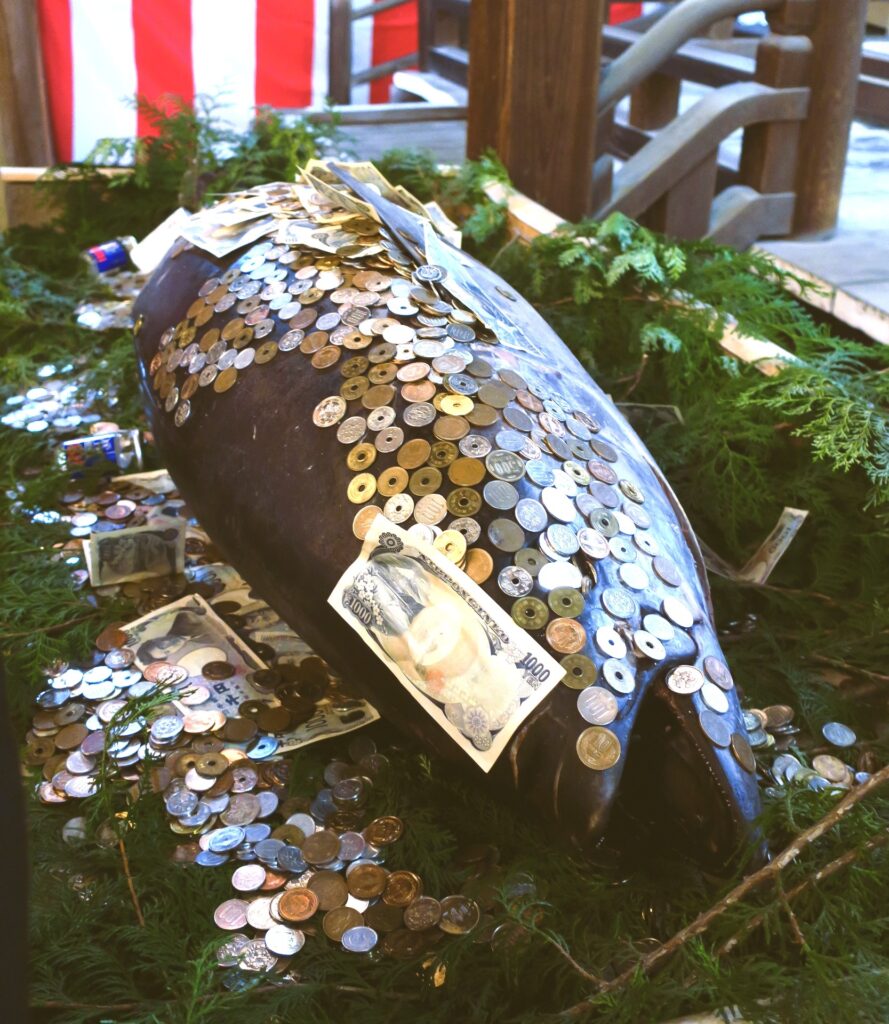
Another essential element of Toka Ebisu is the Fukuzasa (福笹) — a bamboo branch given to worshippers at the shrine.
What is Fukuzasa?
- A bamboo branch symbolizing growth and resilience
- Decorated with lucky charms such as coins, rice bales, or treasure symbols
What does it mean?
People take Fukuzasa back to their shop, office, or home as a visible reminder of their prayer for the year ahead.
How do you receive it?
You receive a basic bamboo branch at the shrine, then add charms while praying, customizing it to reflect your hopes and work.
For many business owners, renewing Fukuzasa every year is an important annual ritual.
More Than a Wish: A Cultural Attitude Toward Work
Toka Ebisu is not only about asking for luck.
By visiting the shrine, offering prayers, and bringing Fukuzasa back to their workplace, people are quietly making a promise to:
- Work honestly
- Respect customers
- Continue their efforts throughout the year
In this sense, Toka Ebisu is a blend of faith, gratitude, and personal commitment — a deeply Japanese approach to business and life.
Discover Japan Beyond Sightseeing
Festivals like Toka Ebisu show that Japanese culture is not only found in temples or museums, but in everyday practices connected to work, community, and belief.
If you’d like to explore Japanese culture on a deeper level — beyond just seeing it — cultural experiences offer a meaningful way to connect with these traditions.