Learning, Faith, and Everyday Life in Kyoto
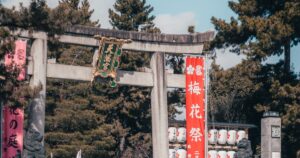
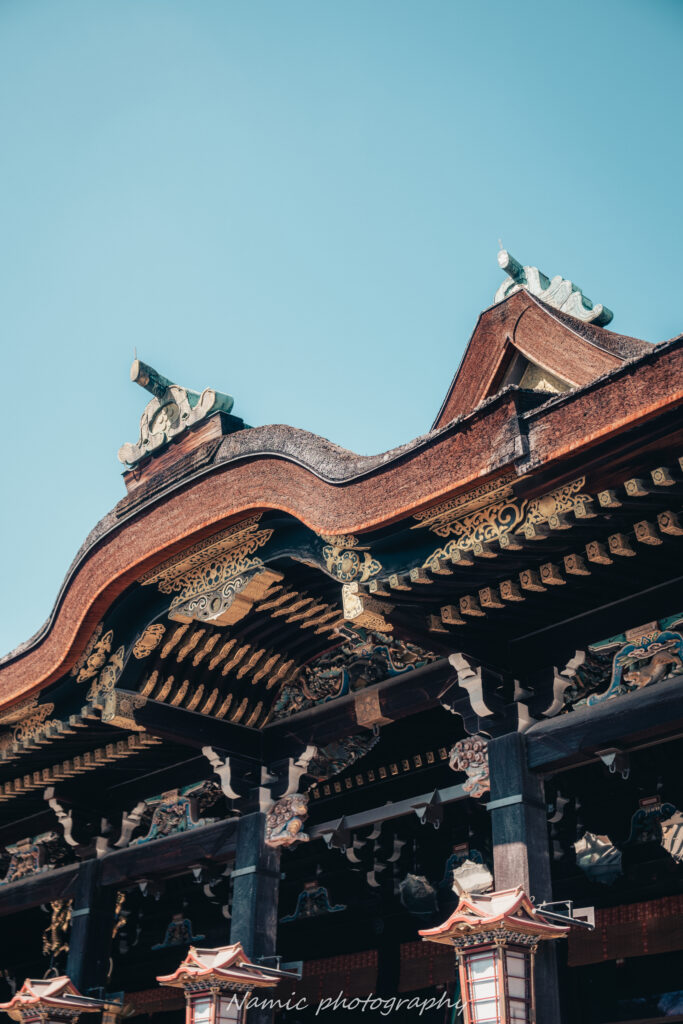
Kitano Tenmangu Shrine, located in the northern part of Kyoto, is one of Japan’s most famous shrines dedicated to learning.
It enshrines Sugawara no Michizane, a scholar and statesman from the Heian period (9th century), who is revered today as the god of learning.
Because of this, the shrine is especially popular with students.
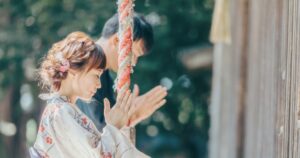
Before important exams, many students—and often their families—visit Kitano Tenmangu to pray for academic success. Even today, the shrine remains closely connected to moments of study, effort, and personal milestones.
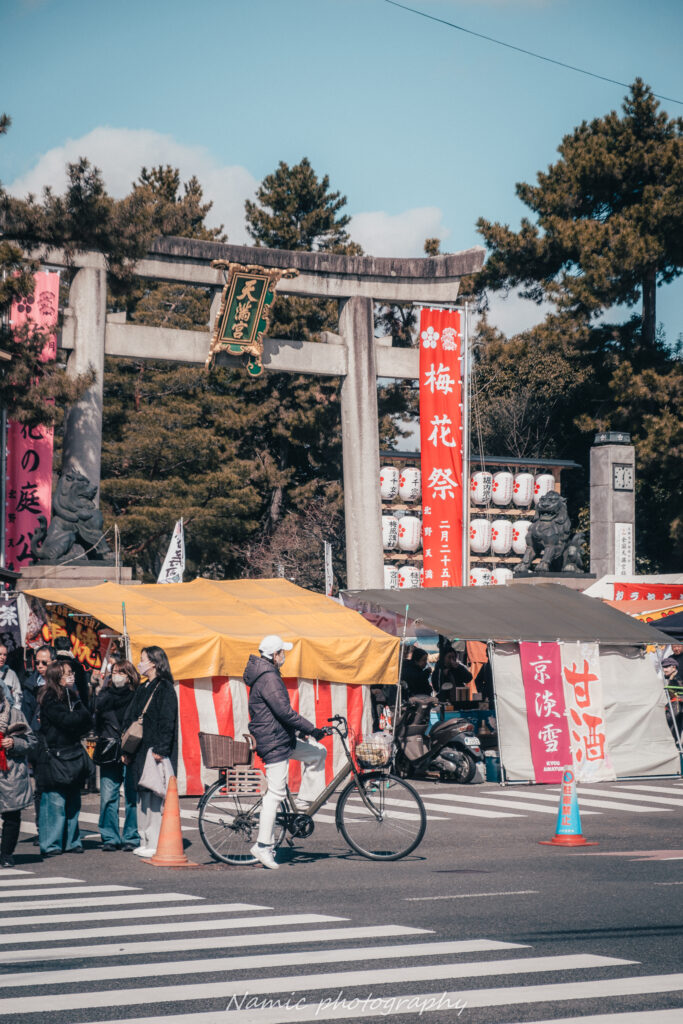
Every month on the 25th, the shrine hosts a special day known as “Tenjin-san.”
What Is “Tenjin-san”?
“Tenjin-san” refers to the monthly memorial day of Sugawara no Michizane.
According to tradition, he was born on the 25th and passed away on the 25th, which is why this day became sacred to him.
In Kyoto, people casually say things like:
- “I’m going to Tenjin-san today,” or
- “It’s the 25th, so it’s Tenjin-san.”
Rather than being a formal religious event only, Tenjin-san is something that naturally blends into everyday life.
The Role of Kitano Tenmangu as a Shrine of Learning
Sugawara no Michizane was known for his deep knowledge and literary talent.
After his death, he was deified and worshipped as Tenjin, the god of learning.
At Kitano Tenmangu, people pray for:
- success in exams
- progress in studies
- academic and professional growth
A common custom is to visit the shrine before an exam, receive a protective charm, and later return to give thanks after achieving one’s goal.
In this way, the shrine is closely tied to both hope and gratitude.
What Is an Ennichi (Temple or Shrine Market Day)?
Tenjin-san is also an ennichi, a special day believed to have a stronger spiritual connection to the enshrined deity.
On an ennichi, visiting a shrine is thought to bring greater blessings than on ordinary days.
Because many people gather on the same day, these occasions naturally became places of exchange—between people, goods, and ideas. Over time, ennichi evolved into days where faith and daily life intersect.
Why Are There Food Stalls and Market Stands?
The presence of food stalls and market stands is not just for entertainment.
Historically, they served very practical purposes:
- providing meals for visitors who came from far away
- selling daily necessities and offerings
- supporting travelers and pilgrims
As time passed, these temporary markets grew more lively.
Food, antiques, handmade items, and old tools began to appear, giving Tenjin-san the feeling of a traditional open-air market rather than a festival in the modern sense.
Even today, Kitano Tenmangu’s Tenjin Market is known for its antiques and second-hand goods, reflecting its long history as a place of trade.
Hatsutenjin: The First Tenjin-san of the Year
Among all Tenjin-san days, January 25th, known as Hatsutenjin (the first Tenjin-san of the year), is especially significant.
Together with December 25th (the final Tenjin-san of the year), it is the busiest day at the shrine.
On Hatsutenjin:
- around 1,000 market stalls fill the shrine grounds and surrounding streets
- the number of visitors can reach approximately 150,000 people
Because entrance exams are approaching in Japan around this time, Hatsutenjin attracts many students and parents praying for success.
Visitors may be seen receiving special prayers or writing their wishes on wooden plaques called ema.
Despite the crowds, Hatsutenjin is not only lively—it is also deeply sincere.
It is a day when people quietly reflect on their goals and hopes for the year ahead.
Plum Blossoms and the Symbol of the Shrine
Plum blossoms (ume) are closely associated with Kitano Tenmangu.
Sugawara no Michizane loved plum trees, and as a result:
- the shrine grounds are filled with plum trees
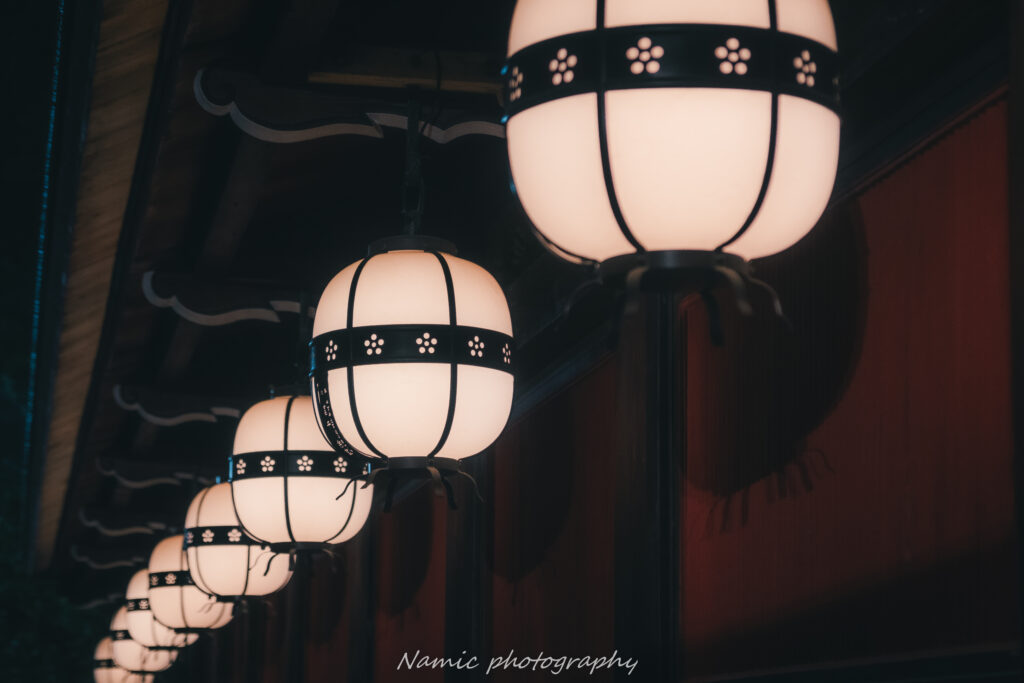
- the official crest of Kitano Tenmangu is a plum blossom
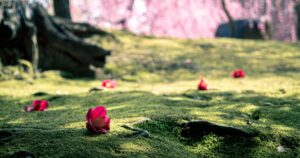
From late January to early February, plum blossoms begin to bloom, often around the time of Hatsutenjin.
This timing—early flowers, the start of a new year, and prayers for learning—adds a seasonal depth to the experience of visiting the shrine.
A Place Where Faith and Daily Life Meet
Tenjin-san is neither a grand spectacle nor a quiet ritual alone.
It is a place where prayer, seasonal change, and everyday activity naturally come together.
By understanding the background of Tenjin-san—the history, beliefs, and customs—what you see during a visit gains new meaning.
A shrine visit becomes more than sightseeing; it becomes a way to glimpse how Japanese culture connects faith with daily life.
Explore Japanese Culture Beyond Sightseeing
Japanese culture is not only preserved in museums or special ceremonies.
It lives in everyday practices like shrine visits, monthly markets, and seasonal traditions.
If you are interested in exploring Japanese culture more deeply—not just by seeing it, but by understanding it—we also offer cultural experiences that explain the stories behind these traditions.
In addition, we organize casual tours where you can interact with local people, offering a more personal perspective on life in Kyoto.
After visiting Tenjin-san, you may find that spending time with locals helps bring the experience into clearer focus—connecting history, belief, and modern life.