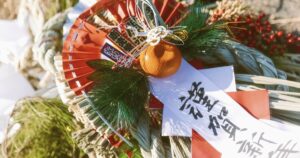
In Japan, the New Year marks a fresh beginning and holds deep cultural meaning.
The first three days of January, known as Sanganichi, are believed to be a time when Toshigami, the New Year deity, brings good fortune to each household.
Because of this belief, certain actions have traditionally been avoided.

1. Cleaning the House
Cleaning during the first three days of the New Year is traditionally avoided.
Reason
It was believed that cleaning would sweep away the good fortune brought by Toshigami.
This is why major house cleaning is usually done before the New Year begins.
2. Using Knives or Sharp Tools
Using knives or scissors is also avoided during Sanganichi.
Reason
Sharp tools symbolically represent “cutting,” such as cutting ties or good luck.
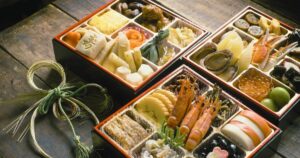
For this reason, traditional New Year dishes, called osechi, are prepared in advance.
3. Spending Money Excessively
Excessive or unnecessary spending is traditionally discouraged during the New Year.
Reason
Spending too much at the very beginning of the year was believed to lead to financial loss throughout the year.
The New Year is meant to be a time for reflection rather than consumption.
4. Using Fire for Household Work
Traditionally, people tried to avoid using fire during the New Year.
Reason
Fire was associated with the risk of accidents, and this custom also allowed women to rest from daily household duties.
This is another reason why New Year foods are designed to last several days.
5. Arguing or Fighting
Arguments and conflicts are especially avoided during the New Year.
Reason
In Japanese culture, the way you begin the year is believed to influence how the rest of the year will unfold.
Therefore, people aim to spend the New Year peacefully and with gratitude.
In Closing
These customs are not strict rules, but rather
traditional ideas meant to help people welcome the New Year with a clear and positive mindset.
Learning about how Japanese people approach the New Year can offer deeper insight into Japanese culture.
For those who wish to explore these values further, experiencing Japanese culture firsthand through cultural activities can be a meaningful way to do so.
BASE KYOTO offers experiences designed to help you gain a deeper understanding of Japanese culture.