Kyoto’s winter is full of tradition, but few events are as visually striking and spiritually deep as the Tsuinayumi Shinji (Exorcism Archery Ritual) at the UNESCO World Heritage site, Shimogamo Shrine.
While “Setsubun” (the day before spring) is famous for bean-throwing, Shimogamo Shrine offers an ancient, aristocratic-style ritual that dates back centuries. Here is what makes this event a must-see for anyone seeking an authentic cultural experience.
The Ritual Begins at the Buden
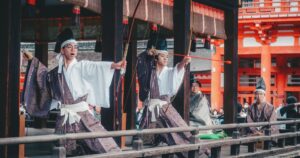
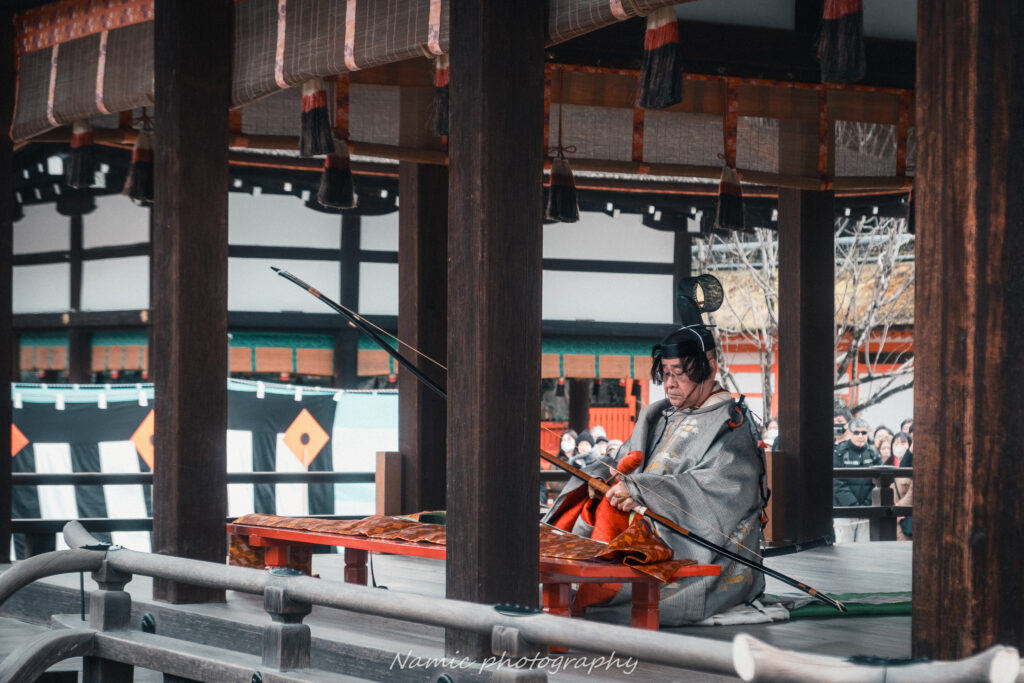
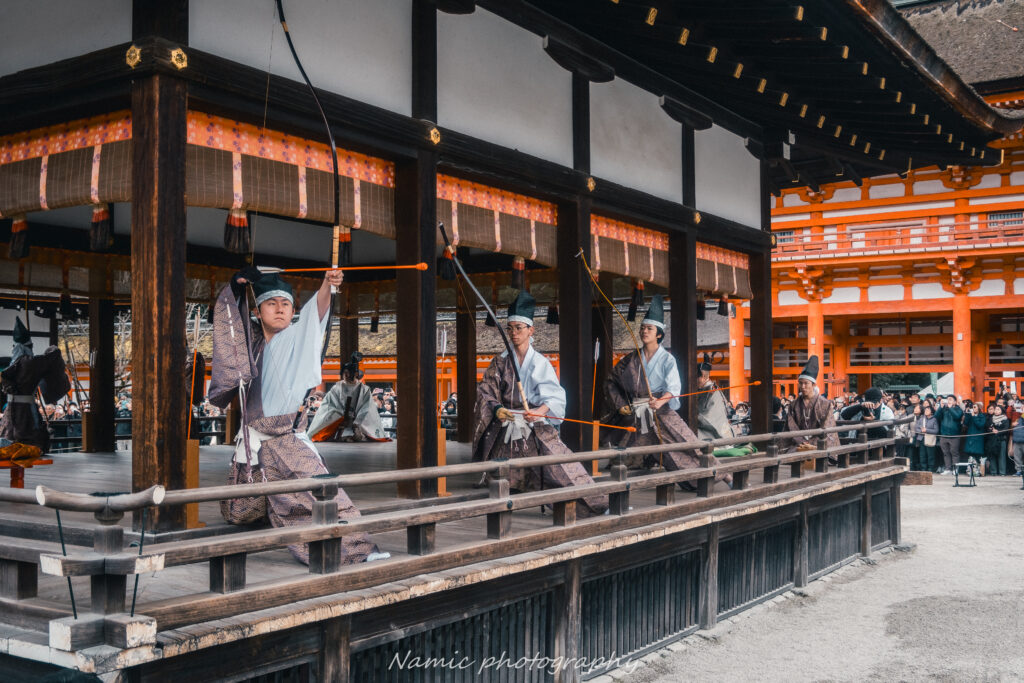
The public part of the ceremony begins around 1:00 PM at the Buden (Sacred Dance Stage). Shinto priests and skilled archers in elegant court noble attire enter the stage, creating an atmosphere of quiet intensity.
Yagoshi-shiki: Purifying the Air with Sound
The first highlight is the Yagoshi-shiki. Archers shoot “Kaburaya” (whistling arrows) over the roof of the grand Romun Gate.
Unlike typical archery, the goal here isn’t to hit a bullseye. Instead, it’s about the sound the arrow makes as it cuts through the air. In Japanese tradition, this whistling sound is believed to purify the space and drive away invisible evil spirits.
Interestingly, this year, one of the arrows landed right on the roof instead of flying over it! This unexpected moment added a touch of “live” reality to the ancient ceremony, drawing warm applause from the crowd.
The Secret of the Target: Hunting the Invisible “Oni”
After the roof-clearing shots, the archers turn their attention to a physical target. This is where the ritual becomes most fascinating:
- The Hidden “Oni” (Demon): If you look at the back of the target, the Kanji character for “Oni” (Demon/Evil Spirit) is written in bold ink.
- The Meaning: In ancient Japan, disasters and illnesses were personified as “Oni.” By shooting the target, the archers are symbolically “slaying” the hidden calamities of the coming year.
Directly shooting the “hidden” demon rather than a visible one is a unique Shinto practice, showing a deep respect and awe for the unseen world.
Bean-Throwing and Hand-Delivered Luck
The finale is the lively Mame-maki (bean-throwing). People gather around the Buden to catch small packets of roasted soybeans, shouting “Fortune in!” to welcome luck for the spring.
Pro-tip for Visitors: Don’t worry if you aren’t fast enough to catch a packet in the air! At Shimogamo Shrine, priests and volunteers kindly hand out Tsuina-mame (blessed beans) by hand after the ceremony. It’s a wonderful, inclusive way for everyone to take a piece of “good luck” home without having to compete in the crowd.

Practical Tips for Visitors
Shimogamo Shrine’s archery ritual is a beautiful display of traditional manners and discipline. Here are a few tips to make your visit smooth:
- Best Viewing Spot: If you want to see the flight of the “Yagoshi” arrows clearly, stand between the Romun Gate and the Buden, slightly toward the south side. You’ll get a great angle of the arrows soaring over the gate.
- Stay Warm: You will likely be standing outside for about an hour. Kyoto’s winter can be surprisingly chilly, so make sure to wear layers and perhaps bring a pocket warmer (kairo).
Experience the Heart of Kyoto with Us
Does the world of Shinto rituals and ancient Japanese traditions fascinate you?
At BASE KYOTO, we go beyond simple sightseeing. We offer deep-dive cultural experiences, from tea ceremonies with expert insights to tailor-made tours that explain the “why” behind Japan’s beautiful traditions.