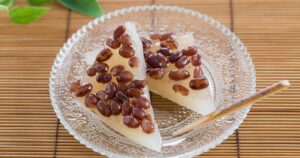
If You’re Visiting Kyoto in February
Many travelers wish to visit Kyoto during cherry blossom or autumn foliage season. But sometimes, travel dates simply don’t line up, and you find yourself coming to Kyoto in February.
If that’s the case, there’s no need to be disappointed.
February is the season of plum blossoms (ume) in Kyoto. These flowers may be quieter than cherry blossoms, but they have been loved in Japan for more than a thousand years. Visiting Kyoto in February is a wonderful opportunity to experience this lesser-known but deeply meaningful side of Japanese seasonal culture.
February Is Plum Blossom Season in Kyoto
Plum blossoms usually bloom from late January to early March. In Kyoto, February is the peak season.
The weather is still cold, and most trees have not yet grown new leaves. Against this winter landscape, small plum blossoms appear and gently announce the coming of spring. Their soft fragrance is just as important as their appearance.
Unlike cherry blossoms, plum trees do not bloom all at once. This encourages visitors to slow down, notice individual flowers, and appreciate subtle changes in nature—an approach that has long been part of Japanese aesthetics.
What Plum Blossoms Have Meant to the Japanese People
Shape Your Own Plum Blossom Wagashi
Using seasonal white bean paste and rice flour, you’ll shape your own neri-kiri sweet alongside a wagashi artisan. After taking in the blossoms, spend a quiet hour recreating their beauty with your own hands.
Plum blossoms have a very long history in Japan. They were introduced from China during the Nara period (8th century) and, in the early days, were admired as more refined and prestigious than cherry blossoms.
This can be seen in Manyōshū, Japan’s oldest collection of poetry. Plum blossoms appear more frequently than cherry blossoms, showing that people at the time strongly associated plum flowers with the changing seasons.
Because plum trees bloom earlier than any other flowers, even while enduring the cold of winter, they came to represent important values in Japanese culture:
- Learning – continuous effort and dedication, like a scholar who never stops studying
- Perseverance – the strength to endure hardship and cold
- Renewal – the quiet beginning of a new season
These meanings explain why plum blossoms have been respected not only for their beauty, but also for the way they reflect the Japanese attitude toward nature, time, and personal growth.
Plum Blossoms and Kitano Tenmangū Shrine
When talking about plum blossoms in Kyoto, Kitano Tenmangū Shrine is essential.
This shrine is dedicated to Sugawara no Michizane, a scholar and poet who is now worshiped as the god of learning. He was known to love plum blossoms deeply.
According to legend, when Michizane was exiled from Kyoto, a plum tree he cherished flew after him to Dazaifu in Kyushu. This story, known as the Tobiume legend, reflects how plum trees were seen as emotional and symbolic beings, not just plants.
The shrine’s crest itself is a plum blossom, and the grounds are home to about 1,500 plum trees of 50 varieties, which bloom beautifully in February.
Recommended Plum Blossom Spots in Kyoto
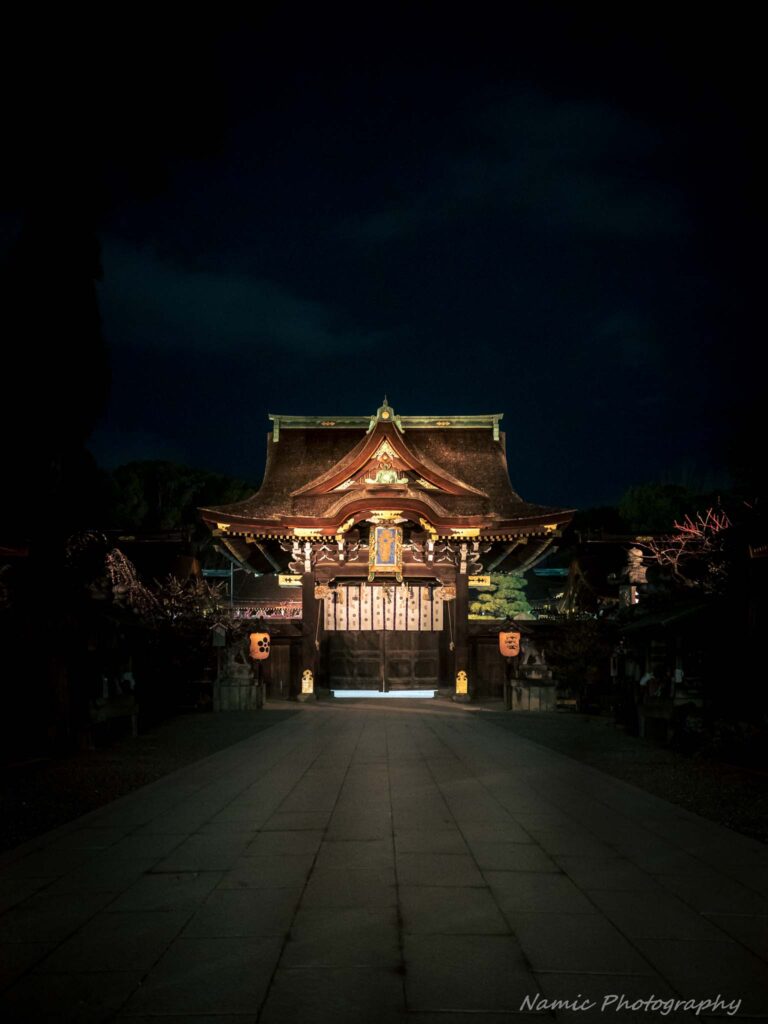
1. Kitano Tenmangu Shrine (Kamigyo Ward)
If you think of plum blossoms in Kyoto, this is the first place to visit.
Highlights:
- The plum garden Hana no Niwa, which opens in early February
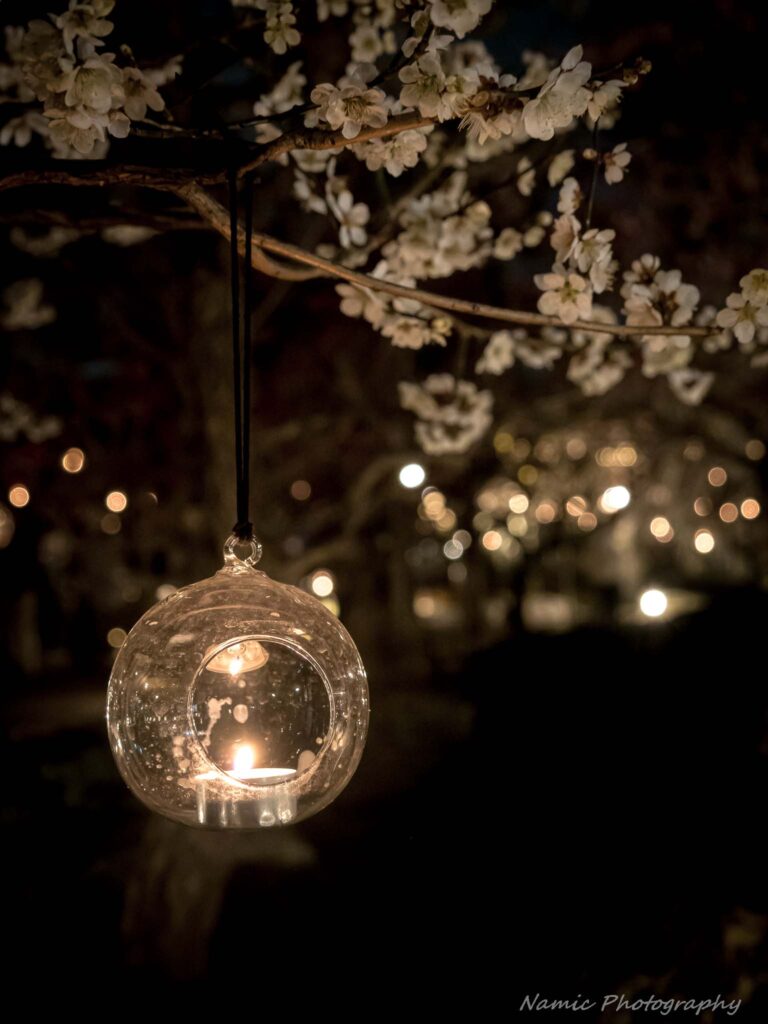
- Evening illuminations from late February, offering a magical nighttime view
Special Event:
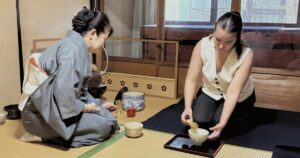
- Baikasai (Plum Blossom Festival) on February 25 Held on the anniversary of Sugawara no Michizane’s death, this event includes an outdoor tea ceremony hosted by geiko and maiko from the Kamishichiken district—an experience uniquely Kyoto.
2. Jonangu Shrine (Fushimi Ward)
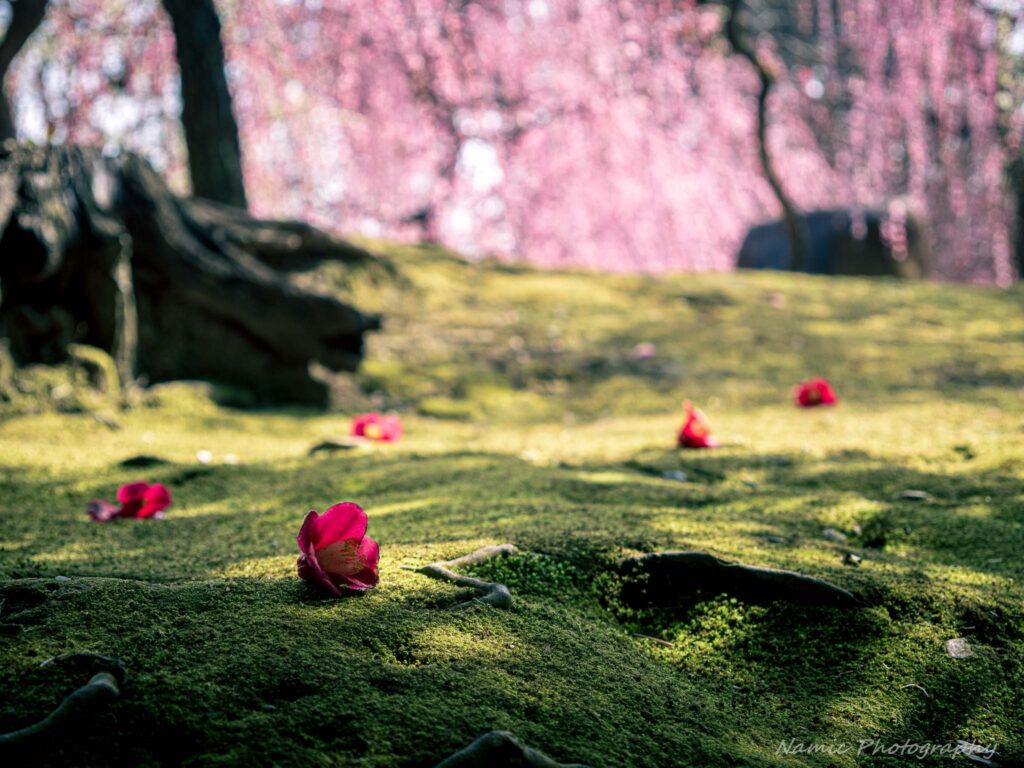
Famous on social media, Jōnangū is known for its breathtaking weeping plum trees.
Highlights:
- About 150 weeping plum trees in the shrine garden
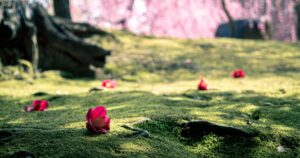
- A stunning contrast between falling plum blossoms and red camellia flowers on the ground, often described as “like a painting”
2026 Schedule:
- Weeping Plum and Camellia Festival: February 18 – March 22, 2026
3. Kyoto Imperial Palace Park (Kamigyō Ward)
An easy stop while exploring the city, Kyoto Imperial Palace Park offers a relaxed way to enjoy plum blossoms.
Highlights:
- Around 200 plum trees with a balanced mix of red and white blossoms
- Open, spacious grounds perfect for a casual walk or picnic
This is a quieter spot where visitors can enjoy seasonal flowers without crowds.
Enjoying Kyoto Beyond Sightseeing
Plum blossoms are not just something to look at—they are part of a larger cultural story that connects nature, history, poetry, and daily life in Japan.
If learning about these backgrounds has sparked your curiosity, you may enjoy exploring Japanese culture more deeply through hands-on experiences.
We offer cultural programs that allow you to go beyond sightseeing and engage with Japanese traditions in a thoughtful and accessible way.