When you think of Setsubun in Japan, one of the first things that comes to mind is bean throwing, or mamemaki.
Shouting “Oni wa soto! Fuku wa uchi!” (“Demons out! Luck in!”) while throwing roasted soybeans is a classic Japanese ritual that marks the transition from winter to spring.
Bean throwing is more than a fun tradition for children—it is a ceremony to drive away evil and invite health, happiness, and good fortune into your home.
Here’s a complete guide to the history, meaning, and proper way to do bean throwing, along with where to experience it in Kyoto.
The History and Origins of Bean Throwing
The tradition of bean throwing originates from an ancient Chinese ritual called Tsuina, performed to drive away evil spirits at the changing of the seasons.
When this practice arrived in Japan, it evolved during the Heian period (8th–12th centuries) into a court ritual.
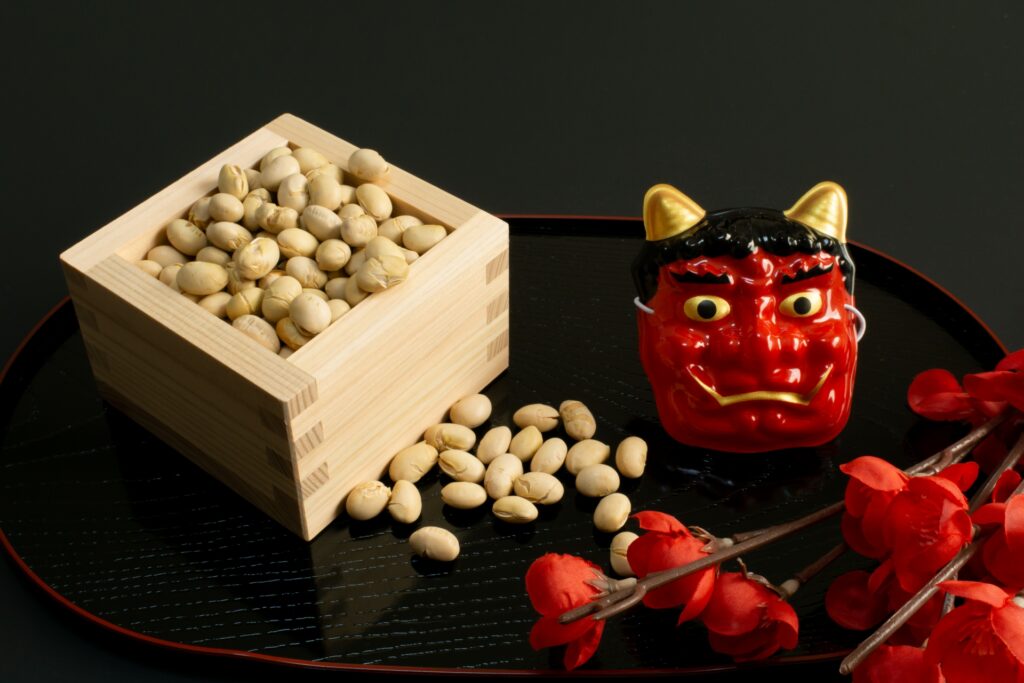
The demon, or “oni,” represents disease, misfortune, and bad luck. Throwing beans to expel the oni became a common practice in households by the Muromachi to Edo periods, eventually evolving into the form we see today.
Why Throw Beans?
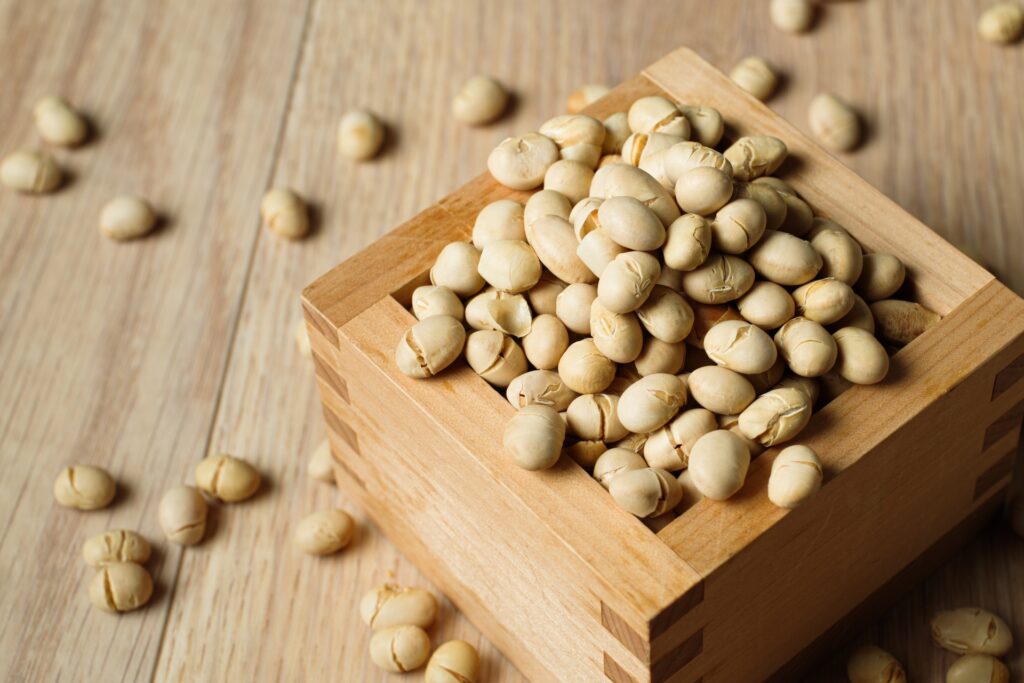
Roasted soybeans, or fukumame (“lucky beans”), are used for several symbolic reasons:
- Wordplay: Mame (bean) sounds like ma wo mesu (“destroy evil”).
- Purification: Grains were believed to have the power to ward off evil spirits.
- Safety: Raw beans can sprout, so roasted beans are used to prevent new misfortune from “growing.”
How to Do Bean Throwing
Bean throwing is simple, but each step has meaning.
Use roasted soybeans, which are easy to find at supermarkets, convenience stores, and even temples or shrines during Setsubun.
Shout “Oni wa soto! Fuku wa uchi!”
This drives out evil spirits and invites good fortune into your home.
Start by tossing beans through the front door or windows, then sprinkle some inside to welcome luck.
Eat the number of beans corresponding to your age, or your age plus one. This practice is believed to bring health and safety for the year.
Why “Demons Out”?
The “oni” in bean throwing doesn’t exist in reality.
It symbolizes invisible misfortune, such as illness, accidents, or personal troubles.
By symbolically casting out the oni, people refresh their minds and homes for the new season—a uniquely Japanese way of facing change.
Setsubun Festivals in Kyoto
In Kyoto, Setsubun is celebrated with lively festivals at shrines and temples, offering a unique cultural experience beyond home bean throwing. Here are some highlights:
- Yoshida Shrine
-
One of the most famous Setsubun events in Kansai. Thousands gather to watch bean throwing by priests and “lucky men/women” (fukuotoko/fukumusume). Traditional ceremonies and ritual processions are also part of the festival.
- Mibu-dera Temple
-
Features the Oni Dance (Oni no hōraku) with actors dressed as demons, blending humor and ritual. Visitors often catch lucky beans handed directly by performers.
- Kitano Tenmangu Shrine
-
Celebrates with Maiko (apprentice geisha) and festival dances, creating a colorful and photogenic event that blends tradition and entertainment.
- Matsuo Taisha(Matsunoo Taisha)
-
Includes Shinto music performances (kagura) and bean throwing by lucky men/women. It’s a quieter, more reflective festival that still provides an authentic cultural experience.
- Rozan-ji Temple
-
Known for its ancient Oni Dance ritual, followed by bean throwing by monks and shrine attendants. A unique chance to witness traditional Kyoto-style rituals.
- Sembon Shakado (Daikoku-zo-ji Temple)
-
Offers a traditional demon-chasing ceremony combined with bean throwing, highlighting centuries-old customs.
Tips for experiencing Setsubun in Kyoto:
- Most events take place around February 3, 2026.
- Arrive early to catch lucky beans and watch the rituals up close.
- Many shrines now provide English signage and explanations for foreign visitors.
- Festivals are photo-friendly, perfect for capturing cultural moments.
Conclusion
Bean throwing on Setsubun is a simple yet meaningful tradition: driving out misfortune and inviting good fortune.
Experiencing it at a Kyoto festival allows you to see history, ritual, and community spirit in action.
Discover Japanese culture firsthand and make your visit to Kyoto even more memorable!