In Japan, the New Year is not only a time for celebration, but also a time to reset the mind.
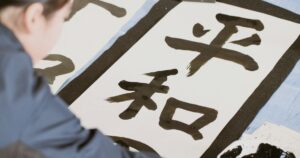
One traditional custom that reflects this spirit is Kakizome, the first calligraphy writing of the year.
Kakizome literally means “first writing.”
It refers to the practice of writing characters with a brush and ink at the beginning of the year, usually during the New Year holidays.
More than just writing, Kakizome is a quiet moment to reflect, set intentions, and begin the year with a calm and focused mind.
The Origin of Kakizome: A Court Ritual in the Heian Period
The origin of Kakizome can be traced back to the Heian period (794–1185), when it was practiced as a court ritual called Kissho Hajime.
In this ritual, members of the imperial court would:
- draw sacred “first water” early on New Year’s Day,
- grind ink using that water,
- face the year’s auspicious direction,
- and write poetry or refined texts.
Words were believed to hold spiritual power, and writing at the very start of the year was a way to pray for peace, growth, and success in the months ahead.
This belief—that words shape the future—remains at the heart of Kakizome today.
From the Elite to Everyday Life
Over time, Kakizome spread beyond the imperial court.
During the Edo period (1603–1868), samurai and townspeople also began practicing it as a New Year custom.
Today, Kakizome is familiar to most Japanese people.
Many experience it during childhood, as elementary schools often hold Kakizome lessons or competitions at the beginning of the year.
Choosing what to write, holding the brush carefully, and facing a blank sheet of paper—for many, these memories are deeply connected to the feeling of a new beginning.
What Do People Write for Kakizome?
There are no strict rules about what to write.
People often choose:
- a goal for the year,
- a value they want to cherish,
- a word that represents how they want to live.
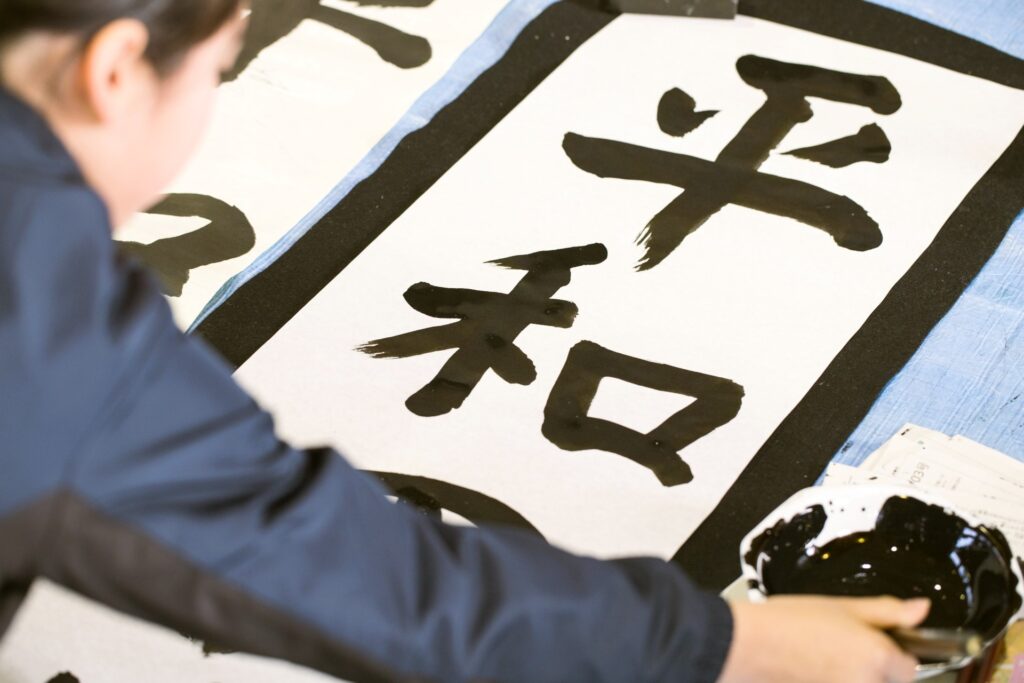
Some write a single character, such as Dream, Harmony, or Heart.
Others choose short phrases or four-character idioms.
The important part is not difficulty or beauty, but the meaning behind the word.
Displaying and Burning Kakizome: From “Matsu-no-Uchi” to Sagicho
Traditionally, Kakizome is displayed at home until Matsu-no-Uchi, the New Year period when decorations are kept up.
By placing the calligraphy where it can be seen every day, people are reminded of the words and intentions they chose for the year.
After Matsu-no-Uchi ends, the calligraphy is taken to a ritual fire festival called Sagicho, also known as Dondoyaki.
At Sagicho, New Year decorations and Kakizome are burned together.
It was believed that the higher the flames and smoke rise, the more one’s writing skills and learning would improve.
Watching the written characters rise into the sky with fire symbolized growth, progress, and personal development.
The Tools of Calligraphy and Japanese Aesthetics
Kakizome uses traditional calligraphy tools:
- Brush – sensitive to movement and pressure
- Ink – ground slowly to calm the mind
- Ink stone – for preparing ink
- Washi paper – where ink spreads and breathes
In calligraphy, uneven lines, blurring, and softness are not mistakes.
They reflect the writer’s state of mind at that moment.
This idea—valuing expression over perfection—is a key part of Japanese aesthetics.
Kakizome as a Moment of Reflection
Kakizome is not about writing beautifully.
It is about slowing down, focusing on the present moment, and expressing intention through movement and ink.
The act of writing itself becomes a form of quiet reflection.
Experiencing Calligraphy in Japan
When you actually hold a brush, grind ink, and write characters yourself,
Kakizome and calligraphy become more than concepts—they become experiences.
Understanding the meaning of the characters, feeling the texture of the brush, and hearing the silence of the room
allow you to connect with Japanese culture on a deeper level.
Taking time to “write” during a journey can become one of the most memorable cultural experiences in Japan.