What Is Osechi?
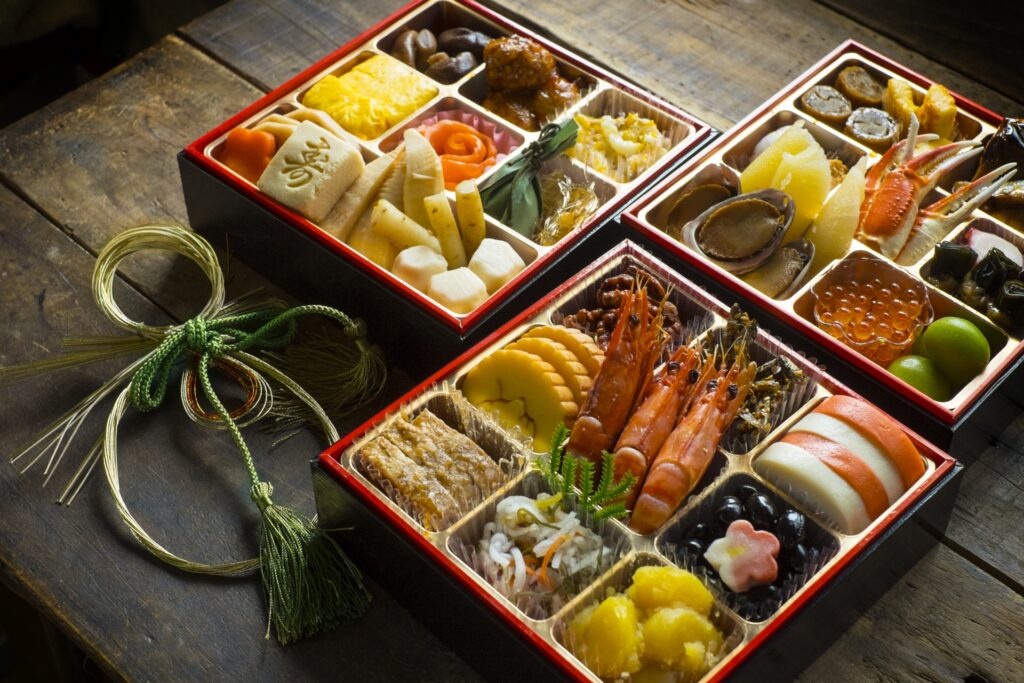
Osechi refers to traditional Japanese dishes eaten during the New Year holidays.
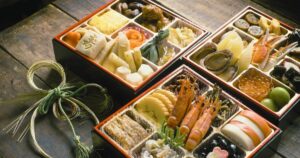
They are usually prepared at the end of the year and beautifully arranged in stacked lacquer boxes called jubako.
Common dishes include black soybeans, herring roe, rolled omelets, kelp rolls, and simmered vegetables.
Each dish has a symbolic meaning, such as good health, prosperity, or happiness in the coming year.
Osechi is not just about taste or appearance.
It is a meal filled with wishes and hopes for the new year.
Why Is Osechi Eaten at New Year?
In Japan, the New Year is considered the most important time of the year.
People traditionally welcome a deity called Toshigami, who is believed to bring good fortune, health, and a good harvest.
Osechi was prepared as an offering to this deity and shared with family members to celebrate the start of a new year.
There was also a practical reason.
In the past, people avoided cooking during the first few days of the New Year, and women were expected to rest from daily kitchen work.
For this reason, osechi dishes were made to last several days without spoiling.
The History and Cultural Background of Osechi
The origins of osechi can be traced back to the Heian period (over 1,000 years ago).
It originally referred to food offered to gods during seasonal festivals.
Over time, osechi became closely associated with the New Year.
During the Edo period, the custom spread among ordinary people, and the style of placing dishes in layered boxes became common.
The stacked boxes symbolize “layered happiness” and good fortune.
Osechi thus represents not only food, but also Japanese values, beliefs, and hopes passed down through generations.
Do All Japanese People Eat Osechi?
Interestingly, not every household eats osechi.
When a family has experienced a recent loss, they may observe mochū (a mourning period) and avoid New Year celebrations.
In such cases, people may choose not to eat osechi or keep their meals simple.
Today, customs vary by family, reflecting how traditional culture adapts to modern life.
Modern Osechi Today
Today, not all Japanese families prepare osechi at home.
Many people now purchase osechi from department stores, specialty shops, hotels, or online services.
In addition to traditional Japanese-style osechi, there are also Western-style and Chinese-style osechi, as well as smaller sets designed for couples or individuals.
These options reflect changes in lifestyle, family size, and eating habits.
While the form of osechi has evolved, its core meaning remains the same.
Sharing special dishes at the beginning of the year and welcoming the new year with gratitude and hope is still an important part of Japanese culture.
From Learning to Experiencing Japanese Culture
Osechi shows how deeply food is connected to Japanese culture, values, and history.
By learning about one tradition, it becomes easier to understand how Japanese people view seasons, time, and celebration.
This site shares articles about Japanese customs, seasonal events, and traditional culture.
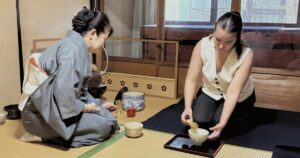
And beyond reading, experiencing Japanese culture firsthand—through food, tea, or quiet moments—can offer a deeper understanding.
Japanese culture becomes even more meaningful when it is not only learned, but experienced.