Introduction
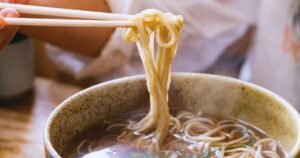
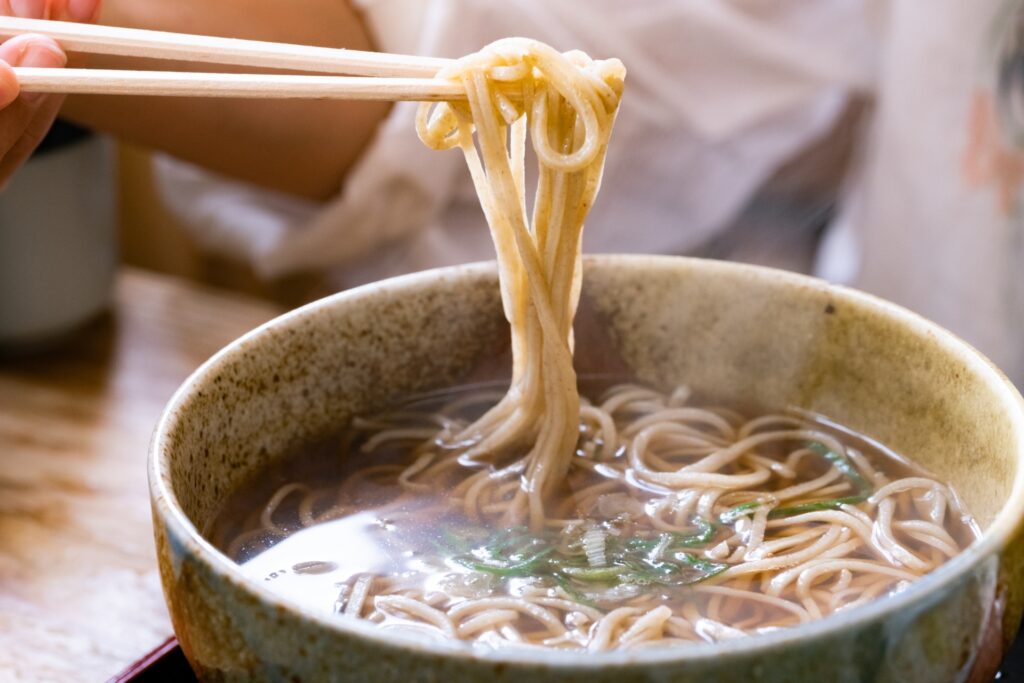
On the night of December 31st, as the air in Kyoto turns crisp and cold, a specific aroma wafts through the streets: the comforting scent of dashi broth and buckwheat noodles. This is Toshikoshi Soba (Year-Crossing Noodles), a dish so essential that for most Japanese people, the year cannot truly end without a bowl of it. But why soba? The reasons are rooted in centuries-old beliefs and a unique Japanese sense of “luck.”
Four Reasons Why We Eat Soba
The tradition dates back to the Edo period (1603–1867). Here are the four symbolic meanings infused into these simple noodles:
1. Long Life and Prosperity
Soba noodles are long and thin. This shape symbolizes a desire for a “thin but long” life—representing longevity and continued family prosperity for generations to come.
2. Cutting Off the Bad Luck of the Past Year
Unlike udon or pasta, soba noodles are firm yet brittle and snap easily when bitten. This physical property is used as a metaphor: “breaking off the misfortunes of the past year.” By eating soba before the clock strikes midnight, Japanese people symbolically cut ties with the hardships, debts, or bad luck of the old year so they don’t carry them into the new one.
3. Attracting Wealth
Centuries ago, goldsmiths used a ball of soba dough to gather up scattered gold dust in their workshops. Because soba was used to “collect gold,” it became a symbol of financial luck and a wish for more money in the coming year.
4. Strength and Resilience
The buckwheat plant is incredibly hardy; it recovers quickly even after being battered by heavy rain and wind. Eating soba represents a wish for resilience and health, hoping to bounce back from any challenges in the year ahead.
How to Enjoy Toshikoshi Soba Like a Local
Here are some tips and cultural etiquette for enjoying your year-crossing noodles in Japan:
- Watch the Clock!
The most important rule is to finish your noodles before midnight. Since soba represents “breaking off bad luck,” eating it after the New Year has already begun is considered unlucky, as it suggests you are dragging the old year’s misfortunes into the new one. Most locals enjoy it as dinner or a late-night snack around 10:00 or 11:00 PM. - Symbolic Toppings
Enhance your luck with specific toppings: Shrimp Tempura symbolizes longevity (due to its curved back resembling an elderly person), Kamaboko (pink and white fish cakes) represents celebration, and Green Onions represent vitality. - Where to Find It
While famous soba restaurants in Kyoto often have long queues on New Year’s Eve, many locals enjoy it at home with their families while watching traditional year-end TV programs. Interestingly, “instant cup soba” is also incredibly popular for its convenience during the busy holiday season—you will see mountains of them in supermarkets and convenience stores!
Deepen Your Connection with Japanese Culture
The tradition of Toshikoshi Soba is a beautiful example of how Japanese people find deep spiritual meaning in everyday life. By understanding the “why” behind what we eat and do, the landscapes of Kyoto—its temples, shrines, and old streets—will begin to look different to you.
If this glimpse into the Japanese mindset has sparked your curiosity, why not take a step further?
Beyond just observing traditions, we invite you to immerse yourself in them. Through our authentic cultural experiences, you can move from a visitor to a participant, discovering the profound philosophy and wisdom that have shaped Japan for over a thousand years. Experiencing the culture firsthand will surely make your stay in Kyoto even more colorful and unforgettable.